Lack of Incriminating Evidence and Parity with Co-accused Cited as Reasons for Bail; Sessions Court's Jurisdiction Questioned
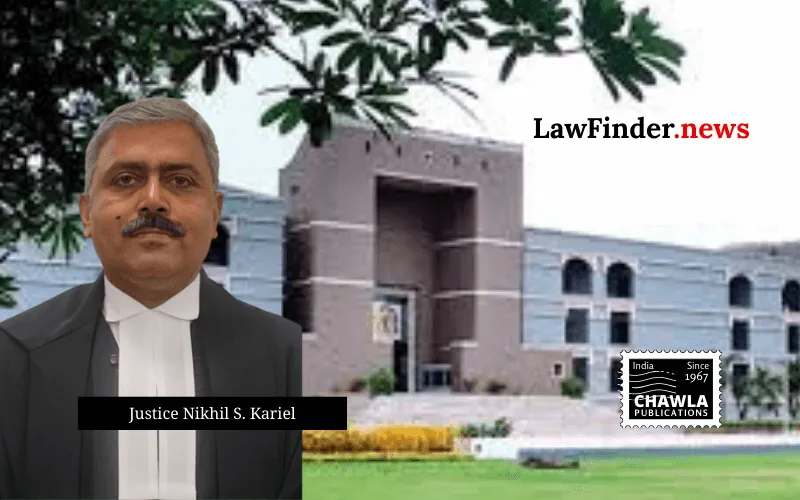
In a significant development, the Gujarat High Court, presided over by Justice Nikhil S. Kariel, has granted bail to three applicants accused of assaulting forest and police officials in an incident that raised concerns about the conduct of public duties. The bail was sanctioned under Section 483 of the Bharatiya Nagarik Suraksha Sanhita, 2023, following thorough deliberations over the alleged involvement of the accused and the evidence presented.
The accused, Satrabhai Ramabhai Damor, along with two others, faced charges under multiple sections of the Bharatiya Nagarik Suraksha Sanhita, the Prevention of Damage to Public Property Act, and the Gujarat Police Act. The prosecution alleged that the accused assaulted officials, causing serious injuries while the officials were performing their duties.
However, the High Court noted the absence of substantial incriminating material against the applicants. The evidence primarily comprised a video recording not included in the charge sheet, and the accused's alleged involvement was based on their own self-implicatory statements. This lack of concrete evidence, along with the precedent of a co-accused being granted bail, influenced the court's decision.
Justice Kariel emphasized the principles laid down by the Supreme Court in "Sanjay Chandra v. Central Bureau of Investigation," advocating for bail in the absence of compelling reasons for continued detention. The court imposed several conditions on the applicants to ensure compliance and prevent misuse of liberty. These conditions include surrendering passports, not leaving Gujarat without permission, and regularly marking their presence at designated police stations.
The court also addressed procedural concerns, highlighting that the Sessions Court appeared to exceed its jurisdiction by making certain scathing remarks and issuing directions beyond its mandate. The High Court flagged these observations for further consideration by the Law Officers Branch.
The case references pivotal judgments, including "Kodungallur Film Society v. Union of India" and "Tehseen Poonwalla v. Union of India," highlighting the importance of judicial restraint and adherence to jurisdictional boundaries.
The Gujarat High Court's decision underscores the judiciary's commitment to balancing the rights of the accused with the interests of justice, while also reinforcing the necessity for lower courts to operate within their legal bounds.
Bottom line:-
Bail application under Section 483 of Bharatiya Nagarik Suraksha Sanhita, 2023 - Grant of regular bail considering absence of incriminating material, self-implicatory statements, and parity with co-accused enlarged on bail.
Statutory provision(s):
Bharatiya Nagarik Suraksha Sanhita, 2023 Section 483, Prevention of Damage to Public Property Act, Gujarat Police Act.
Satrabhai Ramabhai Damor v. State of Gujarat, (Gujarat) : Law Finder Doc id # 2935762