Court rules that only expenditure linked to basic agricultural operations can be treated as agricultural loss; supervision of farmers’ plantations and clonal route activity held to be business expenditure.
The Gujarat High Court has delivered a significant ruling in favour of M/s J K Paper Limited in a long-running income tax dispute concerning its social forestry division, holding that only expenses directly relatable to basic agricultural operations on land can be treated as agricultural expenditure. The Court also upheld the deletion of penalty under Section 271(1)(c), ruling that where the assessee’s tax liability remained governed by the MAT provisions, concealment had no effect on the tax sought to be avoided.
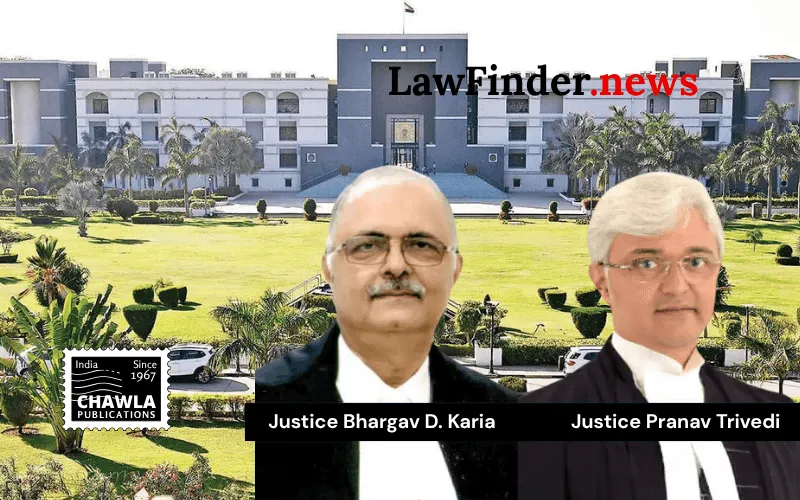
A Division Bench of Justices Bhargav D. Karia and Pranav Trivedi dismissed the Revenue’s challenge in Tax Appeal No. 900 of 2012 and partly allowed the appeal in Tax Appeal No. 290 of 2010 only to the limited extent of book profit computation under Section 115JB.
The dispute arose from the assessment year 2004-05, when the Assessing Officer disallowed the assessee’s social forestry loss of Rs. 78.12 lakh, including depreciation, and also added Rs. 1.63 crore of amortised expenditure while computing book profit under Section 115JB. The Revenue argued that the entire social forestry activity—from growing saplings to supervising plantations raised by farmers—was agricultural in nature and therefore the whole expenditure should be disallowed as relating to exempt agricultural income.
The assessee, however, contended that its social forestry division was not a standalone agricultural venture but part of its business strategy to ensure a continuous supply of raw material for paper manufacturing. It argued that a substantial portion of the expenditure was incurred after saplings were sold to farmers, including supervision, conveyance, salaries and other monitoring costs, and that clonal route production was carried out without use of land.
The Tribunal had earlier drawn a distinction between activities carried out on land as part of basic agricultural operations and later-stage or non-land-based activities. It held that expenses on supervision of farmers’ plantations, staff costs, conveyance and clonal route production were business expenses, not agricultural expenditure. On that basis, it restricted the disallowance to Rs. 9.43 lakh for the year under appeal.
Upholding that view, the High Court observed that only expenditure relatable to basic agricultural operations and their integrated continuation can be treated as agricultural expenditure. It agreed that supervision of farmers’ plantations after sale of saplings, as well as clonal route production carried out without use of soil or land, could not be classified as agricultural operations. The Court therefore held that the Tribunal was right in limiting the disallowance to Rs. 9.43 lakh.
On the issue of book profit under Section 115JB, the Court held that once only a limited portion of the expenditure was found relatable to agricultural activity, the Assessing Officer could not add back the entire amortised social forestry expenditure. The Court ruled that only the amount finally disallowed as relatable to exempt agricultural income could be considered for MAT computation.
In the penalty appeal, the Court upheld the Tribunal’s decision deleting penalty under Section 271(1)(c). Relying on the principle laid down in Nalwa Sons Investments Ltd. and followed in CIT Tiles Ltd., the Court held that where the assessee’s liability remained under MAT and the concealment did not alter the tax payable, no penalty could be imposed because there was no “tax sought to be avoided.”
The ruling clarifies the tax treatment of mixed forestry operations undertaken by industrial assessees and reinforces the principle that agricultural exemption cannot be extended to non-land-based or post-sale supervisory activities.
Bottom Line :
Income Tax - Social forestry expenditure - Only expenditure relatable to basic agricultural operations carried on land and integrated continuation thereof can be treated as agricultural expenditure - Expenditure on supervision of farmers' plantations and clonal route cultivation without use of land is business expenditure - For computation of book profit under Section 115JB, only such amount as is relatable to exempt agricultural income can be considered and not the entire expenditure - Penalty under Section 271(1)(c) not leviable where tax liability remained governed by MAT and concealment had no effect on tax sought to be avoided.
Statutory provision(s): Section 2(1A), Section 10(1), Section 14A, Section 115JB, Section 260A, Section 271(1)(c) of the Income Tax Act, 1961
Commissioner of Income Tax - I v. M/s J K Paper Limited, (Gujarat)(DB) : Law Finder Doc id # 2980134