Despite Confirmed Electrocution Death, Court Finds Inconsistencies and Insufficient Evidence Linking Accused to Electrified Fence, Affirming Benefit of Doubt
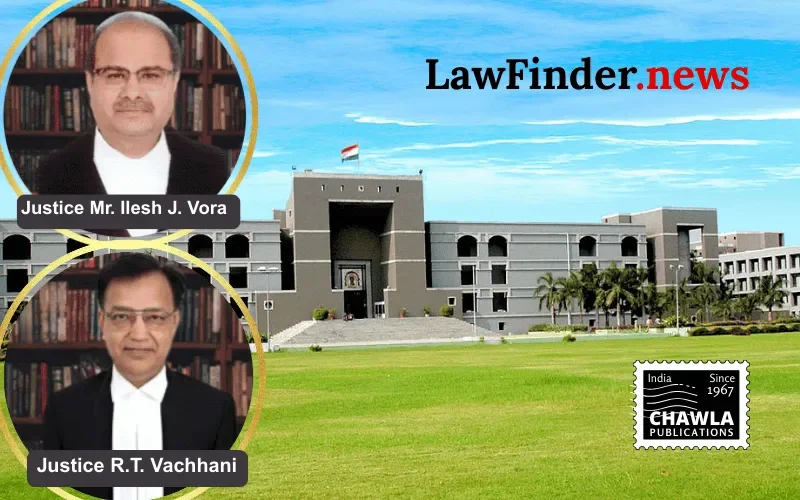
The Gujarat High Court (Division Bench), comprising Justices Ilesh J. Vora and R.T. Vachhani, on 21st October 2026, dismissed an appeal by the State of Gujarat challenging the acquittal of two accused, Sayababhai Sartanbhai Bariya and Gopsingbhai Sartanbhai Bariya, in a criminal case concerning the electrocution death of an 11-year-old boy, Ketan.
The tragic incident occurred on 28th December 2023, when Ketan was found unconscious and entangled in an iron wire fence at the boundary of a maize field allegedly owned by the accused. Medical evidence and the post-mortem report conclusively established that the cause of death was electrocution. The prosecution argued that the accused had erected and electrified the fence to protect their crops, thereby causing the child's death.
However, the Sessions Court had acquitted the accused under Sections 304 (culpable homicide not amounting to murder) and 114 (abettor present when offence committed) of the Indian Penal Code (IPC), granting them the benefit of doubt. The State appealed against this acquittal under Section 419 of the Bharatiya Nagarik Suraksha Sanhita, 2023.
The High Court thoroughly examined two pivotal issues: first, whether the death was caused by electrocution, and second, whether the prosecution had proved beyond reasonable doubt that the accused had erected and electrified the fence.
The Court affirmed that the death was indeed unnatural and due to electric shock, supported by the unchallenged testimony of the post-mortem doctor and eyewitnesses who found the child at the boundary of the field.
However, on the crucial question of the accused's responsibility, the Court found the prosecution's case wanting. Oral evidence about ownership and possession of the field was inconsistent, with witnesses attributing ownership variously to one accused, both accused, or multiple co-owners. The Investigating Officer failed to collect or produce critical documentary evidence such as the survey number, revenue records, or maps, nor was any relevant village official like the Talati examined. Moreover, the prosecution did not prove the source or mode of the electric connection or that the accused had installed or charged the fence with electricity.
Witnesses did confirm the existence of a charged wire fence to protect crops from wild boar, but this alone was insufficient to implicate the accused. The Court emphasized that criminal liability under Sections 304 and 114 IPC requires proof beyond reasonable doubt that the accused knowingly caused death by such dangerous act.
The Court relied on established legal principles, including the doctrine of res ipsa loquitur, clarifying that it does not strictly apply in criminal cases unless all circumstances form a complete, unbroken chain excluding any hypothesis of innocence. Since the prosecution failed to establish such a chain, the accused were entitled to the benefit of doubt.
Further, the Court referenced the Supreme Court's guidance in Tulasareddi @ Mudakappa v. State of Karnataka (2026) and the Gujarat High Court's own precedent in Syad Akbar v. State of Karnataka, underscoring that appellate interference in acquittal is warranted only in exceptional cases with perverse judgments.
Given the plausible and reasonable view taken by the Sessions Court, the High Court dismissed the State's appeal, affirming the acquittal. The judgment reinforces the stringent standard of proof required in criminal cases and the importance of credible, consistent evidence before holding accused persons criminally liable for unnatural deaths.
Bottom Line:
Appeal against acquittal in electrocution death of child - Though death by electrocution at live wire fence was proved, prosecution failed to prove beyond reasonable doubt that accused had erected and charged fence with electricity - Inconsistencies regarding ownership/possession of field, absence of proof of source of electric connection and lack of incriminating recovery justified benefit of doubt - Acquittal upheld.
Statutory provision(s):
Indian Penal Code Sections 304, 114; Bharatiya Nagarik Suraksha Sanhita, 2023 Section 419; Code of Criminal Procedure Sections 209, 235(1), 313
State of Gujarat v. Sayababhai Sartanbhai Bariya, (Gujarat)(DB) : Law Finder Doc Id # 3001681