Court Rules Consensual Live-in Relationship Under Written Agreements Does Not Constitute Rape Despite Subsequent Refusal to Marry
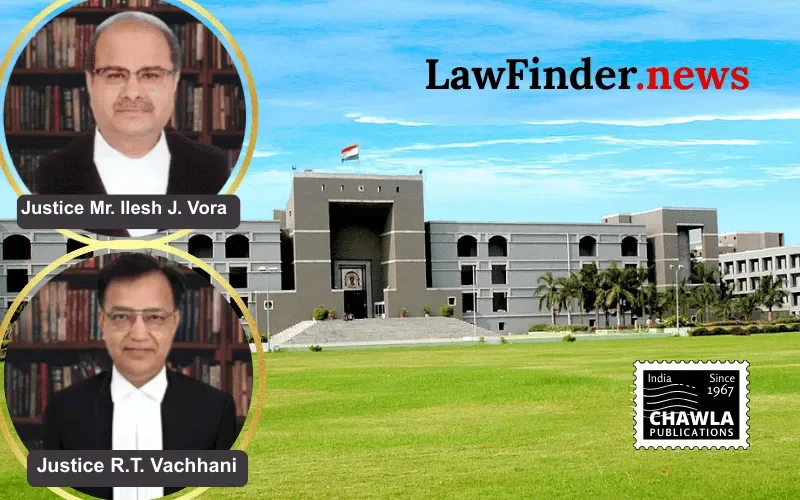
In a significant judgment delivered on October 21, 2026, the Gujarat High Court (Division Bench comprising Justices Ilesh J. Vora and R. T. Vachhani) dismissed an appeal filed by the State against the acquittal of an accused in a rape case involving allegations of a false promise to marry. The case, titled XYZ Victim v. State of Gujarat, centered on allegations that the accused had repeatedly raped the victim under the pretext of marriage promises during their live-in relationship, which spanned over several months.
The appellant-victim had alleged that the accused, with whom she was in a relationship for about a year, lured her with a written friendship/live-in agreement dated August 14, 2019, promising marriage upon attaining the marriageable age. Allegations included forcible sexual intercourse and physical assault during the period they lived together in the accused's house and later in a rented accommodation. The victim further claimed that the accused coerced her into cancelling the original agreement under threat.
However, the trial court acquitted the accused, holding that the relationship was consensual and entered into by mutual agreement, with no evidence of force or coercion. The High Court agreed with this view after a careful appraisal of the evidence.
Key to the Court's reasoning was the victim's own contemporaneous medical history, which recorded that she had been in love with the accused and living with him under a friendship agreement voluntarily. Testimonies from the victim's father, uncle, and the landlady of the rented premises reinforced that the victim stayed with the accused of her own volition and never complained of harassment.
The Court noted that the parties had executed a subsequent agreement on January 29, 2020, cancelling the earlier live-in agreement by mutual consent without any coercion or threat. The Court observed that these written deeds, along with witness testimony, strongly indicated a consensual relationship rather than one founded on deceit or force.
Referring to Supreme Court precedents, the Court emphasized the distinction between a mere breach of promise to marry and a false promise made with dishonest intent from the outset to obtain sexual favors. It held that where two consenting adults live together for a considerable period, the presumption is that their relationship is voluntary and with full knowledge of its consequences. An expression of desire to marry or later refusal to marry cannot convert such a consensual relationship into rape.
Further, the Court highlighted the prosecution's failure to seize original agreements during investigation and noted contradictions and omissions in the prosecution's evidence, including hostile witnesses and lack of corroboration for the serious allegations.
The Court underscored that interference in an appeal against acquittal is justified only in exceptional cases where the trial court's view is perverse or suffers from compelling infirmity. Since the trial court's appreciation of evidence was plausible, and the prosecution failed to prove guilt beyond reasonable doubt, the High Court dismissed the appeal.
This judgment reflects an evolving judicial approach towards consensual live-in relationships in India, recognizing the autonomy of adults to enter such relationships and cautioning against criminalizing breach of marriage promises absent fraudulent intent or coercion.
Bottom Line:
Rape on false promise of marriage - Long live-in relationship between consenting adults under written "friendship/live-in" agreements - Subsequent refusal to marry, in facts of case, does not amount to rape - In appeal against acquittal, where trial Court view is plausible and not perverse, no interference warranted.
Statutory provision(s):
Indian Penal Code, 1860 Sections 376, 376(2)(n), 323; Bharatiya Nagarik Suraksha Sanhita, 2023 Section 413
XYZ Victim v. State of Gujarat, (Gujarat)(DB) : Law Finder Doc Id # 3001057