Court Rules Lessee Must Pay Rent Until Vacant Possession Delivered Despite Lease Termination; Limits Judicial Interference Under Arbitration Act
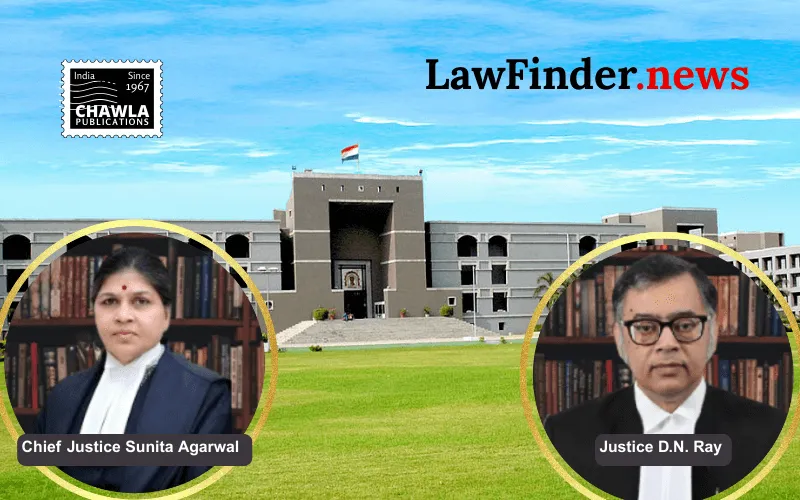
In a significant judgment dated September 24, 2026, the Division Bench of the Gujarat High Court, comprising Chief Justice Mrs. Sunita Agarwal and Justice D.N. Ray, dismissed the appeal filed by Indus Towers Limited challenging an arbitral award related to a lease dispute over terrace premises used for telecom tower installation. The court upheld the decision of the Commercial Court which had partially confirmed the arbitral award, thereby affirming the lessee's liability to pay rent for the leased premises until the actual handing over of vacant possession to the lessor, Bilkishbanu Tofiqhussain Lokhandwala and another.
The dispute arose from a Lease Deed executed in 2011 between Indus Towers Limited (lessee) and the respondents (lessors) for a 15-year term with monthly rent fixed at Rs. 25,800. The lessee terminated the lease in September 2012 citing obstruction by neighboring occupants which prevented the telecom tower from becoming operational. However, Indus Towers failed to remove its equipment from the premises, continuing to occupy the property beyond the termination notice period.
The arbitral tribunal awarded rent from the lease commencement date in August 2011 until January 2015, and future rent till the lessee delivered vacant possession, along with Rs. 75,000 for damages and interest. The Commercial Court, in its 2026 order, allowed the lessee's Section 34 application to the extent of setting aside the Rs. 75,000 damages but confirmed the rest of the award. Notably, the court held that while the lease was terminated as per Clause 9.2 after the three-month notice, the lessors were entitled to mesne profits (occupation charges) equivalent to rent until actual possession was delivered.
Indus Towers challenged this modification, arguing the lessees were not liable to pay rent or mesne profits beyond the termination date and contended that mesne profits were not pleaded or proven. They further argued that the arbitral tribunal lacked jurisdiction to award mesne profits and that the damages award was unsupported by evidence.
Rejecting these contentions, the High Court emphasized the limited scope of judicial interference under Sections 34 and 37 of the Arbitration and Conciliation Act, 1996. The court noted that the lessee's continued occupation of the premises by leaving equipment intact equated to possession, making the lessor entitled to compensation for use and occupation. The court held that the distinction between "rent" and "mesne profits" in this context was essentially semantic, especially since the quantum of the award remained unchanged. It further observed that the lessee failed to prove any obstruction by the lessor preventing removal of equipment.
Regarding the damages, the court found that the arbitral tribunal intended to award compensation for actual physical damage to the property, not contractual damages under the Indian Contract Act, 1872. The Commercial Court's severance of the Rs. 75,000 damages award was deemed erroneous but was not restored due to lack of challenge by the lessors.
The judgment also referenced authoritative Supreme Court rulings establishing that courts should not interfere with arbitral awards for mere legal errors, but only if such errors violate the fundamental policy of Indian law or constitute patent illegality. The appellate jurisdiction under Section 37 is even narrower than under Section 34.
The High Court imposed costs of Rs. 1,50,000 on the appellant, directing half to be paid to the respondents and half to be deposited with the Gujarat State Legal Services Authority for welfare projects.
This ruling affirms the principle that lease termination does not automatically absolve the lessee of liability if possession is not peacefully delivered. It also underscores the judiciary's restrained role in reviewing arbitral awards, reinforcing arbitration as an effective dispute resolution mechanism in commercial matters.
Bottom Line:
Arbitration - Scope of interference under Sections 34 and 37 of the Arbitration and Conciliation Act, 1996 is extremely limited - Where lessee terminated lease but failed to remove telecom tower equipment and continued to occupy demised premises, award directing payment equivalent to agreed rent till actual handing over of vacant possession cannot be interfered with merely because Commercial Court described claim as mesne profits instead of rent - Mere qualitative change in description of claim, without change in quantum, is not patent illegality or violation of fundamental policy of Indian law.
Statutory provision(s):
Arbitration and Conciliation Act, 1996 Sections 2(12), 31A, 34, 37; Indian Contract Act, 1872 Sections 55, 73; Code of Civil Procedure, 1908 Sections Order XX Rule 12