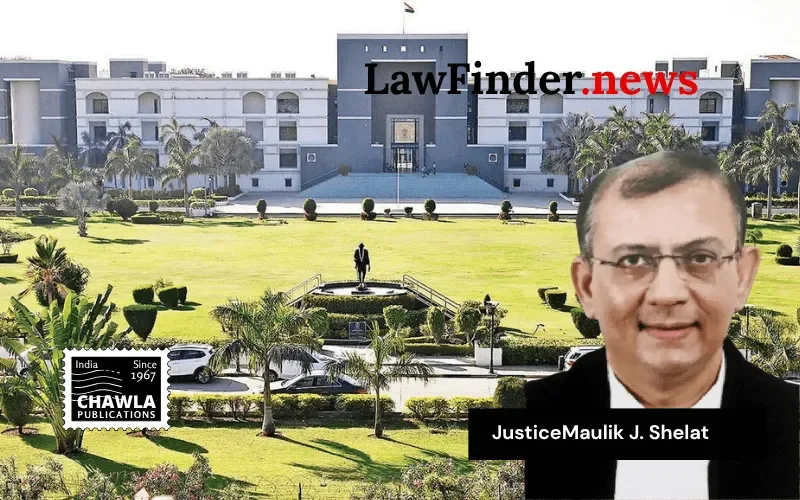
Court Rules Compensation Awarded in Criminal Proceedings under Section 138 NI Act Must Be Recovered via BNSS/CrPC Procedure, Not Civil Suit Amendment
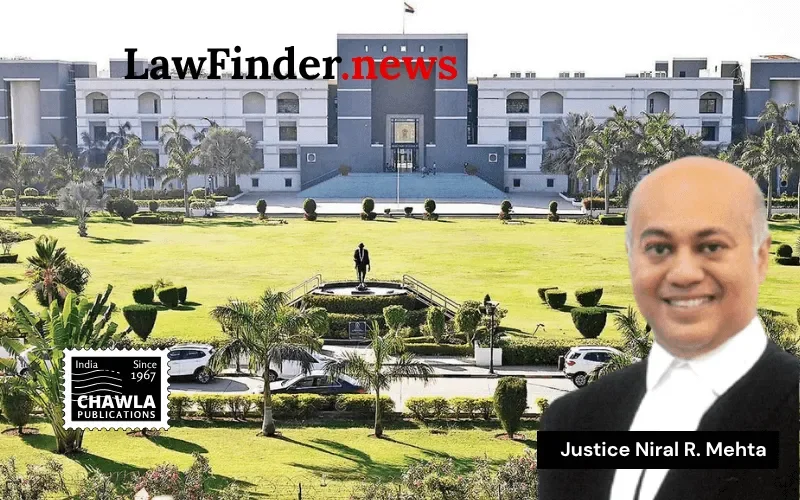
In a significant ruling on October 16, 2026, the Gujarat High Court, presided over by Justice Maulik J. Shelat, dismissed a petition filed by Kailashben Arunkumar Prajapati seeking to amend a pending civil recovery suit to claim compensation previously awarded in criminal proceedings related to dishonoured cheques. The original suit involved recovery of Rs.31,22,659 based on cheque dishonour. However, following a successful criminal appeal under Section 138 of the Negotiable Instruments Act (NI Act), the Court had awarded compensation amounting to Rs.25,00,000 to the plaintiff.
The plaintiff sought to amend the civil suit to include this compensation amount along with legal expenses incurred during criminal proceedings, thereby increasing the total claim to Rs.78,85,659. The trial court rejected the amendment application, prompting the petitioner to approach the High Court under Article 227 of the Constitution.
The High Court analyzed whether compensation awarded by the criminal court could be recovered through civil proceedings. It held that once compensation is determined by the competent criminal court, it must be recovered as per the procedure prescribed under the Bharatiya Nagarik Suraksha Sanhita, 2023 (BNSS) and/or the Criminal Procedure Code (CrPC), and not through a separate civil suit or amendment thereof. This interpretation aligns with Section 395 of BNSS (corresponding to Section 357 of CrPC), which governs recovery of compensation awarded by criminal courts.
Furthermore, the Court emphasized that the claim for compensation and legal expenses arose from a different cause of action than the original civil suit for cheque dishonour. As per settled principles under Order VI Rule 17 of the Civil Procedure Code (CPC), amendments introducing a new cause of action or changing the nature of the suit are generally impermissible. The Court referred to the Supreme Court's decision in Life Insurance Corporation of India v. Sanjeev Builders Private Limited, which mandates allowing amendments only if they aid in resolving the real controversy without causing injustice or prejudice to the opposite party.
The Court noted that the plaintiff's claim for legal expenses also rested on a separate cause of action, further justifying rejection of the amendment. The High Court found no error in the trial court's order and dismissed the petition, reaffirming that the plaintiff must follow the statutory procedure under BNSS/CrPC to recover the compensation awarded in criminal proceedings.
This judgment clarifies the procedural route for recovery of compensation awarded under Section 138 NI Act and underscores the principle that criminal compensation orders cannot be enforced through civil suits, thereby preventing duplication of litigation and ensuring adherence to statutory recovery mechanisms.
Bottom Line:
Civil Procedure - Amendment of plaint - In pending recovery suit, plaintiff sought to add claim for compensation awarded in earlier cheque dishonour criminal proceedings and legal expenses incurred therein - Held, compensation awarded by criminal court/High Court under Section 138 NI Act is recoverable through procedure under BNSS/Cr.P.C. and not by separate civil recovery suit - Proposed amendment was founded on a different cause of action and would introduce a new case - Rejection of amendment application upheld.
Statutory provision(s):
Civil Procedure Code, 1908 Order VI Rule 17, Constitution of India Article 227, Negotiable Instruments Act, 1881 Section 138, Bharatiya Nagarik Suraksha Sanhita, 2023 Sections 395, 461, 471