Court clarifies succession under Guru-Chela tradition, affirms public trust status of temple properties, and validates appointment of trustees amidst decades-long litigation.
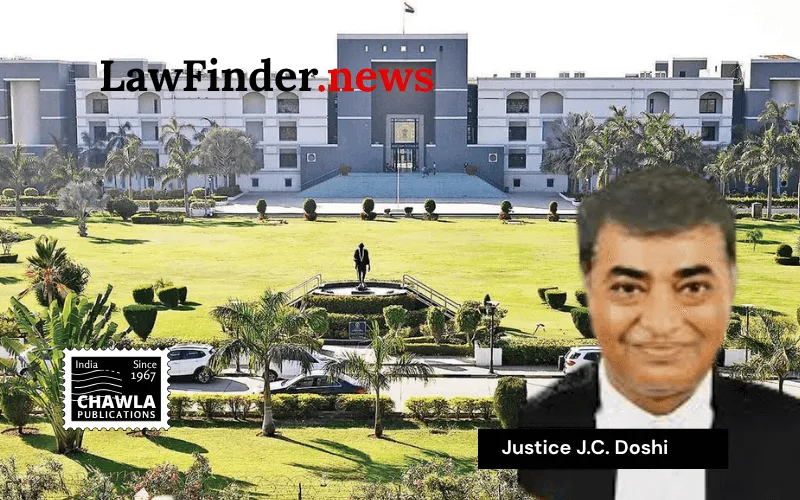
In a landmark judgment delivered on June 22, 2026, the Gujarat High Court decisively ruled that the temple of Lord Narsinhji in village Dhaman, Navsari district, is a public trust governed by the Gujarat Public Trust Act, 1950 (GPT Act). The Court dismissed appeals filed by the heirs of late Mahant Dayaramdas, who claimed private ownership over the temple's properties and sought recognition of the idol as a private deity.
The dispute, which has spanned over seven decades, originated in 1952 when devotees of Lord Narsinhji filed an application asserting that the idol and associated properties were public, accessible for worship and religious activities by the general public. Conversely, the late Mahant Dayaram and his heirs contended that the idol and surrounding properties were private, inherited family assets. The conflict led to numerous proceedings before the Charity Commissioner, Deputy Charity Commissioner, District Courts, and the Gujarat High Court.
The Division Bench of the Gujarat High Court in 1977 had already held that the temple is a public trust and the idol a public deity, entitling all devotees to worship and partake in religious services. The present judgment reaffirms this position, emphasizing that the temple and its attached properties — including agricultural lands, buildings, and movable assets — are public trust properties.
A pivotal aspect of the Court’s analysis was the nature of succession of trustees. The Court observed that the Mahants traditionally followed the Guru-Chela system of succession, where trusteeship passed from spiritual teacher (Guru) to disciple (Chela), rather than through personal or familial inheritance. This custom underlines the public and religious character of the trust, distinguishing it from private property succession.
The Court meticulously examined voluminous documentary and oral evidence, including revenue records, gift deeds, wills, and historical documents. It found that many properties were originally granted by the erstwhile Baroda State as Barkhali lands — lands specifically endowed for temple maintenance — and others were gifted by villagers for religious purposes. These lands, though sometimes standing in the names of Mahants or trustees, carry a presumption of public trust ownership unless convincingly rebutted. The heirs failed to discharge this burden of proof.
The Court further noted that the Mahants’ claims of personal ownership were unsubstantiated by credible evidence of independent income or business to acquire such properties. The last Mahant, Dayaramdas, was found to have misused the trust properties, including unauthorized alienations, which were declared void.
Regarding the appointment of trustees, the Court upheld the District Court’s appointment of five trustees in 2017 under Section 47 of the GPT Act, a decision supported by a Gram Sabha resolution and subsequent inquiry by the Charity Commissioner. While the appellants challenged the procedure, the Court found the appointment lawful and necessary given the demise of earlier trustees and the need to manage the public trust effectively. The Court emphasized that trustee appointments must consider the wishes of the trust author, public interest, and customs, and are within the Court’s jurisdiction to ensure proper administration until a final scheme is framed.
The judgment also sternly criticized the prolonged litigation tactics employed by the heirs, which extended the dispute over forty years, undermining the rule of law and the public’s interest in the temple’s proper management.
In conclusion, the Gujarat High Court dismissed all appeals, reaffirming the public trust status of the Lord Narsinhji Temple and its properties, endorsing the Guru-Chela tradition of trusteeship succession, and validating the current trustees’ appointment. The Court directed the expeditious execution of the judgment and cautioned against further attempts to treat public trust properties as private assets.
Bottom line:-
The temple of Lord Narsinhji is held to be a public trust under the Gujarat Public Trust Act, 1950. Properties attached to the temple, including agricultural lands, buildings, and movable properties, are public trust properties unless specifically excluded. The succession of trustees follows the Guru-Chela tradition, not personal inheritance. Appointment of trustees under Section 47 of the Act must consider the wishes of the trust author, public interest, and custom. The Court has the power to appoint trustees when vacancies arise. The burden of proof lies on the party claiming private ownership of the properties. Prolonged litigation and attempts to treat public trust properties as private are discouraged.
Statutory provision(s):
Gujarat Public Trust Act, 1950 Sections 2(10), 2(13), 2(17), 19, 20, 47(1)-(6), 50, 70, 72; Indian Succession Act, 1925; Indian Evidence Act, 1872 Sections 101, 102, 65; Transfer of Property Act, 1882 (referenced); Baroda Act (historical reference)
This detailed report captures the essence, legal reasoning, and outcome of the Gujarat High Court judgment in the case concerning the Lord Narsinhji Temple, presenting a comprehensive narrative suitable for legal professionals and the general public interested in public trust law and religious endowments.