Tribunal’s Authority to Determine Trust or Waqf Status Confirmed Under Unified Waqf Management Act, 2025; Appeal by Trust Challenging Registration Certificate Dismissed
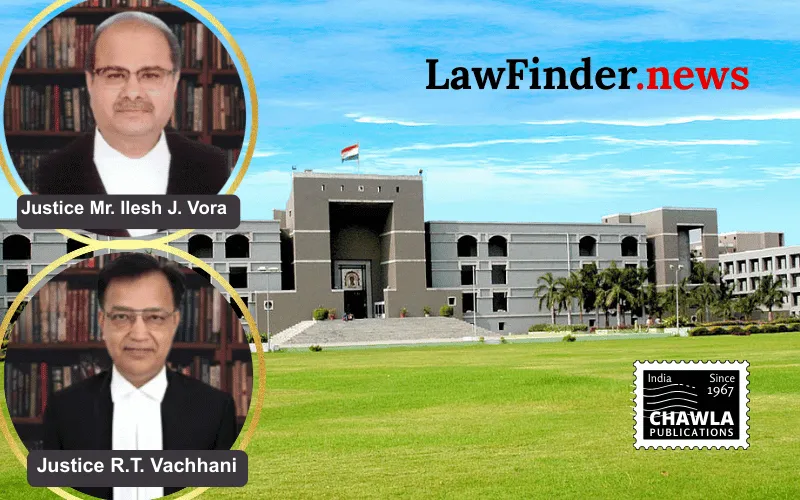
In a significant ruling delivered on September 9, 2026, the Division Bench of the Gujarat High Court, comprising Justices Ilesh J. Vora and R. T. Vachhani, dismissed the appeal filed by the Muslim Kuzafarosh Jamat Trust challenging its classification as a Waqf and the jurisdiction of the Gujarat State Waqf Board. The judgment affirms the authority of the Waqf Tribunal to adjudicate on the nature of the entity—whether it is a Waqf or a public charitable trust—under the provisions of the Waqf Act, 1995 and the subsequent Unified Waqf Management Empowerment, Efficiency and Development Act, 2025.
The appellant, Muslim Kuzafarosh Jamat Trust, originally registered under the Bombay Public Trust Act, 1950, contested the Waqf Board’s registration certificate dated November 28, 2017, which declared the Trust to be a Waqf. The Trust argued that its properties, including a Qabarstan (graveyard) and other immovable properties, were never dedicated as religious Waqf and that the Board lacked jurisdiction to classify it as such without conducting a mandatory inquiry under Section 40 of the Waqf Act, 1995.
Tracing a complex procedural history, the Court noted that the Trust had been registered as a public charitable trust since 1952, with its objects including religious and welfare activities such as education and burial services for the Muslim community. The Trust’s efforts to challenge its Waqf status through various authorities, including the Charity Commissioner and the District Court, were dismissed, and the matter was eventually transferred to the Waqf Board under Section 43 of the Waqf Act, 1995, which deems Waqfs registered under previous laws as registered under the Waqf Act.
The Court examined whether the provisions of Section 40, which empowers the Waqf Board to conduct inquiries to determine if a property is a Waqf property, were applicable. It was observed that the CEO’s communication dated April 27, 2011, relied upon by the appellant as an inquiry, did not constitute a mandatory inquiry under Section 40. Since the Trust was already registered and recognized as a Waqf under Section 43, which provides a deeming fiction for previously registered Waqfs, no further inquiry was necessary.
Furthermore, the Court upheld the Waqf Tribunal’s jurisdiction under Section 83(9) of the Unified Waqf Management Empowerment, Efficiency and Development Act, 2025, which empowers it to decide disputes relating to Waqf properties, including determining the nature of an entity. It was emphasized that the Tribunal’s authority to adjudicate such matters is well established, and the appellant’s contention of lack of jurisdiction was rejected.
The Court also addressed procedural contentions regarding the composition of the Tribunal, noting amendments in the Gujarat State Waqf Rules, 2023, which clarified that the Tribunal would not be deemed non-coram due to vacancies or absence of members, thereby upholding the validity of the Tribunal’s orders.
The judgment highlights the importance of the Waqf Board’s role in managing Waqf properties and confirms that entities registered as Waqfs under previous laws continue to fall under its jurisdiction without the need for fresh inquiry. The Court’s decision reinforces the legal framework ensuring that properties dedicated for religious and charitable purposes within the Muslim community are appropriately regulated and protected.
Consequently, the Gujarat High Court dismissed the appeal and upheld the Waqf Tribunal’s order dated May 13, 2025, which rejected the appellant’s Waqf Application No. 115 of 2019, affirming the status of Muslim Kuzafarosh Jamat as a Waqf under the Waqf Act.
Bottom Line:
Waqf Act, 1995 - Determination of whether a trust is a Waqf or a public charitable trust - Tribunal has jurisdiction to decide the nature of the trust under the provisions of the Waqf Act, 1995 and its successor legislation, the Unified Waqf Management Empowerment, Efficiency and Development Act, 2025.
Statutory provision(s): Waqf Act, 1995 Sections 3(r), 40, 43; Unified Waqf Management Empowerment, Efficiency and Development Act, 2025 Section 83(9); Bombay Public Trust Act, 1950
Muslim Kuzafarosh Jamat v. Gujarat State Waqf Board, (Gujarat)(DB) : Law Finder Doc Id # 2975921