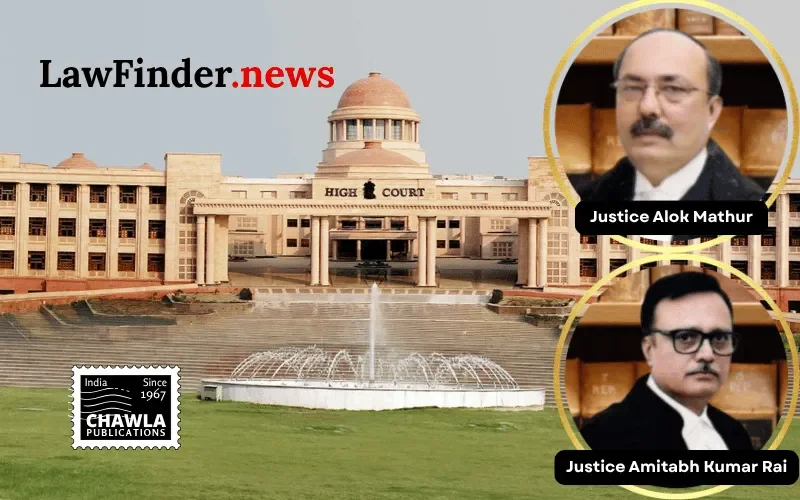
Court holds teachers of U.P. Sports Colleges Society are not “public servants” under the U.P. Public Services (Tribunals) Act, though pay re-fixation and recovery remain service matters
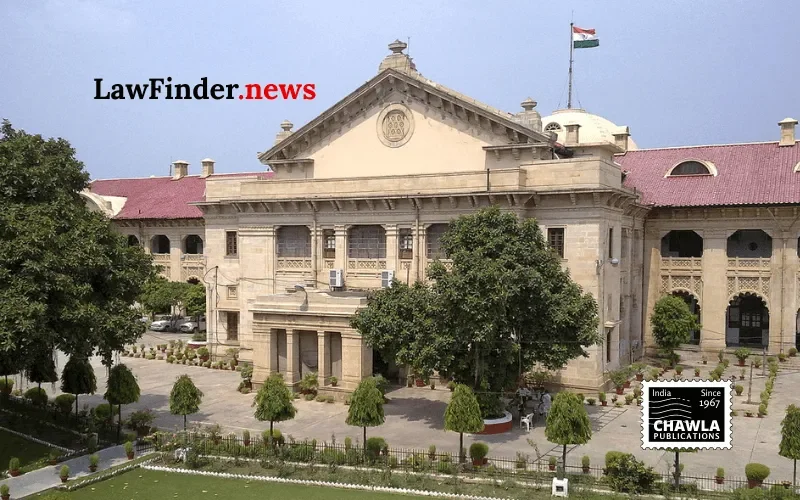
The Allahabad High Court, Lucknow Bench, has ruled that teachers working in sports colleges run by the U.P. Sports Colleges Society cannot approach the U.P. State Public Service Tribunal because they are not “public servants” within the meaning of the U.P. Public Services (Tribunals) Act, 1976.
A Division Bench of Justice Alok Mathur and Justice Amitabh Kumar Rai passed the judgment on October 28, 2026, in Principal Guru Govind Singh Sports College, Kursi Road, Gudamba, Lucknow v. U.P. State Public Service Tribunal, Lucknow through Registrar and Others.
The case arose from a challenge to an order of the Public Service Tribunal dated September 4, 2025, by which the Tribunal had rejected preliminary objections and held maintainable a claim petition filed by Harvir Singh, a retired Assistant Teacher (Football) of Guru Govind Singh Sports College, Lucknow.
Harvir Singh had questioned orders dated September 17, 2024, November 19, 2024 and December 5, 2024 relating to re-fixation of his pay and recovery of alleged excess payments from his post-retiral dues. He had also sought grade pay benefits and consequential reliefs before the Tribunal.
Before the High Court, the sports college argued that the U.P. Sports Colleges Society is a registered society under the Societies Registration Act, 1860, and that its teachers are appointed by the Principal with approval of the Society’s Board of Management, not by the State Government. It also contended that salaries are paid by the institution out of grant-in-aid received from the government, which does not make such employees government servants or public servants.
The High Court agreed with the college on the key jurisdictional issue. The Bench examined the structure of the U.P. Sports Colleges Society and found that it is an independent and autonomous body registered under the 1860 Act. Although government officials are part of its Board of Management and the State provides financial assistance, the Society retains a separate legal character.
The Court noted that the respondent teacher was appointed through an office order issued by the Principal of Sports College, Dehradun, after approval by the Board of Management of the Society. His confirmation in service also came through the Society’s management structure. Therefore, the Tribunal’s finding that he had been appointed pursuant to a State Government notification was held to be contrary to the record.
On the question whether the teacher was “in the pay of” the State Government, the Bench held that salaries paid out of grants-in-aid cannot be equated with direct payment by the government. Referring to Rule 369-A of the Financial Handbook, the Court observed that grant-in-aid is ordinarily given only to bodies that are independent of the Government and possess separate legal status. This, according to the Court, reinforced the autonomous status of the Sports Society rather than weakening it.
The Bench further held that the Society is neither a “local authority” nor a “corporation” under Section 2(b) of the 1976 Act. Relying on Supreme Court decisions including Illachi Devi v. Jain Society, Protection of Orphans India and Board of Trustees, Ayurvedic and Unani Tibia College v. State of Delhi, the Court reiterated that a society registered under the Societies Registration Act is not a corporation in the same sense as a company or statutory body.
At the same time, the High Court rejected the petitioner-college’s separate argument that a retired employee’s grievance over pay revision and recovery is not a “service matter.” The Bench held that disputes over pay fixation, arrears, revision of pay scales and pension consequences directly relate to conditions of service. Citing the Supreme Court’s ruling in M.R. Gupta v. Union of India, the Court said wrong pay fixation is a continuing wrong and can give rise to a recurring cause of action, including where pension is affected after retirement.
However, the Court clarified that even though the dispute concerns a service matter, the Tribunal can entertain only matters brought by a “public servant” as defined by statute. Since teachers of sports colleges run by the U.P. Sports Colleges Society do not fall within that category, the claim petition itself was not maintainable before the Tribunal.
The Bench also distinguished the Full Bench ruling in Roychan Abraham v. State of U.P., which had been cited by the retired teacher. It said that decision dealt with the maintainability of writ petitions under Article 226 against institutions performing public duties, and not with the limited statutory jurisdiction of the Public Service Tribunal. The Court stressed that a tribunal’s jurisdiction cannot be expanded on grounds of equity, convenience or the public character of the employer.
Allowing the writ petition, the High Court set aside the Tribunal’s September 4, 2025 order and quashed the proceedings in Claim Petition No. 281 of 2025. It left it open to Harvir Singh to pursue his grievance regarding pay re-fixation and recovery before any other appropriate forum, including by filing a writ petition under Article 226 of the Constitution.
Bottom Line:
Teachers working in sports colleges run by U.P. Sports Colleges Society are not "public servants" under Section 2(b) of the U.P. Public Services (Tribunals) Act, 1976; hence claim petition before Public Service Tribunal is not maintainable, though dispute regarding pay re-fixation and recovery is a service matter.
Statutory provision(s): Section 2(b), Section 2(bb) of the U.P. Public Services (Tribunals) Act, 1976, Societies Registration Act, 1860, Rule 369-A of Financial Handbook Volume 5 Part I, Section 4(25) of the U.P. General Clauses Act, 1904, Article 226 of the Constitution of India, Section 3 of the Companies Act, 1956