Madhya Pradesh High Court overturns trial court's rejection, affirming the right to travel abroad under Article 21 of the Constitution
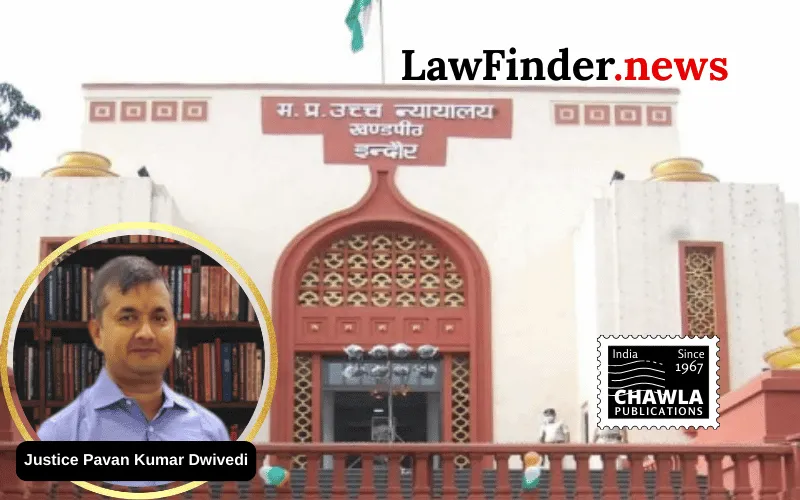
In a significant ruling on June 22, 2026, the Madhya Pradesh High Court, Indore Bench, presided by Justice Pavan Kumar Dwivedi, granted Gaurav Ahlawat, a petitioner and accused in an ongoing criminal case, permission to travel abroad for his son’s medical treatment. This decision overturns a previous order by the trial court, which had denied the application on the grounds that the son’s medical condition existed since childhood.
Gaurav Ahlawat, a Russian citizen, has been facing charges under the Bharatiya Nyaya Sanhita, 2023. Despite being granted anticipatory bail by the Supreme Court, which included conditions like surrendering his passport, Mr. Ahlawat sought modification of these conditions to facilitate urgent travel for his son's treatment abroad.
The trial court had initially permitted Mr. Ahlawat to travel for his son's treatment but later rejected a subsequent application citing the chronic nature of the illness. The High Court highlighted that such reasoning ignored the urgency and necessity of the treatment, which was supported by genuine medical documentation.
Justice Dwivedi emphasized that the right to travel abroad is an integral part of the right to life and personal liberty under Article 21 of the Indian Constitution. The court noted Mr. Ahlawat's compliance with previous conditions, including the surrender of his passport and cooperation with the investigation, as evidence of his reliability and non-misuse of travel permissions.
The High Court directed the trial court to impose necessary conditions to ensure Mr. Ahlawat's return to India post-treatment. The decision underscores the judiciary's role in balancing individual rights with legal obligations, especially in cases involving fundamental rights.
The court's decision is a reminder of precedents set by the Supreme Court in cases like Menka Gandhi v. Union of India, which affirmed the right to travel as a fundamental right, and Satwant Singh Sawhney v. D. Ramarathnam, which elucidated the scope of personal liberty.
Mr. Ahlawat is now permitted to travel from June 23 to August 16, 2026, for his son's treatment, with clear instructions to surrender his passport upon return.
This judgment not only reinforces the constitutional right to travel but also highlights the importance of judicial review in safeguarding personal liberties against arbitrary denials.
Bottom line:-
Right to travel abroad is a facet of the right to life and personal liberty under Article 21 of the Constitution of India. Permission to travel abroad cannot be denied casually, especially when supported by genuine reasons and compliance with conditions imposed previously.
Statutory provision(s): Article 21 of the Constitution of India, Bharatiya Nyaya Sanhita, 2023 Sections 316(5), 318(4), 61(2), BNSS Section 528