Court clarifies that "Act only" motor insurance policies exclude occupant coverage without additional premium; Judicial officer criticized for flawed reasoning in earlier Motor Accident Claims Tribunal award
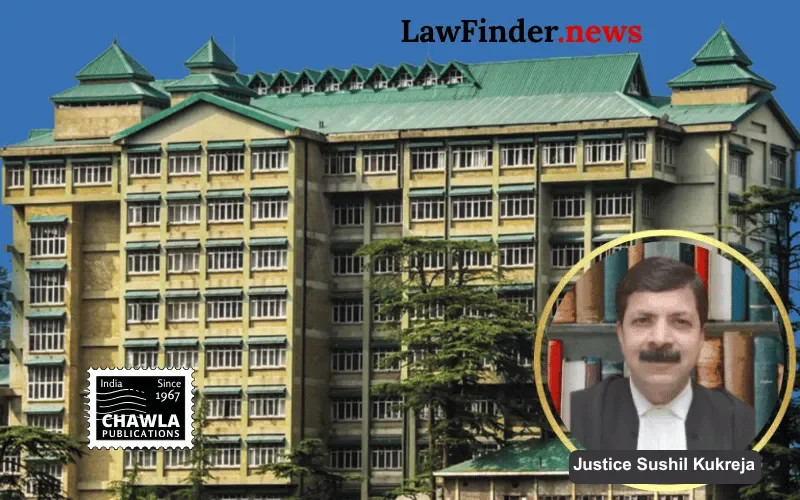
In a significant judgment delivered on October 29, 2026, the Himachal Pradesh High Court, presided over by Justice Sushil Kukreja, set aside a Motor Accident Claims Tribunal (MACT) award that had held the New India Assurance Company liable to pay compensation for the death of an occupant in a private car accident. The court ruled that the insurer was not liable under the "Private Car Liability Policy" (commonly called the "Act Policy") which covers only third-party risks and does not include passengers or occupants unless an additional premium is paid.
The case arose from a fatal accident on December 30, 2016, where the deceased, Trahru alias Kesav, was an occupant in a private car driven allegedly in a rash and negligent manner. The petitioners, his widow and son, claimed Rs. 50 lakh in compensation from the vehicle's owner, driver, and the insurer. The MACT had awarded Rs. 13.93 lakh with interest, directing the insurer to pay the compensation.
On appeal, the insurer contended that the policy in force was an "Act only" policy valid from September 19, 2016, to September 18, 2017, under which only third-party liability is covered. No additional premium had been paid to cover occupants' risk. The court found that the MACT erroneously relied on an expired insurance policy valid only until September 2, 2016, which was irrelevant as the accident occurred in December 2016.
The High Court extensively referred to Supreme Court precedents including United India Insurance Co. Ltd. v. Tilak Singh (2006), Oriental Insurance Co. Ltd. v. Sudhakaran (2008), New India Assurance Co. Ltd. v. Sadanand Mukhi (2009), and National Insurance Co. Ltd. v. Balakrishnan (2013). These rulings firmly establish that occupants or gratuitous passengers of a private car do not qualify as "third parties" under Section 147 of the Motor Vehicles Act, 1988, and thus are not covered under a statutory liability policy unless a comprehensive or package policy is purchased with the requisite premium.
Justice Kukreja observed that since no additional premium was paid for occupant coverage, the insurer was rightly exonerated. The liability to compensate the deceased's family rests solely on the vehicle owner. The court modified the MACT award accordingly.
Importantly, the court sharply criticized the MACT judge for non-application of mind and mechanical adjudication, especially for relying on an expired insurance policy and misunderstanding the fundamental difference between "Act only" and "comprehensive" policies. The judge was directed to undergo refresher training in Motor Accident Claims Tribunal matters, and a copy of the judgment was ordered to be placed in the judge's service record and sent to the Himachal Pradesh State Judicial Academy.
This judgment reinforces the legal position that in motor accident claims involving occupants of private vehicles, the insurance company's liability depends strictly on the nature of the insurance policy and the premium paid. It serves as a cautionary note for courts to apply settled legal principles carefully and avoid procedural lapses.
Bottom Line:
Motor Vehicles Act - Act only/private car liability policy does not cover risk of death or bodily injury to occupant/gratuitous passenger of private car unless additional premium is paid - In such case insurer is not liable and owner alone must satisfy award - Tribunal deprecated for relying on irrelevant expired policy and for non-application of mind.
Statutory provision(s):
Motor Vehicles Act, 1988 - Sections 146, 147, 166, 173
New India Assurance Company Limited v. Promila Devi, (HP) : Law Finder Doc Id # 3006260