Court holds continuous cohabitation and birth of child with deceased government employee entitles petitioner to family pension, quashing denial based on absence of marriage certificate and subsistence of first marriage.
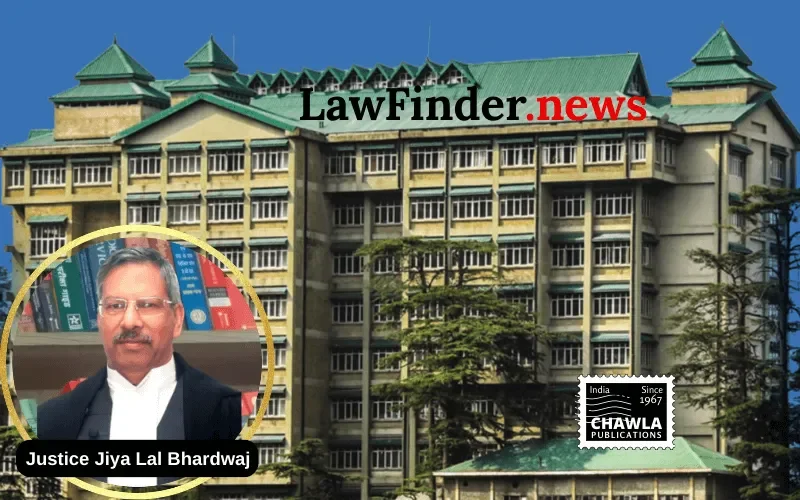
In a landmark judgment delivered on November 3, 2026, the Himachal Pradesh High Court, presided over by Justice Jiya Lal Bhardwaj, upheld the right of a woman to receive family pension despite her marriage occurring during the subsistence of her husband’s first marriage and her name not being recorded in pension documents.
The petitioner, Gulshan Devi, had cohabited with late Charan Dass, a former Deputy Superintendent of Police with the Himachal Pradesh Police Department, for over 25 years and bore a son in 1978. Although Charan Dass was legally married to his first wife, who died in 1985 after living separately from him since 1975, the petitioner’s claim for family pension was initially rejected by the State on grounds that she was not legally wedded, and her name did not appear in the employee’s pension records.
The petitioner challenged this rejection, asserting that despite the absence of a formal marriage certificate, the long-term cohabitation and social recognition of her relationship with Charan Dass established her status as his wife. Supporting documents included the birth certificate of her son listing Charan Dass as the father, scheduled caste certificates identifying her as Charan Dass’s wife, and a marriage invitation card of her son naming her as mother and Charan Dass as father.
The Court referred to a series of authoritative Supreme Court precedents and the provisions under Section 114 of the Evidence Act, 1872, which allow the presumption of marriage from continuous cohabitation. It further distinguished the purpose of family pension as providing maintenance and financial dignity to the widow, which cannot be denied merely due to procedural or formalistic lapses like the absence of a marriage certificate or the existence of a prior marriage.
The judgment notably relied on the Supreme Court’s recent decision in Radha Devi vs. Chief General Manager & Ors. (2024), which endorsed granting family pension to a woman who lived with the deceased government employee as his wife after the death of his first wife, underscoring the principle that long-term cohabitation raises a presumption of marriage. Other significant cases cited included Shiramabai vs. Captain, Record Officer (2024) and Umawati v. HPSEB (2025), reinforcing the presumption of marriage arising from long-standing cohabitation.
Rejecting the State’s reliance on Rule 54 of the Central Civil Services (Pension) Rules, 1972, and Section 5 of the Hindu Marriage Act, 1955, which prohibit second marriages during the subsistence of the first, the Court held that the petitioner’s claim could not be denied on these grounds when the relationship was socially recognized and a child was born from the union.
Consequently, the Court quashed the order denying the family pension and directed the State to grant the petitioner family pension with arrears from three years before the filing of the petition. The Court also imposed a 6% interest per annum on delayed payments beyond six months from the judgment date.
This decision reinforces the legal recognition of de facto marital relationships in pension claims and affirms the protective intent of family pension provisions to uphold financial security and dignity for surviving spouses, even in complex marital scenarios.
Bottom Line:
Family pension - A woman who cohabitated with a government employee as his wife for a long period and had a child with him, is entitled to family pension despite the fact that her name was not recorded in pension documents or her marriage occurred during the subsistence of the employee's first marriage.
Statutory provision(s):
Central Civil Services (Pension) Rules, 1972 - Rule 54, Hindu Marriage Act, 1955 - Section 5(1), Evidence Act, 1872 - Section 114
Gulshan Devi v. State of H.P., (HP) : Law Finder Doc Id # 3129672