New Delhi, Nov 10 The Supreme Court has directed the Uttar Pradesh government to identify undertrial prisoners in the state who have been granted bail but could not be released for want of execution of sureties and other conditions.
Observing that the onus lies on the state to make sure that these people are released from custody, the apex court said its direction would be applicable even to those undertrial prisoners who could not comply with bail conditions, despite the fact that they have engaged private lawyers.
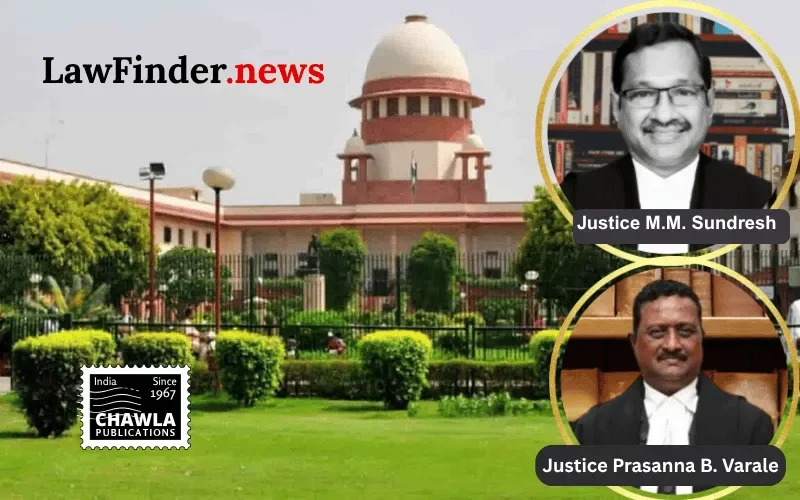
A bench of justices M M Sundresh and Prasanna B Varale was informed that in 20 districts of Uttar Pradesh, there were 264 undertrial prisoners who were granted bail but could not be released for want of execution of sureties and other conditions imposed by the trial courts.
The counsel appearing for Uttar Pradesh submitted that out of these 264 prisoners, only 158 have been released and an appropriate decision would be taken with respect to the remaining 106.
"Taking note of the submissions made, we direct the state of UP to undertake the exercise for the undertrial prisoners who have been granted bail but could not be released for want of compliance of conditions of bail, in consultation with the respective District Legal Service Authorities," the bench said in its November 4 order.
The top court passed the order while hearing a suo motu case concerning policy strategy for grant of bail.
During the hearing, the counsel appearing for the National Legal Services Authority said that periodical reviews were undertaken every month with active participation of District Legal Services Authorities (DLSAs).
The counsel appearing for the petitioner said the statistics were available only for 20 districts and the exercise has to be undertaken for the remaining 55 districts of the state.
The state's counsel said the needful would be done within a reasonable time.
The bench observed that there cannot be any differentiation between under-trial prisoners, who have the assistance of the DLSA, and those who have engaged private counsel.
"The fact remains that both the categories are similar with respect to non-compliance of the bail conditions imposed," it said.
The bench said merely because private lawyers were engaged, the assistance from the counsel of DLSA cannot be denied.
"Litigation cannot be adversarial in that sense. Therefore, notwithstanding the presence of counsel appearing for the accused person who have been granted bail, further assistance can be rendered by the District Legal Services Authorities to them," it said.
"In any case, the onus lies on the State to make sure that these persons are released from custody," the bench said.
It also asked the concerned courts to take up those cases which were brought to notice by the respective DLSAs and modify the conditions suitably so that the under-trial prisoners can be released accordingly.
"Needless to state that the aforementioned directions shall apply to all the undertrial prisoners spanning across 75 districts," the bench said.
It posted the matter for hearing on January 20.