Punjab and Haryana High Court Orders Interest on Delayed Release of Seized Rs.30 Lakh Cash, Court holds tax department liable to pay statutory interest till assessment and compensatory interest for illegal retention after no tax liability was found
The Punjab and Haryana High Court has ruled that a school teacher whose Rs.30 lakh in cash was requisitioned and seized by income tax authorities is entitled not only to statutory interest under Section 132B(4) of the Income Tax Act, 1961, but also to compensatory interest for the period during which the money was illegally retained after assessment.
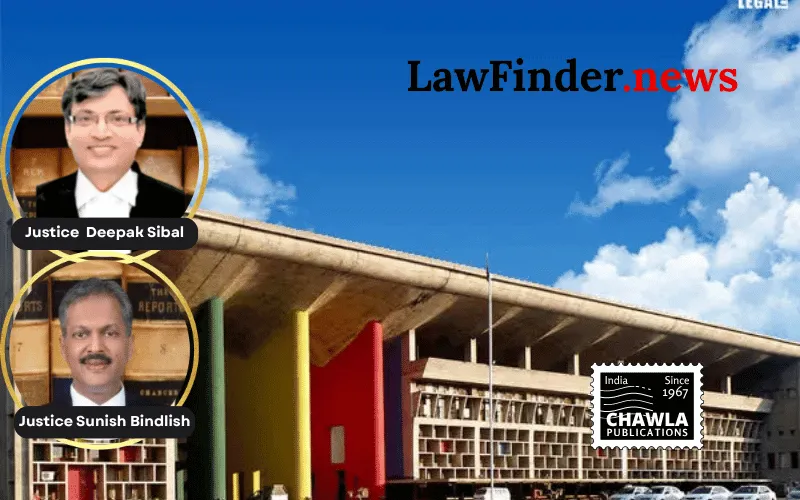
A Division Bench of Justice Deepak Sibal and Justice Sunish Bindlish delivered the verdict in a petition filed by Paramvir Singh Gill, who had challenged the failure of the tax department to pay interest on the delayed release of his seized cash.
According to the court, the cash was recovered by Punjab Police from the petitioner’s car on 27 December 2011 and was handed over to income tax authorities the same day. The authorities requisitioned and seized the amount under Section 132A of the Act and later initiated assessment proceedings. On 20 March 2014, the assessment was completed under Section 143(3) read with Section 153B(1)(b), and no addition was made to the petitioner’s declared income. In other words, no tax liability was found.
Despite this, the seized money was not returned immediately. The petitioner repeatedly sought release of the amount, but the cash was ultimately returned only on 15 January 2017, without interest for the prolonged delay.
The court examined Section 132B of the Income Tax Act in detail. It held that under Section 132B(4), the petitioner was entitled to simple interest at the rate of 0.5% per month from the expiry of 120 days after the requisition and seizure, i.e. from 26 April 2012, until the date of completion of assessment on 20 March 2014.
More importantly, the court held that the department’s retention of the cash after 20 March 2014 was contrary to Section 132B(3), which requires seized assets to be “forthwith” returned once liabilities are discharged. Since no tax was found payable, the authorities had no legal basis to continue holding the money.
Rejecting the revenue’s argument that no interest could be granted because the Act did not expressly provide for it after assessment, the court said the absence of a specific provision does not absolve the State from compensating a citizen for unlawful deprivation of property. The bench relied on restitutionary principles and held that a constitutional court can award compensatory interest in writ jurisdiction.
The court also dismissed the department’s plea that it had not earned any interest on the amount kept in the PD account. It observed that entitlement to interest must be judged from the standpoint of the person deprived of his money, not from whether the department benefited from retaining it.
Taking note of earlier Delhi High Court decisions, including Ajay Gupta and GL Jain, the bench fixed the rate of compensatory interest for the post-assessment period at 6% per annum, the same as the statutory rate under Section 132B(4)(a). Accordingly, the court directed payment of interest from 21 March 2014 till 15 January 2017.
The High Court allowed the writ petition and ordered the respondents to make the payment within four weeks.
Bottom Line:
Cash requisitioned and seized under Section 132A - Assessee entitled to interest under Section 132B(4) from expiry of 120 days after seizure till date of assessment order - Even in absence of express statutory provision, Constitutional Court can award compensatory interest for period of illegal retention of seized cash after assessment order where no tax liability is found and amount was not released forthwith as mandated by Section 132B(3).
Statutory provision(s): Income Tax Act, 1961 Sections 132A, 132B(3), 132B(4), 143(3), 153B(1)(b)