Court Emphasizes Strict Compliance with Safeguards Under Jammu & Kashmir Public Safety Act, 1978; Highlights Need for Genuine Subjective Satisfaction and Effective Execution Measures
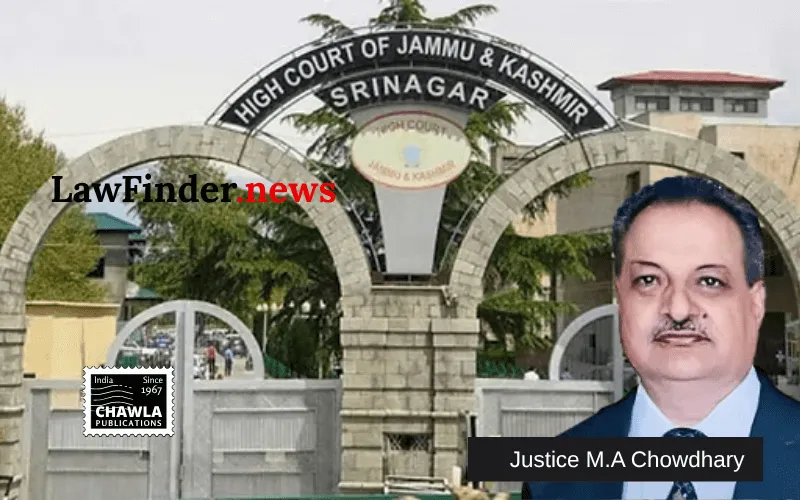
In a significant judgment dated September 14, 2026, the Jammu & Kashmir and Ladakh High Court (Srinagar Bench), presided over by Justice M. A. Chowdhary, set aside a preventive detention order issued against Firdous Ahmad Dar under Section 8 of the Jammu & Kashmir Public Safety Act, 1978 (“the Act”). The Court’s decision underscores the critical importance of adhering to procedural safeguards and the necessity of a genuine subjective satisfaction when exercising extraordinary preventive detention powers.
The petitioner, Firdous Ahmad Dar, challenged the detention order dated June 25, 2022, passed by the District Magistrate, Anantnag, which was aimed at preventing him from actions prejudicial to the security of the State. Dar contended that although the order was passed in June 2022, there was an inordinate delay in its execution. He further submitted that an interim order of this Court was in operation preventing execution, and the authorities failed to take effective steps for its vacation.
The Court examined the delay in execution closely, referring to precedents including Shafiq Ahmad v. District Magistrate and M. Ahamedkutty v. Union of India, which hold that delay does not automatically invalidate detention orders but requires explanation, especially when abscondence is alleged. The Court noted the provisions under Section 12 of the Act, which empower authorities to take special steps if a detenu is absconding. However, the respondents failed to demonstrate that such measures were invoked or pursued effectively, which cast doubt on their claim that the petitioner deliberately evaded arrest.
Furthermore, the petitioner highlighted that one of the FIRs (No. 384/2007) against him had resulted in acquittal and that he was granted bail in other cases. The petitioner argued that these critical developments were not brought to the notice of or considered by the Detaining Authority, thereby vitiating the subjective satisfaction required for detention.
The Court reiterated the principle, grounded in Supreme Court rulings, that while acquittal or bail does not per se bar preventive detention, such facts are material and must be considered by the Detaining Authority. The detention order must rest on relevant and contemporaneous material demonstrating a genuine apprehension of future prejudicial activity to the State’s security. Selective or stale material, or failure to consider material facts, can invalidate the subjective satisfaction underpinning detention.
After a detailed analysis, the Court found that the detention order suffered from:
1. Unexplained and inordinate delay in execution without credible evidence of abscondence or use of statutory measures under Section 12;
2. Failure of the respondents to effectively seek vacation of the interim judicial stay;
3. Non-consideration of the petitioner’s acquittal and bail orders, which were material to the question of preventive detention;
4. Lack of demonstration of a rational nexus between the material relied upon and the necessity for preventive detention.
The Court held that preventive detention is an extraordinary power that must not be exercised mechanically or arbitrarily. Due to these shortcomings, the subjective satisfaction recorded by the Detaining Authority could not be sustained in law. Consequently, the Court quashed the detention order bearing No. 39/DMA/PSA/DET/2022 dated June 25, 2022.
This judgment reinforces the constitutional protections under Articles 21 and 22 of the Indian Constitution relating to personal liberty, emphasizing that preventive detention must comply strictly with procedural safeguards and be based on genuine, relevant material. It also serves as a stern reminder to the authorities to act vigilantly and responsibly while invoking such powers, particularly ensuring timely execution and consideration of all relevant facts.
Bottom Line:
Preventive detention order invalidated due to unexplained delay in execution, non-compliance with statutory safeguards, and non-consideration of material facts like acquittal and bail orders.
Statutory provision(s):
Jammu and Kashmir Public Safety Act, 1978 Section 8, Section 12; Constitution of India Articles 21 and 22