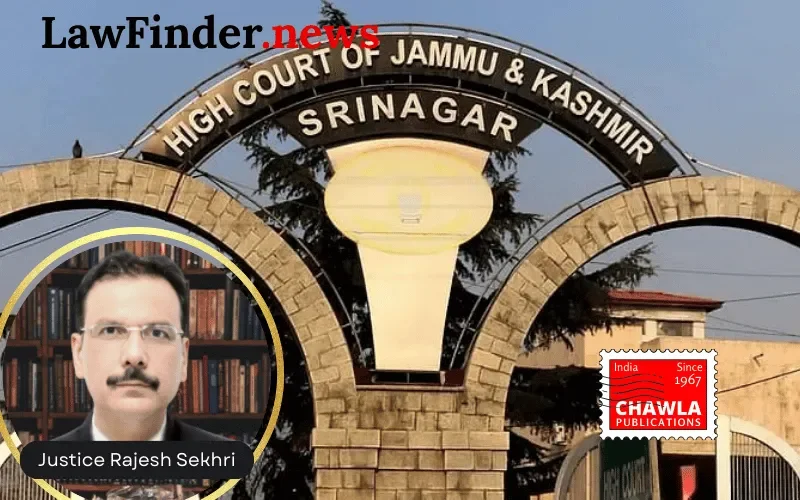
Court Rules Dismissal of Restoration Application Not a Decree; Restoration Allowed for Senior Citizen Due to Health Issues
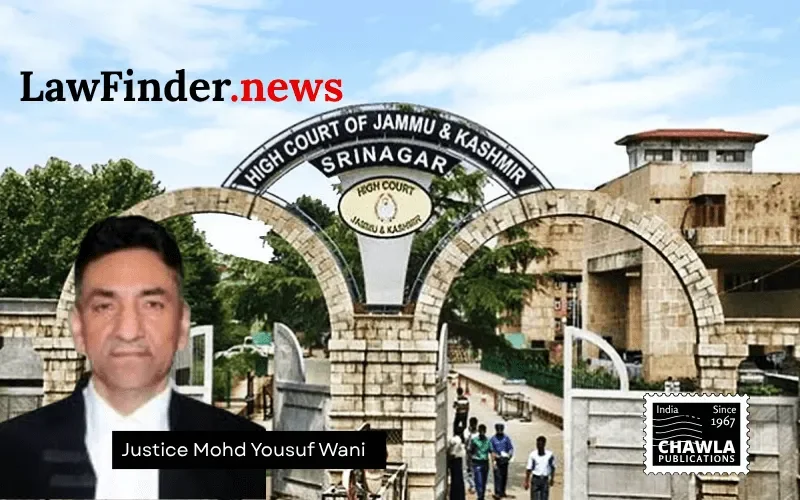
In a significant judgment delivered on October 6, 2026, the Jammu & Kashmir and Ladakh High Court in Srinagar upheld the restoration of a suit that had been dismissed for non-prosecution. The case, Sheikh Mohammad Yaseen v. Ali Mohammad Shora, revolved around the interpretation of procedural provisions under the Civil Procedure Code (CPC), particularly concerning the restoration of suits dismissed for non-prosecution under Order IX Rule 9 CPC.
The dispute originated when Ali Mohammad Shora, the respondent and plaintiff in the original suit, filed an ejectment suit against Sheikh Mohammad Yaseen, the petitioner. The suit was dismissed by the trial court on May 20, 2022, due to the plaintiff's absence in court. Subsequently, the plaintiff applied for restoration of the suit within seven days, citing his advanced age and severe joint problems as the reasons for non-appearance. The trial court, however, dismissed the restoration application on June 17, 2023, finding no sufficient cause for the plaintiff's absence, especially as the plaintiff was absent on 12 consecutive hearing dates.
Dissatisfied with this dismissal, the plaintiff challenged the order through a Civil Miscellaneous Appeal under Order XLIII CPC. The appellate court allowed the appeal, observing that "sufficient cause" for restoration must be assessed with a liberal approach, focusing on the plaintiff's absence on the specific date of dismissal rather than earlier instances. The court emphasized that procedural provisions like Order IX Rule 9 CPC should be interpreted to advance substantial justice and enable parties to have their claims adjudicated on merits rather than on technical defaults.
Sheikh Mohammad Yaseen then filed a supervisory petition under Article 227 of the Constitution, contending that the dismissal of the restoration application amounted to a decree and should be challenged only by a regular civil first appeal under Order XLI CPC, not by a miscellaneous appeal. The petitioner also argued that the plaintiff's continuous absence justified the trial court's dismissal of the restoration application.
Justice Rajesh Sekhri, presiding over the High Court bench, rejected these contentions. The judgment clarified that a decree, as defined under Section 2(2) CPC, must conclusively determine the rights of the parties on the merits of the case. However, dismissal of a suit or restoration application for non-prosecution is procedural and does not amount to a decree because it does not adjudicate the substantive rights of the parties. Therefore, such orders are appealable under Order XLIII Rule 1(c) CPC, and the appeal before the appellate court was valid.
The court distinguished this case from the Supreme Court judgment in Rajneesh Kumar v. Ved Prakash (2024), where a long delay in filing an appeal was not condoned. In contrast, the plaintiff in the present case had filed the restoration application promptly within seven days, and his non-appearance was due to legitimate health reasons.
The High Court upheld the appellate court's decision allowing the restoration of the suit and directed the trial court to proceed with the trial in accordance with law. The parties were instructed to appear before the trial court on October 14, 2026.
This ruling reinforces the principle that procedural safeguards such as restoration applications should be liberally construed to ensure that cases are decided on their merits, particularly where sufficient cause is shown for non-appearance. It also clarifies the correct appellate procedure concerning orders dismissing restoration applications under the CPC.
Bottom Line:
Civil Procedure Code - Dismissal of application for restoration of suit under Order IX Rule 9 CPC is not a decree - Such order is appealable under Order XLIII Rule 1(c) CPC and not by regular first appeal under Order XLI CPC - "Sufficient cause" for restoration of suit has to be seen with reference to absence on the date when suit was dismissed for non-prosecution - Liberal approach warranted to advance substantial justice.
Statutory provision(s):
Civil Procedure Code, 1908, Order IX Rules 3, 4, 8, 9; Order XLIII Rule 1(c); Order XLI Rule 1; Section 2(2) CPC; Limitation Act, 1963, Article 122