New Delhi, Oct 5 The Delhi High Court on Monday dismissed pleas for an SIT probe into alleged brutalities on students by police during the 2019 violence in Jamia Millia Islamia, saying that when a gathering ceases to remain peaceful, cops cannot be expected to remain mute spectators.
The high court said the police did not enter the university premises at the outset to deal with an otherwise peaceful assembly confined to the campus. The force entered there only after the situation outside and around the varsity had escalated and the crowd had moved into the campus, it added.
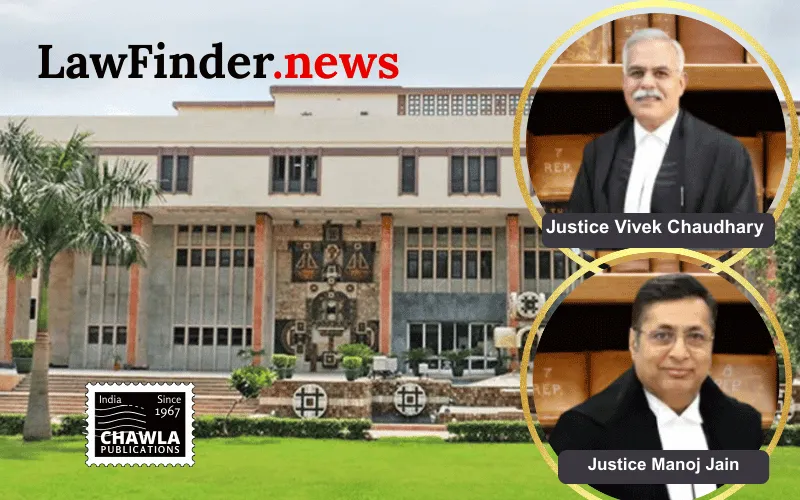
"The police intervention, therefore, has to be viewed in the prevailing law and order situation which had developed at that time," a bench of Justices Vivek Chaudhary and Manoj Jain said in its judgment.
The high court said the right to peaceful protest is not in dispute and Articles 19(1)(a) and 19(1)(b) of the Constitution protect freedom of speech and expression and the right to assemble peacefully without arms, subject to reasonable restrictions. These rights do not, however, extend to causing any violence or destruction of property, it added.
"Once a gathering ceases to remain peaceful and the circumstances disclose violence, commission of cognisable offences or a threat to life or property, the police cannot be expected to remain inactive or as mute spectator merely because the gathering is taking place within a university campus," the court said.
The court's observations came while dismissing a batch of petitions seeking an independent judicial inquiry into the violence at the varsity in 2019, an investigation into alleged police excesses and compensation to injured students.
"The events of December 2019 undoubtedly generated considerable public concern and gave rise to serious allegations regarding the conduct of various stakeholders," it said.
It refused to create a separate set of rules governing police action only within educational institutions.
It noted that the protests on December 15, 2019 had escalated into violence around the university, including incidents of stone-pelting, burning of buses and other vehicles, damage to public property and attacks on police personnel.
The court also noted shortcomings in the manner in which the police intervention was carried out. It referred to the findings of the National Human Rights Commission (NHRC) which had specifically found that the use of tear-gas shells inside the university library could have been avoided.
It observed that a university is a place of learning and academic activity, and the said crucial aspect must always be kept in mind while exercising police powers.
"That consideration cannot, however, be taken to mean that the police are prohibited from entering a university campus in all circumstances. Where the situation requires immediate intervention, the police cannot be expected to remain outside merely because the premises belong to an educational institution," it said.
It said the university authorities should be informed and, wherever the circumstances permit, consulted before police intervention and even the Model Police Manual also contemplates informing the head of an educational institution, as far as possible, before entering the premises.
"This requirement cannot, however, operate as an absolute condition in every situation. An immediate threat to life or property, an unlawful assembly, the commission of cognisable offences or a rapidly developing law and order situation may leave no time for prior communication or permission.
"The police may also receive information from sources other than the institution. This, however, does not place police action beyond scrutiny," the court added.
The petitions were related to the violence that broke out in Jamia Millia Islamia (JMI) following anti-Citizenship (Amendment) Act (CAA) protests in December 2019.
The petitioners before the court are lawyers, JMI students, residents of south Delhi's Okhla, where the university is located, and the Imam of Jama Masjid mosque opposite Parliament.
The bench dismissed the petitions, holding that there was no ground for directing a fresh independent inquiry, transferring the investigation, awarding compensation, framing fresh guidelines or issuing further consequential directions.
The court noted that the incidents took place on December 15, 2019 and more than six years have since passed. It noted that criminal cases were registered, a probe had been conducted by a Special Investigation Team (SIT) of the Delhi Police Crime Branch and charge sheets had been filed before competent courts. The NHRC had also conducted an inquiry and submitted its report in May 2020.
"No subsequent incident or material has been brought to our notice to show that the violations of guidelines as alleged in these petitions have continued or have been repeated. Thus, we are of the considered opinion that no fresh guidelines for regulation of police action during protests within educational institutions are required to be framed," it said.