In the case of Rama Rani v. Chaman Lal, the High Court highlights the importance of valid summons service for triggering statutory timelines under the Civil Procedure Code.
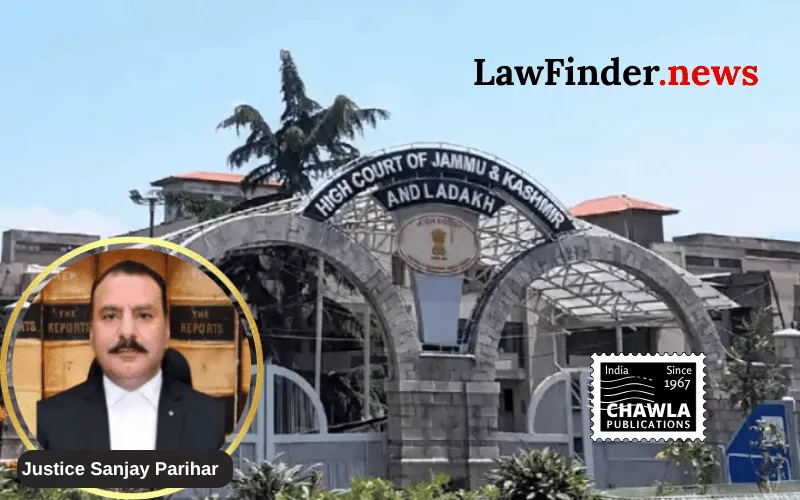
The Jammu & Kashmir and Ladakh High Court delivered a significant judgment on July 14, 2026, setting aside the order of the 3rd Additional Munsiff, JMIC, Jammu, which had closed the right of the defendant, Rama Rani, to file a written statement. The decision was based on the failure to comply with mandatory procedural requirements for serving summons under the Civil Procedure Code, 1908 (CPC).
The case, titled Rama Rani v. Chaman Lal, revolved around whether the service of an ex parte injunction order could substitute for valid service of summons, thereby commencing the 120-day period prescribed under Order VIII Rule 1 CPC for filing a written statement. Justice Sanjay Parihar, presiding over the matter, concluded that the service of an injunction order under Order XXXIX Rule 3 CPC does not fulfill the statutory requirement for summons service as outlined in Order V CPC.
The petitioner, Rama Rani, contended that she was unaware of the suit's pendency until she pursued records of a previous litigation involving her late mother. Despite appearing through counsel and seeking time to file a written statement, the trial court closed her right to file the same, citing the expiration of the statutory period.
Justice Parihar emphasized the critical distinction between serving a summons and serving an interim injunction order. While the latter merely informs the opposite party of interim relief, the former is essential for initiating the defendant's obligation to respond and triggers the timeline for filing a written statement.
The court referenced the Jammu and Kashmir Reorganization (Adaptation of Central Laws) Order, 2020, which mandates the filing of a written statement within 120 days from the date of summons service. However, without proper summons service, the timeline does not commence, rendering the trial court's order erroneous.
By setting aside the impugned order, the High Court has reinforced the importance of adhering strictly to procedural requirements under Order V CPC before invoking stringent provisions of Order VIII Rule 1 CPC. This judgment underscores the significance of ensuring that defendants are duly informed and given a fair opportunity to present their defense, aligning with principles of natural justice.
The case also reflects the evolving legal landscape in Jammu and Kashmir post-reorganization, highlighting the judiciary's role in interpreting and applying adapted central laws. The decision has been welcomed by legal experts as a reaffirmation of procedural fairness in civil litigation.
The parties have been directed to appear before the trial court on August 10, 2026, where the written statement, if filed, will be taken on record, enabling the trial court to proceed with the case in accordance with the law.
Bottom line:-
Closing of the right to file a written statement due to the expiry of the statutory period under Order VIII Rule 1 CPC is improper when summons are not duly served as per Order V CPC.
Statutory provision(s):
Order VIII Rule 1 CPC, Order V CPC, Order XXXIX Rule 3 CPC, Jammu and Kashmir Reorganisation (Adaptation of Central Laws) Order, 2020
Rama Rani v. Chaman Lal, (Jammu & Kashmir and Ladakh) : Law Finder Doc id # 2944611