Court quashes disengagement order of Special Police Officer over alleged fake verification report, says authorities must first issue show-cause notice and hear the officer before passing a stigmatic order.
The Jammu & Kashmir and Ladakh High Court has held that Special Police Officers (SPOs) engaged under Sections 18 to 20 of the Police Act, 1983 do not hold civil posts and are not entitled to the full disciplinary protections available to regular police personnel under Article 311 of the Constitution. However, the Court clarified that if an SPO is disengaged on allegations of misconduct and the order is stigmatic in nature, the authorities must comply with the minimum requirements of natural justice by issuing a show-cause notice and granting an opportunity of hearing.
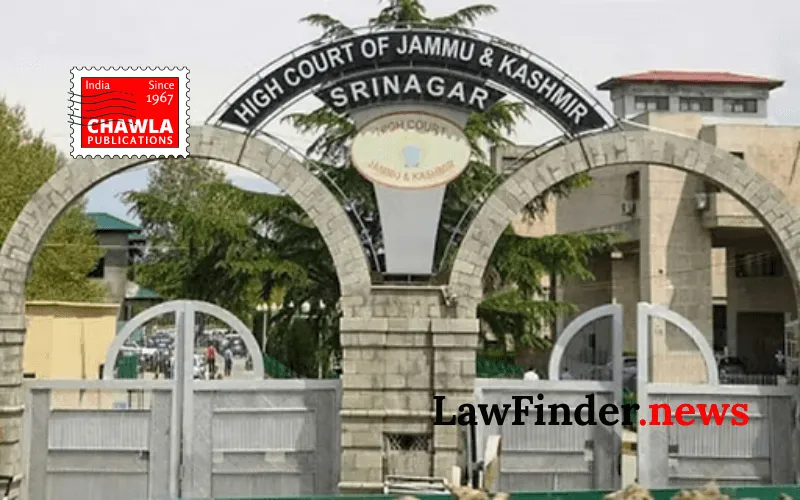
A Division Bench comprising Chief Justice Dr. Pushpendra Singh Bhati and Justice Sanjeev Kumar delivered the oral order while hearing an appeal filed by the Union Territory of Jammu and Kashmir against a writ court decision that had quashed the disengagement of an SPO and directed his reinstatement.
The case arose from the disengagement of Mushtaq Ahmad Shah, who had been engaged as an SPO in Kupwara in 2000. According to the police authorities, Shah allegedly prepared and signed a false and fabricated verification report in April 2021 in respect of a person said to be involved in multiple criminal cases. The department claimed that this conduct amounted to gross negligence and misconduct. A departmental enquiry was initiated, and based on the findings, the respondent was disengaged.
The writ court had set aside the disengagement order and directed reinstatement, while granting liberty to the police department to reconsider the matter after issuing a show-cause notice. Challenging that decision, the appellants argued that SPOs are temporary, honorarium-based appointees who do not occupy civil posts and therefore cannot claim the same procedural safeguards as regular police officers.
The High Court accepted the broader legal position that SPOs are not regular police officers and that Sections 18, 19 and 20 of the Police Act, 1983 create a temporary, need-based arrangement to meet local law and order exigencies. The Court noted that the powers and protections under Section 19 are operational in nature, intended to help SPOs perform their duties in risky situations, and cannot be equated with service protections applicable to permanent public servants.
At the same time, the Bench emphasized that where disengagement is founded on misconduct, especially where the order carries a stigma, the doctrine of audi alteram partem must be followed. The Court said that while a full-fledged departmental enquiry like that for a regular police officer is not required, the affected SPO must still be given notice and a reasonable opportunity to explain before final action is taken.
Referring to earlier decisions including State of J&K v. Mohammad Iqbal Mallah, Gh. Haider v. State of J&K, UT of J&K v. Shahen Shah, and recent Supreme Court rulings on stigmatic termination, the Court held that the impugned disengagement order could not stand in its present form. It quashed the order dated 24.04.2021 but allowed the authorities to revisit the matter afresh after issuing a show-cause notice and providing adequate hearing to the respondent.
The Court also clarified that if an SPO’s engagement ends merely because the exigency for which he was appointed has ceased, then principles of natural justice may not be attracted. But where the action is based on alleged misconduct, at least a notice and opportunity of hearing are mandatory.
The appeal was disposed of with a direction that the authorities should take a fresh decision expeditiously, preferably within 30 days.
Bottom Line :
Special Police Officers engaged under Sections 18 to 20 of the Police Act, 1983 do not hold a civil post and are not entitled to protections akin to Article 311 or full-fledged departmental enquiry as applicable to regular police personnel; however, where disengagement is founded on misconduct and is stigmatic, minimum compliance with principles of natural justice by issuance of show cause notice and opportunity of hearing is mandatory.
Statutory provision(s): Sections 18, 19 and 20 of the Police Act, 1983, Article 311 of the Constitution of India