Court Rules No Cause of Action Against Private Defendants; Their Deletion from Suit Array Valid Under Order I Rule 10(2) CPC
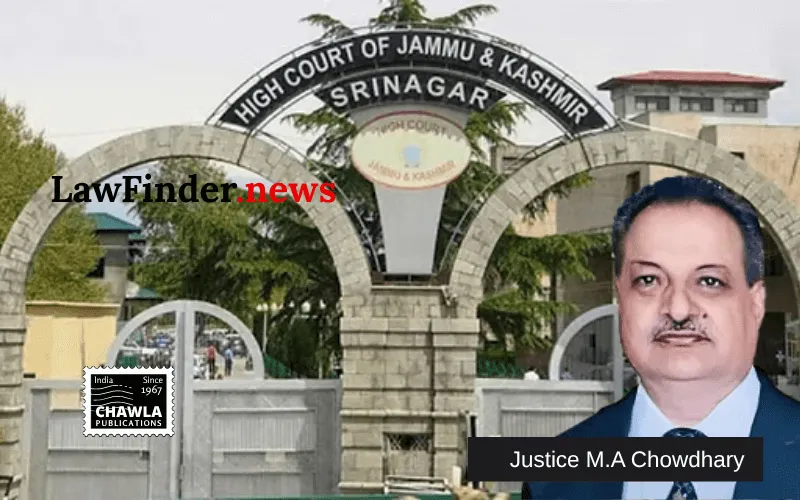
In a significant judgment delivered on September 26, 2026, the Jammu & Kashmir and Ladakh High Court, Srinagar Bench, presided over by Mr. M.A. Chowdhary, J., dismissed a petition filed by Mohammad Sultan Bhat challenging the deletion of certain private defendants from a civil suit concerning property disputes. The Court upheld the Trial Court's exercise of power under Order I Rule 10(2) of the Civil Procedure Code (CPC) to strike out improperly joined defendants from the suit.
The dispute involved the petitioner's claim against official respondents and private parties relating to ownership and possession of inherited property. The petitioner had filed a suit for declaration and permanent injunction against seven defendants, including private parties (Respondents No. 5 to 7). The private defendants filed applications under Order VII Rule 11 CPC seeking rejection of the plaint on grounds of lack of cause of action against them and improper joinder.
Although the Trial Court rejected the applications for rejection of the plaint, it suo motu invoked its power under Order I Rule 10(2) CPC to remove the private defendants from the array of parties. The Trial Court found that the plaint disclosed no cause of action against these private defendants, no relief was sought against them, and the dispute could be effectively adjudicated in their absence.
The petitioner contended that these private defendants acted through official respondents to affect his interests unlawfully, hence they were necessary parties. However, the High Court after examining the pleadings held that neither actionable pleadings nor any substantive relief was claimed against private defendants in the plaint. It emphasized that a necessary party is one without whom no effective order can be passed, and a proper party is one whose presence may be necessary for complete adjudication even if no specific relief is claimed. Since the dispute with revenue authorities could be decided without the private defendants, their joinder was improper.
Relying on precedents, including Maqsud Ahmad v. Mathra Dutt & Co., the Court reiterated that the object of Order I Rule 10(2) CPC is to ensure effectual and complete adjudication and to strike out parties improperly joined at any stage, even suo motu. The Court found no perversity or illegality in the Trial Court's order and held that the High Court would not interfere under supervisory jurisdiction.
Consequently, the High Court dismissed the petition, confirming the deletion of the private defendants from the suit. The judgment clarifies the scope of Order I Rule 10(2) CPC in civil litigation to prevent unnecessary multiplicity of parties and proceedings where no cause of action or relief is involved.
This ruling is a crucial precedent for civil procedure in Jammu & Kashmir and Ladakh, emphasizing the Court's authority to streamline parties for the effective administration of justice.
Bottom Line:
Order I Rule 10(2) CPC - Court can strike out improperly joined defendants at any stage - Where neither cause of action is disclosed against private defendants nor any relief is claimed against them, and controversy can be effectively adjudicated in their absence, their deletion from array of parties is proper.
Statutory provision(s):
Civil Procedure Code, 1908 - Order I Rule 10(2), Order VII Rule 11; Constitution of India, 1950 - Article 227