Court invokes inherent powers under Section 561A CrPC to address trial lapses after police charge-sheet case leads to acquittal
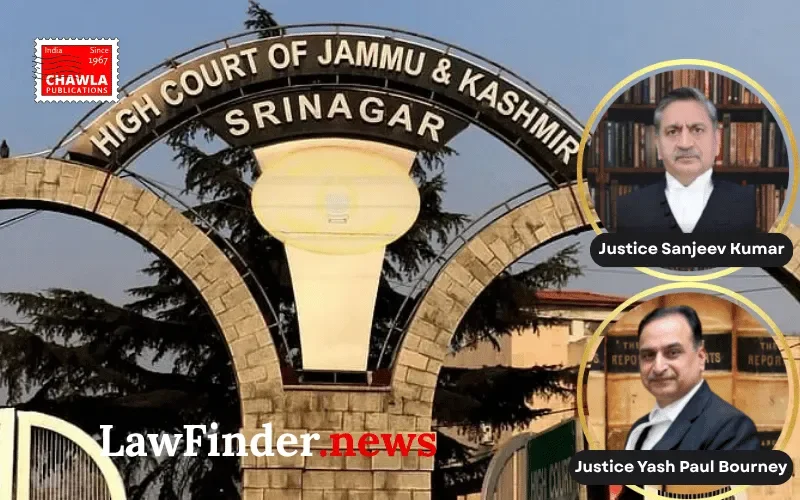
In a significant judgment delivered on November 6, 2026, the Jammu & Kashmir and Ladakh High Court (Division Bench comprising Justices Sanjeev Kumar and Yash Paul Bourney) ruled that victims do not have the statutory right to file an appeal under Section 417(2) of the Code of Criminal Procedure (CrPC) against an acquittal in cases initiated by a police charge-sheet. The case involved Dalbeer Singh, one of the injured victims, who sought special leave to appeal the acquittal order passed by the 1st Additional Sessions Judge, Jammu.
The court referred extensively to the Supreme Court precedent in Mahabir & Others v. State of Haryana (2025 INSC 120), which clarified that the right to appeal is strictly statutory and limited to those expressly granted by law. Section 417(2) CrPC allows a complainant to appeal only when the case is instituted upon a private complaint, not when initiated by a police charge-sheet. Since the present case originated from a police charge-sheet, Dalbeer Singh, though a victim, was not legally entitled to appeal the acquittal.
The facts of the case reveal a violent assault on September 17, 2005, where the victim Sohan Singh was attacked with sharp weapons. The FIR was registered under multiple sections of the Ranbir Penal Code (RPC), including attempted murder (Section 307 RPC), voluntarily causing grievous hurt (Section 326 RPC), and unlawful assembly (Sections 147, 148, 149 RPC), along with violations under the Indian Arms Act. Despite the gravity of the charges, the prosecution managed to examine only three witnesses over 7.5 years, including the victim Sohan Singh whose cross-examination remained incomplete because the other victim, Dalbeer Singh, was never produced for examination.
Highlighting the procedural failure, the High Court expressed concern over the lethargy displayed by the prosecution and investigating agency, as well as the trial court's passive role, which collectively resulted in a miscarriage of justice. The court emphasized that the failure to examine material witnesses negated the very purpose of the trial.
To remedy this failure and ensure justice, the High Court invoked its inherent powers under Section 561A CrPC, which allows the court to act in cases of failure of justice due to procedural lapses. The Court ordered the trial to be reopened and remanded back for retrial, directing the trial court to conclude the proceedings expeditiously, preferably within six months.
This judgment underscores the distinction between substantive rights and procedural remedies in criminal jurisprudence. While victims' rights and victimology have gained emphasis in recent years, this ruling clarifies that such rights must be derived from explicit statutory provisions. It also illustrates the High Court's proactive role in correcting procedural lapses to uphold the integrity of the criminal justice system.
Bottom Line:
Victim of an offense has no right to file an appeal under Section 417(2) of the Ranbir Penal Code if the case is not instituted upon a private complaint but upon a charge-sheet filed by the police. However, inherent jurisdiction under Section 561A of the CrPC can be invoked to address a failure of justice caused by procedural lapses during the trial.
Statutory provision(s):
Section 417(2) CrPC, Section 561A CrPC, Sections 307, 326, 147, 148, 149, 34 Ranbir Penal Code, Sections 4 and 25 Indian Arms Act
Dalbeer Singh v. Raghubir Singh, (Jammu & Kashmir and Ladakh)(DB) : Law Finder Doc Id # 3015704