Court Rules Magistrate Became Functus Officio After Recording Compromise in Negotiable Instruments Act Matter
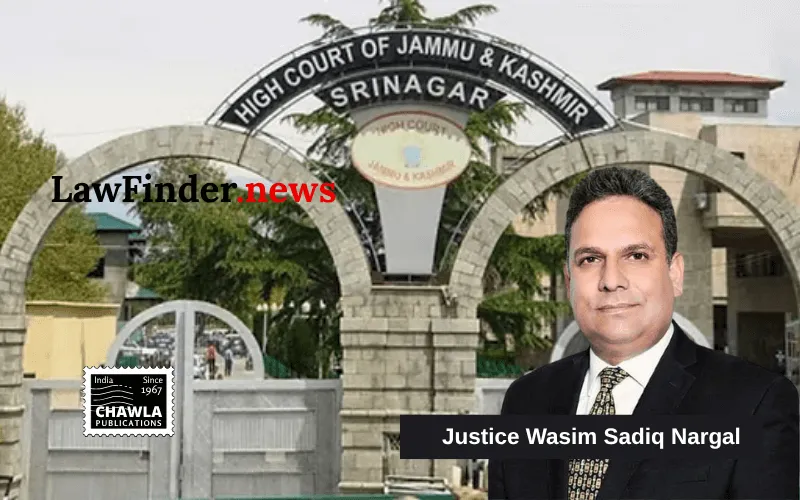
In a significant judgment, the High Court of Jammu & Kashmir and Ladakh has quashed the execution proceedings initiated by the Chief Judicial Magistrate, Budgam, in a case involving a cheque dishonour under Section 138 of the Negotiable Instruments Act, 1881. The judgment, delivered by Justice Wasim Sadiq Nargal, emphasized the principle of functus officio, which limits a court's jurisdiction once it has passed a final order.
The case centered around a complaint by Ghulam Qadir Sheikh alleging cheque dishonour by Gulla Ganaie, who had agreed to pay Rs. 6.60 lakhs under a compromise reached between the parties. The compromise also included provisions for Sheikh to transfer a patch of land to Ganaie. However, execution proceedings were initiated when Sheikh claimed a breach of the compromise terms. The Chief Judicial Magistrate had ordered the attachment of Ganaie's property to enforce the compromise.
Justice Nargal ruled that after recording the compromise and acquitting the accused, the Magistrate had exhausted his jurisdiction and could not entertain execution proceedings in the absence of an executable judicial direction. The judgment clarified that coercive recovery methods under Sections 421 and 431 of the Criminal Procedure Code are applicable only if the settlement terms are explicitly incorporated into the judicial order.
The court noted the importance of incorporating settlement terms into judicial orders to ensure their enforceability. In this case, the order from the Chief Judicial Magistrate merely recorded the compromise and dismissed the complaint, without stipulating the consequences of default or declaring the agreed amount recoverable under statutory provisions.
The High Court's decision underscores the limitations of a criminal court's jurisdiction once a matter is settled and dismissed, reiterating that any breach of compromise gives rise to a fresh cause of action, which must be pursued through appropriate legal remedies outside the concluded criminal proceedings.
Justice Nargal also highlighted that while the compromise remains valid, the enforcement through execution proceedings was beyond the Magistrate's jurisdiction post-acquittal. The decision allows Sheikh to seek other remedies in civil courts, reinforcing the distinction between criminal and civil jurisdiction in matters of settlement enforcement.
Bottom line:-
A criminal court, after recording a compromise and acquitting the accused in proceedings under Section 138 of the Negotiable Instruments Act, becomes functus officio and cannot entertain execution proceedings in the absence of an executable judicial direction.
Statutory provision(s):
Negotiable Instruments Act, 1881 Section 138; Criminal Procedure Code, 1973 Sections 421, 431; Constitution of India, 1950 Article 227.