Court rules that dismissal orders cannot have retrospective effect without statutory support, affirms prospective enforcement from the date of order.
In a significant judgment, the High Court of Jammu & Kashmir and Ladakh has upheld the dismissal of a police officer, Abdul Sattar Lone, by the State authorities while clarifying the legal position on the retrospective effect of dismissal orders. The court's decision came in the backdrop of an appeal filed by the State of Jammu & Kashmir against an earlier order which had allowed Mr. Lone to resume his duties.
The case revolved around Mr. Lone, who was arrested for alleged embezzlement while serving as a Head Constable/Cashier. Following his arrest, he was suspended and subsequently released on bail. However, Mr. Lone failed to report back to duty, which led to departmental proceedings against him for unauthorized absence. The disciplinary authority eventually dismissed him from service with effect from a date prior to the actual dismissal order, a point contested by Mr. Lone.
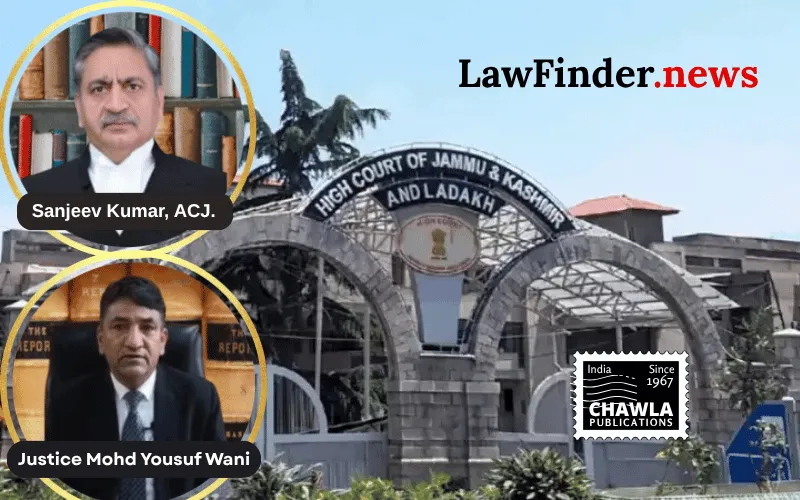
The High Court bench, comprising Acting Chief Justice Sanjeev Kumar and Justice Mohd. Yousuf Wani, ruled that any dismissal order must take effect from the date it is issued unless there is explicit statutory authorization for retrospective application. The judgment emphasized the distinction between the date of the misconduct and the effective date of dismissal, underscoring that without such statutory backing, dismissal orders should only be enforced prospectively from the date they are issued.
Moreover, the court addressed concerns regarding the breach of principles of natural justice. It noted that Mr. Lone had been given ample opportunity to participate in the inquiry process but had chosen to remain absent, thus waiving his right to contest the proceedings. The court found no procedural lapses in the inquiry conducted under the J&K Police Rules, 1960, dismissing Mr. Lone's claims of procedural violations.
The bench referred to the Supreme Court's precedent in "R. Jeevaratnam v. The State of Madras," affirming that an order of dismissal with retrospective effect is, in essence, valid from the date of the order itself, making the retrospective aspect severable and invalid.
Concluding the judgment, the court set aside the earlier decision by the Writ Court, thereby validating the dismissal order from the date it was passed, May 11, 2007. It allowed the authorities to treat the period of Mr. Lone's absence as unauthorized and handle it according to the prevailing rules.
This ruling sets a significant precedent for handling dismissal cases and clarifies the boundaries of retrospective application in employment law within the jurisdiction of Jammu & Kashmir and Ladakh.
Bottom Line :
Employment Law - Dismissal of an employee cannot be given retrospective effect unless specifically authorized by statute or applicable service rules. Retrospective dismissal orders can be sustained as prospective from the date of the order itself.
Statutory provision(s):
- Rule 359 of J&K Police Rules
- Article 311 of the Constitution of India
- Sections 409, 420, 467, 468, 471 RPC
State of J&K v. Abdul Sattar Lone, (Jammu & Kashmir and Ladakh)(DB) : Law Finder Doc id # 2960421