Court rejects plea for removal of Engineer-in-Chief and transfer of investigation to central agencies; emphasizes right to speedy justice under Article 21 and mandates timelines for conclusion of inquiries
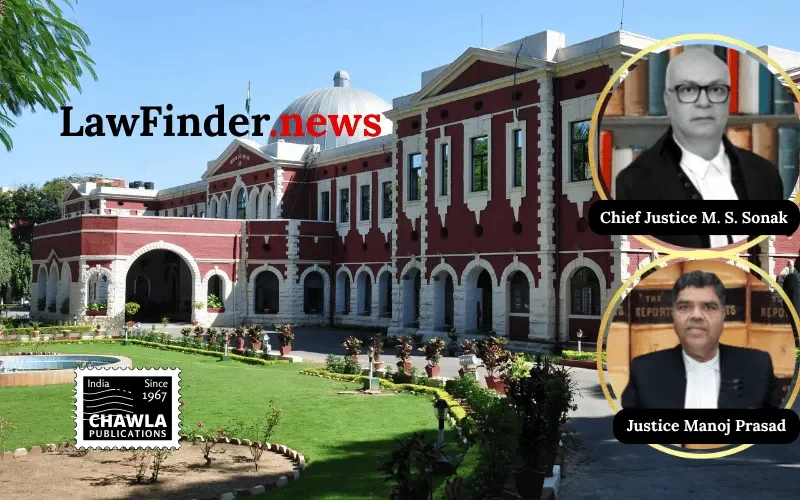
In a significant judgment dated October 14, 2026, the Jharkhand High Court (Division Bench comprising Chief Justice M. S. Sonak and Justice Manoj Prasad) dismissed a Public Interest Litigation (PIL) filed by Pankaj Kumar Yadav seeking a roving inquiry and transfer of investigations into multiple bridge collapses across Jharkhand, alongside allegations of corruption involving the then Chief Engineer and In-Charge Engineer-in-Chief of the Rural Development Department.
The petitioner alleged that several bridges in districts including Dhanbad, Khunti, Palamau, and Gumla collapsed due to structural failures and financial irregularities during the tenure of respondent No. 5, Birendra Ram, who was serving as Chief Engineer and later as Engineer-in-Chief. The petition sought directions for fresh investigations, initiation of action against senior officers, blacklisting of contractors, and removal of Birendra Ram from his official post, citing unaccounted cash seizures amounting to Rs. 2.45 crores linked to his close relatives.
However, the Court noted that the State had already registered First Information Reports (FIRs) where criminal negligence was indicated, initiated departmental proceedings against responsible officials, blacklisted contractors, and commissioned independent technical inquiries from reputable institutions like Birla Institute of Technology (B.I.T.) Mesra. The Court found no evidence that these prior inquiries were superficial or tainted to warrant a fresh roving investigation merely based on audit observations and general allegations.
Regarding the allegations of corruption and unaccounted cash, the Court observed that the Enforcement Directorate (ED) had arrested respondent No. 5 and filed a prosecution complaint under the Prevention of Money Laundering Act, 2002 (PMLA), with trial proceedings underway before the Special Court. Therefore, any prayers seeking fresh ED investigations or status reports were considered infructuous.
The Court also rejected the petitioner's request to restrain the Engineer-in-Chief from functioning during ongoing investigations, holding that decisions related to postings and suspension of civil servants fall within the State's executive domain under statutory service rules. In the absence of any statutory infraction or rule violation, judicial interference in administrative postings was unwarranted.
Addressing the prayer for transferring investigations to a central agency such as the CBI or ED, the Court reiterated established Supreme Court precedents that such powers must be exercised sparingly and only in exceptional cases of demonstrable bias, mala fide investigation, or matters of wider public importance. No such exceptional circumstances were found here, as the State's investigatory and disciplinary mechanisms were functioning without shown malice or illegality.
While declining substantive reliefs for fresh or transferred investigations, the Court expressed serious concern over the protracted delays in completing investigations related to bridge collapses. FIRs registered between 2009 and 2015 remained pending without conclusion. Emphasizing the constitutional right to speedy investigation as integral to the fundamental right to life and liberty under Article 21 of the Constitution, the Court issued binding directions to the Superintendents of Police of Dhanbad, Palamau, and Gumla districts to complete investigations and submit final reports under Section 173 of the Criminal Procedure Code within three months.
Similarly, the Secretary of the Rural Development Department was directed to ensure that pending departmental proceedings against erring officials reach logical conclusions within the same timeframe. Compliance affidavits were mandated, with personal liability imposed on the officials for any delay, including reasons for non-compliance.
The Court further instructed the Special Court handling the PMLA trial of respondent No. 5 and others to expedite proceedings.
The writ petition was disposed of without costs, and certified copies of the judgment were ordered to be communicated to relevant authorities for strict compliance.
This judgment underscores the judiciary's cautious approach in ordering fresh investigations or agency transfers, emphasizing respect for prior departmental and criminal inquiries, while simultaneously upholding the constitutional mandate for timely administration of justice.
Bottom Line:
Public interest litigation seeking roving inquiry/transfer of investigation into bridge collapses and alleged corruption against Engineer-in-Chief - Relief for fresh investigation/ED inquiry declined where FIRs, departmental proceedings, blacklisting of contractors and PMLA prosecution had already been initiated - Court cannot direct removal/posting of civil servant in absence of statutory infraction - However, inordinate delay in criminal investigation violates Article 21 right to speedy justice; directions issued for completion of pending investigations and departmental proceedings within fixed timeline.
Statutory provision(s): Constitution of India Articles 21, 226, 309; Prevention of Money Laundering Act, 2002; Criminal Procedure Code, 1973 Section 173
Pankaj Kumar Yadav v. State of Jharkhand, (Jharkhand)(DB) : Law Finder Doc Id # 2997532