Court holds that prolonged mental and physical cruelty, including husband's illicit relationship and separation since 2019, warrant dissolution of marriage under Hindu Marriage Act; wife granted liberty to seek alimony.
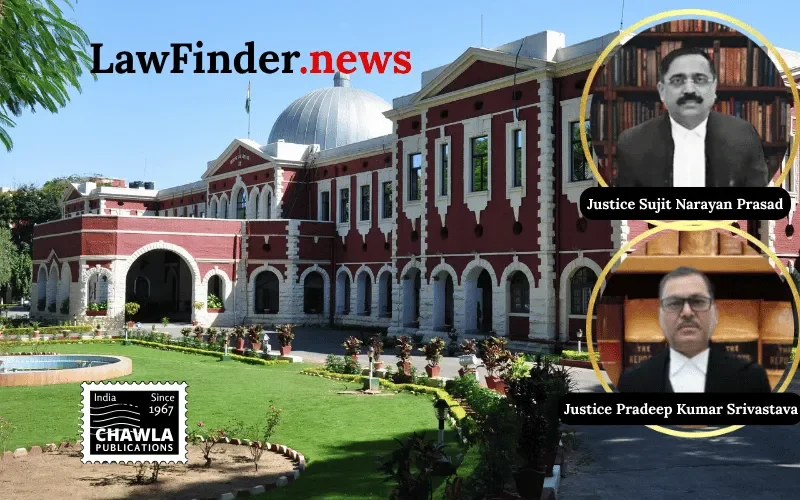
In a significant ruling dated September 23, 2026, the Jharkhand High Court (Division Bench of Justices Sujit Narayan Prasad and Pradeep Kumar Srivastava) allowed an appeal filed by Dr. Shimpy Kumari, setting aside the Family Court's dismissal of her divorce petition against her husband, Dr. Raj Kapoor Soni. The appellant-wife had sought divorce under Section 13(1)(i-a) of the Hindu Marriage Act, 1955, on grounds of cruelty, which the Family Court had dismissed for lack of sufficient proof.
The High Court meticulously examined the facts, evidence, and legal principles governing matrimonial cruelty and found the Family Court's judgment to be perverse, having failed to appreciate the evidence in its entirety and relying on fragmented evaluation. The Court emphasized that cruelty in matrimonial law must be judged on the preponderance of probabilities and encompasses both physical and mental cruelty.
Dr. Shimpy Kumari's testimony detailed repeated physical assaults by her husband, resulting in serious medical conditions such as slip-disc and traumatic osteoarthritis. She also alleged her husband's illicit extramarital relationship with a widow, Mousami Ghosh, which was confirmed by family intervention and a bond executed by the respondent to desist from such conduct. Despite assurances, the respondent's behavior persisted, with the added mental cruelty of demanding the petitioner accept the other woman as a "younger sister" in their marital life.
The wife's father, uncle, and brother corroborated her allegations, and the FIR filed at Charhi Police Station further substantiated claims of cruelty and dowry-related harassment. The respondent's challenge to the medical evidence on the ground that it was procured from a clinic owned by the petitioner's father was rejected by the Court, which held that the origin of medical documents does not ipso facto render them unreliable unless specific infirmities are demonstrated.
The Court also considered the fact that the parties had been living separately since September 2019, and the wife was categorically unwilling to resume conjugal life. The High Court observed that prolonged separation coupled with sustained cruelty indicated that the matrimonial bond was broken beyond repair, and continuation of the marriage would itself amount to mental cruelty.
Referring extensively to precedents from the Supreme Court, the High Court reiterated that cruelty is not to be narrowly defined but must be assessed contextually, considering the parties' social and economic conditions and the cumulative impact of conduct on the aggrieved spouse. The Court cited landmark judgments such as Dr. N.G. Dastane v. Mrs. S. Dastane, V. Bhagat v. D. Bhagat, Joydeep Majumdar v. Bharti Jaiswal Majumdar, and others, emphasizing that both mental and physical cruelty are valid grounds for divorce.
Consequently, the High Court dissolved the marriage by a decree of divorce under the Hindu Marriage Act, 1955. However, it granted liberty to the appellant-wife to approach the Family Court for permanent alimony under Section 25 of the Act through appropriate proceedings, ensuring financial support post-divorce.
This ruling underscores the judiciary's commitment to protecting the rights of spouses, especially women, from cruelty in matrimonial relationships, recognizing the evolving understanding of mental cruelty and the importance of evaluating evidence holistically rather than in isolation.
Bottom Line:
Hindu Marriage Act - Divorce on ground of cruelty - Family Court dismissed wife's petition holding cruelty not proved - High Court held that in matrimonial cases cruelty is to be assessed on preponderance of probabilities - Wife's testimony regarding physical assault, illicit relationship of husband, mental agony and long separation since 2019 stood sufficiently corroborated - Family Court appreciated evidence in piecemeal and its finding was perverse - Decree of divorce granted with liberty to wife to seek permanent alimony under section 25 of Hindu Marriage Act.
Statutory provision(s): Family Courts Act, 1984 Section 19(1), Hindu Marriage Act, 1955 Sections 13(1)(i-a), 25
Dr. Shimpy Kumari v. Dr. Raj Kapoor Soni, (Jharkhand)(DB) : Law Finder Doc Id # 2984942