Court holds prolonged consensual relationship over 7 years cannot be treated as offence under Section 69 of Bharatiya Nyaya Sanhita, 2023; also quashes charges under SC/ST Act due to lack of evidence of non-consent.
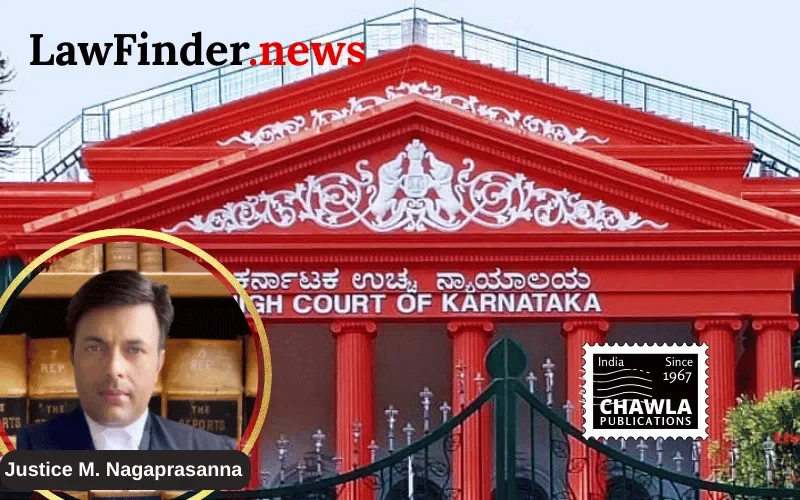
Mangalore, October 16, 2026 - The Karnataka High Court, in a significant judgment, has quashed criminal proceedings against Dr. Ramdas Patil, a medical practitioner, who was accused by a woman of Scheduled Caste origin of having sexual intercourse on the false promise of marriage and caste-based discrimination. The Court ruled that a long-standing consensual sexual relationship cannot be converted into a criminal offence merely because the marriage did not materialize.
The case arose from a complaint filed in March 2025, wherein the complainant alleged that she and Dr. Ramdas had been in a relationship since 2017, with physical relations commencing in 2019. The complainant contended that these relations were on the promise of marriage which was later breached due to caste considerations, as Dr. Ramdas belonged to the Maratha community, while she belonged to a Scheduled Caste. The complaint also alleged mental trauma and physical assault.
Dr. Ramdas challenged the proceedings, contending that the relationship was consensual, lasting nearly seven years with intermittent breaks, and there was never an intention to deceive by promising marriage falsely from the outset. The case was registered under Section 69 (sexual intercourse by employing deceitful means) and Section 115(2) of the Bharatiya Nyaya Sanhita, 2023 (BNS), along with Sections 3(1)(w)(i)(ii) and 3(2)(va) of the Scheduled Castes and Scheduled Tribes (Prevention of Atrocities) Act, 1989.
Justice M. Nagaprasanna, presiding over the case, extensively analyzed the facts and relevant Supreme Court precedents to distinguish between consensual relationships and criminal conduct. The Court observed that Section 69 of the BNS punishes sexual intercourse obtained by deceitful means or a false promise to marry made without any intention to fulfill it from the beginning. However, in this case, the relationship spanned over seven years, which is inconsistent with the notion of deception at inception.
The Court referred to landmark Supreme Court rulings such as Dr. Dhruvaram Murlidhar Sonar v. State of Maharashtra (2019), Naim Ahamed v. State (NCT of Delhi) (2023), and Samadhan v. State of Maharashtra (2025), which establish that mere breach of promise or failure to marry does not vitiate consent given for sexual intercourse unless the promise was dishonest from the outset. The Court emphasized that a man cannot be held criminally liable for a prolonged consensual relationship simply because the marriage did not occur.
Additionally, the Court examined the allegations under the SC/ST Act and found no material to show absence of consent or intentional sexual touching without consent. The complainant's own admissions of a consensual relationship over several years negated the ingredients necessary under the SC/ST Act provisions invoked.
Regarding the charge under Section 115(2) of the BNS for voluntarily causing hurt, the Court noted the absence of any medical evidence or injuries, and held that mental trauma or allegations of driving the complainant to suicide did not satisfy the statutory requirements for causing hurt.
The Court further observed that continuing the prosecution would amount to an abuse of the process of law and would result in a miscarriage of justice. Exercising its inherent powers under Section 482 of the Criminal Procedure Code and Section 528 of the BNS, the Court quashed the proceedings in Special Case No. 88 of 2025 pending before the II Additional District and Sessions Judge, Mangalore.
This decision sends a clear message against the misuse of criminal law provisions in personal disputes that arise from failed consensual relationships, reaffirming the principle that criminal proceedings should not be initiated merely because a relationship breaks down or marriage does not take place.
Bottom Line:
Bharatiya Nyaya Sanhita, 2023 Section 69 - Long-standing consensual sexual relationship between major parties cannot, merely because marriage did not fructify, be converted into offence of sexual intercourse by deceitful means or false promise to marry - To attract Section 69, promise to marry must be false from inception and made without intention of being fulfilled - Mere refusal to marry later, including on caste grounds alleged against family, would not by itself constitute offence - Proceedings under Section 115(2) BNS and Sections 3(1)(w)(i)(ii), 3(2)(va) of SC/ST Act also quashed where complaint itself disclosed consensual relationship and no material of hurt or sexual act without consent.
Statutory provision(s): Bharatiya Nyaya Sanhita, 2023 Section 69, Section 115(2); Scheduled Castes and Scheduled Tribes (Prevention of Atrocities) Act, 1989 Sections 3(1)(w)(i)(ii), 3(2)(va); Criminal Procedure Code, 1973 Section 482; Bharatiya Nagarik Suraksha Sanhita, 2023 Section 528
Dr. Ramdas @ Ramdas Patil v. State of Karnataka, (Karnataka) : Law Finder Doc Id # 3000490