Court says criticism of reservation policy and remarks against Chief Minister, without intent to promote enmity or incite violence, do not attract BNS hate-speech provision.
The Karnataka High Court has quashed a criminal case registered against two petitioners who had opposed the proposed grant of Scheduled Tribe status and reservation benefits to the Kuruba community, holding that mere protest or criticism of government policy does not amount to an offence under Section 353(2) of the Bharatiya Nyaya Sanhita, 2023.
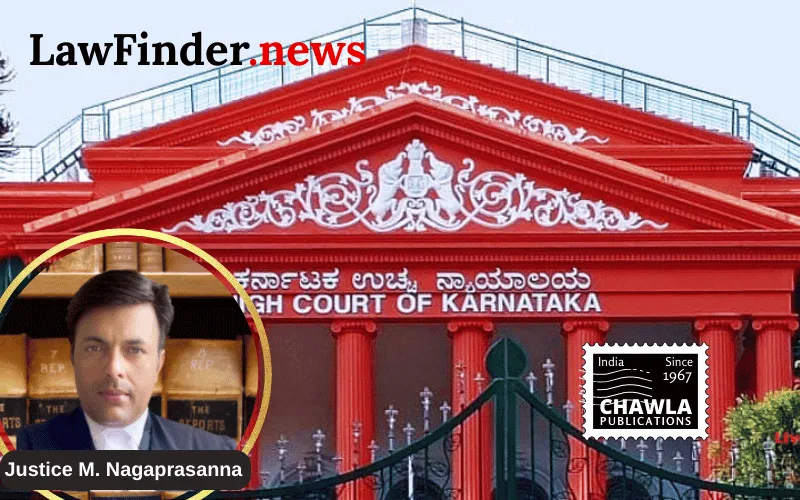
Justice M. Nagaprasanna allowed the criminal petition filed by T. Narayanaswamy alias Chalavadi Narayanaswamy and another, and set aside Crime No. 97/2025 pending before the XLII Additional Chief Judicial Magistrate, Bengaluru City.
According to the prosecution, the petitioners had made statements and posted content on social media opposing reservation to the Kuruba community and had also made remarks against the Chief Minister of Karnataka. It was alleged that their statements humiliated the entire Kuruba community, leading to registration of the FIR under Section 353(2) BNS.
However, the petitioners contended that their statements were part of a lawful protest against a reservation policy and did not contain any ingredient of the alleged offence. They argued that there was no intention to promote enmity, hatred or ill will between communities, nor any incitement to violence.
The State opposed the petition, arguing that the matter was still at the investigation stage and that the allegations, on their face, disclosed a cognizable offence.
The High Court rejected this submission and held that the complaint, even if taken at face value, did not disclose the essential ingredients of Section 353(2) BNS. The Court relied on Supreme Court precedents, including Imran Pratapgadhi v. State of Gujarat, Javed Ahmad Hajam v. State of Maharashtra, and Patricia Mukhim v. State of Meghalaya, to reiterate that mens rea is a necessary ingredient of hate-speech-related offences.
The Court observed that the law requires an intention to promote disharmony, enmity, hatred or ill will between different groups or communities, and that mere criticism of a government decision or protest against reservation policy is protected speech under Article 19(1)(a) of the Constitution. It further held that the basic requirement of incitement to violence or disturbance of public tranquillity was absent in the present case.
Justice Nagaprasanna also clarified that there is no absolute bar on quashing an FIR merely because the investigation is at a nascent stage. If the complaint does not disclose any offence on its face, the High Court can intervene to prevent abuse of process.
Concluding that the petitioners had only protested against the reservation proposal and had not crossed the line into criminal conduct, the Court quashed the FIR and allowed the petition.
Bottom Line :
Mere protest against grant of Scheduled Tribe reservation to a community or criticism of the State/Government, without mens rea, without promotion of enmity between two groups, and without any incitement to violence or disturbance of public tranquillity, does not attract Section 353(2) of the Bharatiya Nyaya Sanhita, 2023; FIR can be quashed even at the stage of investigation where no offence is made out on the face of the complaint.
Statutory provision(s): Section 353(2) of the Bharatiya Nyaya Sanhita, 2023, Article 19(1)(a) of the Constitution of India, 1950, Section 528 of the Bharatiya Nagarik Suraksha Sanhita, 2023