Court directs opportunity to rectify affidavit defects before proceeding with investigation into alleged irregularities in allotment of civic amenity sites by Siddhartha Vihar Trust.
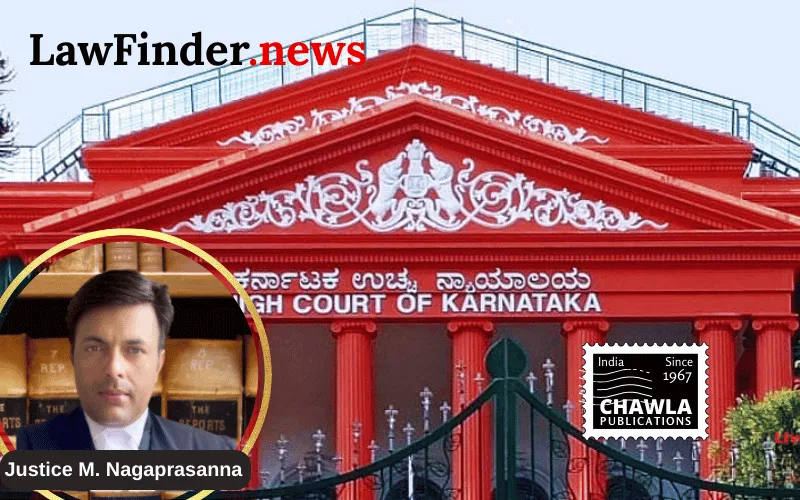
In a significant judgment delivered on August 18, 2026, the Karnataka High Court addressed the procedural intricacies concerning complaints under the Bharatiya Nagarik Suraksha Sanhita, 2023 (BNSS), specifically focusing on allegations of corruption involving public servants. The judgment, delivered by Justice M. Nagaprasanna, arose from a petition filed by Sri Vijayaraghava Marathe, President of Lanchamukta Karnataka Vedike, who challenged the trial court's order that declined to initiate an investigation under Section 175(3) of the BNSS, opting instead for a court-conducted enquiry under Section 223 of the BNSS.
The background of the case involves allegations that the Siddhartha Vihar Trust, a charitable organization ostensibly open to all communities, misrepresented itself as exclusively serving Scheduled Castes and Scheduled Tribes to secure allotment of valuable civic amenity (CA) sites from the Bangalore Development Authority (BDA) under reserved quotas. The complaint alleged that the Trust, aided by trustees wielding influence, including public servants and elected representatives, obtained illegal concessions and alternative allotments without adhering to mandatory rules, resulting in undue gain and misuse of public office.
Despite the gravity of the allegations which called for a thorough investigation by the Karnataka Lokayukta Police, the trial court directed an enquiry under Section 223 due to a defective affidavit submitted with the complaint, which failed to meet the verification requirements under Section 333 of the BNSS.
The High Court, after a detailed examination of the procedural safeguards and relevant Supreme Court precedents, held that non-compliance with affidavit requirements under Section 333 is a curable defect and does not justify denial of investigation under Section 175(3). It emphasized that the procedural safeguards embedded in Section 175(3) and (4) are designed to prevent frivolous complaints, but should not obstruct legitimate investigations, especially in cases involving public servants and complex corruption allegations.
Justice Nagaprasanna highlighted that allegations of corruption often require the collection of official records and evidence beyond the complainant's immediate knowledge, making investigation indispensable. The Court underscored the distinct roles of Sections 175(3) and 223: while Section 223 pertains to court enquiry based on available material, Section 175(3) empowers the court to order police investigation where the facts demand deeper probing.
Critically, the High Court set aside the trial court's order that diverted the complaint to an enquiry under Section 223, directing the lower court to allow the complainant to rectify the defective affidavit and then proceed with the complaint in accordance with Section 175 of the BNSS. The Court stressed that procedural requirements must facilitate justice rather than defeat it.
The judgment draws heavily on Supreme Court rulings including the landmark S.N. Vijayalakshmi v. State of Karnataka (2025 INSC 917), which clarified that non-filing or defective affidavits in complaints under analogous provisions are curable defects and that courts must afford complainants an opportunity to cure such defects before passing substantive orders.
By remitting the case for proper application of Section 175 procedures, the Karnataka High Court has reinforced the principle that procedural technicalities should not impede the investigation of serious corruption allegations involving public officials. This decision strengthens accountability mechanisms under the BNSS and ensures that complainants are not unduly penalized for curable procedural lapses.
Bottom Line:
Bharatiya Nagarik Suraksha Sanhita, 2023 (BNSS) - Defective affidavit in a complaint under Section 175(3) of BNSS is a curable defect - Court should provide an opportunity to the complainant to rectify such defect before deciding on investigation.
Statutory provision(s):
Bharatiya Nagarik Suraksha Sanhita, 2023 Sections 175(3), 175(4), 223, 333; Prevention of Corruption Act, 1988 Sections 13(1)(a), 13(1)(b); Bharatiya Nyaya Sanhita, 2023 Sections 403, 406, 409, 420, 426; Rules of Bangalore Development Authority (Allotment of Civic Amenity Sites) Rules, 1989.
Sri Vijayaraghava Marathe v. State of Karnataka, (Karnataka) : Law Finder Doc Id # 2974607