Appellate Court's order directing three months' civil imprisonment upheld; apology orders by Trial Court deemed beyond statutory scope under Order XXXIX Rule 2A of CPC
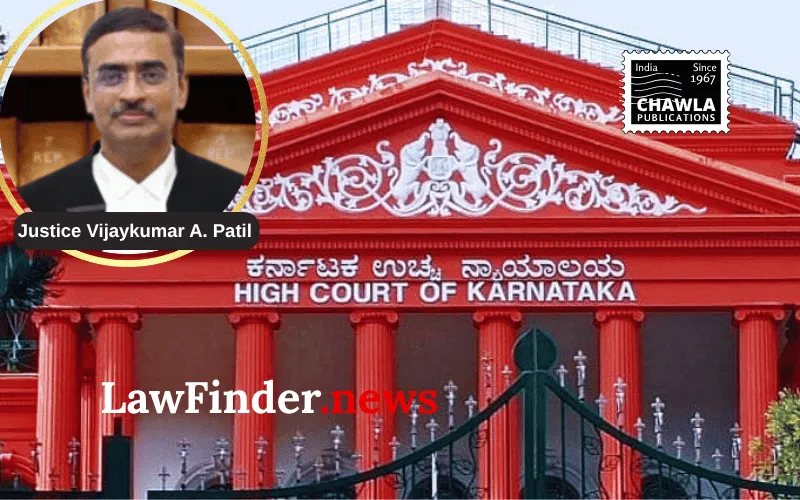
In a significant judgment dated August 25, 2026, the Karnataka High Court, presided over by Justice Vijaykumar A. Patil, clarified the scope of punishments that trial courts can impose under Order XXXIX Rule 2A of the Code of Civil Procedure, 1908 (CPC) for disobedience of temporary injunctions. The court held that trial courts are limited to imposing only two forms of penalties: attachment of property or detention in a civil prison. Any other form of punishment, including ordering an unconditional apology, is beyond the statutory ambit and therefore impermissible.
The case involved petitioners Sathish N. Vaidya and others who were found guilty by the trial court of violating a temporary prohibitory injunction by publishing defamatory material against the respondent, M.P. Noronha, in their newspaper `Karavali Ale'. The trial court, instead of imposing the penalties prescribed under the CPC, ordered the petitioners to tender an unconditional apology through their publication within 30 days, failing which they were to undergo 15 days of civil imprisonment. The petitioners complied with the apology order but the respondent challenged the leniency by appealing to the Additional District and Sessions Judge, who subsequently set aside the apology order and directed the petitioners to be detained in civil prison for three months.
The petitioners approached the High Court, contending that the appellate court's order was harsh and that they had already complied by tendering the apology. They also sought release of Rs. 2,00,000 deposited as compensation. The respondent maintained that the appellate court was correct in strictly enforcing the statutory penalties and that an apology order was not a recognized form of punishment under Order XXXIX Rule 2A.
Justice Patil meticulously analyzed the statutory provisions and relevant case law, including precedents from the Supreme Court and various High Courts, and reaffirmed the legal maxim "Nulla poena sine lege" (no punishment without law). The court emphasized that when the legislature prescribes specific penalties, courts cannot invent or impose alternative punishments.
Key points from the judgment include:
- The trial court's order directing an unconditional apology was ultra vires and beyond the scope of Order XXXIX Rule 2A, which only authorizes attachment of property or civil imprisonment for disobedience of injunctions.
- The appellate court rightly corrected this error by imposing civil imprisonment for three months, which is within the statutory framework.
- Tendering an apology is recognized under Section 12 of the Contempt of Courts Act, 1971, but not under the CPC provisions governing temporary injunctions.
- Compensation cannot substitute the punishment under Order XXXIX Rule 2A; monetary deposits do not absolve the contemnor from undergoing the prescribed punishment.
- The nature of proceedings under Order XXXIX Rule 2A is quasi-criminal, aiming to uphold the dignity of the court and deter willful disobedience of injunctions.
- The petitioners are permitted to withdraw the deposited compensation amount, but the writ petition challenging the appellate order is dismissed.
This ruling provides much-needed clarity on the extent of judicial powers in contempt-like proceedings relating to temporary injunctions and reiterates the principle that courts must act strictly within the legal framework prescribed by statutes.
Bottom Line:
The Trial Court cannot impose penalties other than those prescribed under Order XXXIX Rule 2A of the Code of Civil Procedure, 1908, which provides only two forms of punishment for disobedience of temporary injunction orders: attachment of property or imprisonment in civil prison.
Statutory provision(s): Code of Civil Procedure, 1908 - Order XXXIX Rule 2A; Contempt of Courts Act, 1971 - Section 12
Sathish N. Vaidya v. M.P. Noronha, (Karnataka) : Law Finder Doc Id # 2972987