Court Remands Matter to Trial Court for Fresh Consideration, Highlighting Need for Detailed Judicial Reasoning on Prima Facie Case, Balance of Convenience, and Irreparable Injury
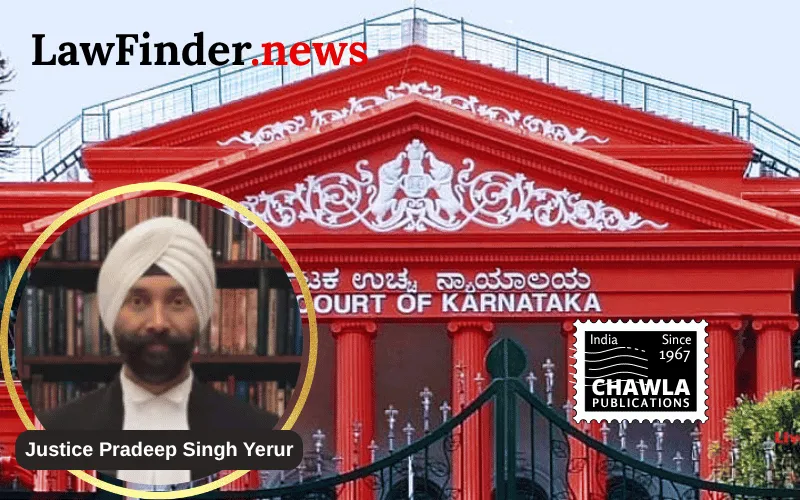
In a significant ruling on August 25, 2026, the Karnataka High Court, presided over by Mr. Pradeep Singh Yerur, J., quashed an ex parte temporary injunction granted by the trial court in a defamation suit filed by Cashfree Payments India Private Limited against Arti Singh and another. The High Court underscored the critical importance of adherence to procedural mandates under Order XXXIX Rule 3 of the Code of Civil Procedure (CPC) when granting temporary injunctions without notice.
The plaintiff, Cashfree Payments India Private Limited, had sought a mandatory injunction to remove a defamatory article published on the social media platform operated by the first defendant, alongside a permanent injunction against further defamatory content. The trial court had granted an ex parte temporary injunction without hearing the defendants, citing urgency and the risk that issuing notice would cause delay and defeat the suit's purpose.
The appellants, a journalist and a media company, challenged the order, contending that the trial court failed to record specific reasons for dispensing with notice as mandated by the proviso to Order XXXIX Rule 3 CPC. They argued that the order did not properly articulate the existence of a prima facie case, balance of convenience, or irreparable injury, rendering the injunction arbitrary and perverse.
The High Court thoroughly examined the legal framework governing temporary injunctions. It reiterated that while the power to grant injunctions is discretionary, such power must be exercised cautiously, especially in ex parte situations where the affected party is not heard. The court emphasized that the proviso to Order XXXIX Rule 3 CPC imposes a mandatory requirement on courts to record reasons justifying the grant of an injunction without notice, specifically demonstrating that the object of the injunction would be defeated by delay.
Citing authoritative Supreme Court judgments, including Shiv Kumar Chadha v. Municipal Corporation of Delhi (1993), Morgan Stanley Mutual Fund v. Kartick Das (1994), and Bloomberg Television Production Services India Private Limited v. Zee Entertainment Enterprises Limited (2025), the court highlighted that non-compliance with these procedural safeguards amounts to non-application of judicial mind and vitiates the order.
The High Court found that the impugned order merely stated that a prima facie case was made out and that issuing notice would cause delay but failed to elucidate these conclusions with judicial reasoning. It did not analyze the specific nature of the defamatory content, the urgency necessitating an ex parte injunction, or the comparative hardship to the parties. Importantly, the court noted the constitutional protections afforded to journalistic expression and the heightened threshold for restraining such content through injunctions.
Accordingly, the High Court allowed the appeal, set aside the ex parte temporary injunction order dated June 3, 2026, and remanded the matter to the trial court. The trial court was directed to reconsider the application for temporary injunction afresh, ensuring compliance with Order XXXIX Rule 3 CPC by providing detailed reasons on the prima facie case, balance of convenience, and irreparable injury, after giving both parties a fair opportunity to be heard. The fresh order was to be passed within 15 days of receiving the High Court’s order.
The court clarified that it had not expressed any opinion on the merits of the underlying suit or the injunction application, leaving all contentions open for trial court consideration.
This judgment reinforces the procedural rigor required in granting ex parte injunctions, particularly in defamation matters involving media defendants, balancing the protection of reputation with freedom of speech and expression.
Bottom Line:
Temporary injunction granted in an ex parte manner must comply with Order XXXIX Rule 3 of CPC by recording reasons for dispensing notice and outlining prima facie case, balance of convenience, and irreparable injury. Failure to do so amounts to non-application of judicial mind and renders the order perverse.
Statutory provision(s):
Order XXXIX Rules 1, 2, and 3 of the Code of Civil Procedure, 1908; Order XLIII Rule 1(r) of the Code of Civil Procedure, 1908; Section 104 of the Code of Civil Procedure, 1908
Arti Singh v. Cashfree Payments India Private Limited, (Karnataka) : Law Finder Doc Id # 2975938