Court Rules Smell of Alcohol in Post-Mortem Report Insufficient to Prove Influence at Time of Accident, Remands Case for Fresh Hearing
In a significant ruling delivered on September 8, 2026, the Karnataka High Court overturned the Motor Accident Claims Tribunal's dismissal of a compensation claim filed under the Employees Compensation Act, 1923. The case, Salma and Others v. United India Insurance Co. Ltd. and Another, concerned the death of a lorry driver, Sri Ajameer @ Ajam, who died in a road accident while in the employment of the respondent.
The deceased's legal representatives had filed a petition claiming compensation for loss of dependency following his fatal injuries sustained in an accident near Kenchahally on November 22, 2007. The Tribunal had dismissed the claim based on the presence of the smell of alcohol noted in the post-mortem report, concluding that the deceased was under the influence of alcohol at the time of the accident, thereby absolving the employer of liability under Section 3(1)(b)(i) of the Employees Compensation Act.
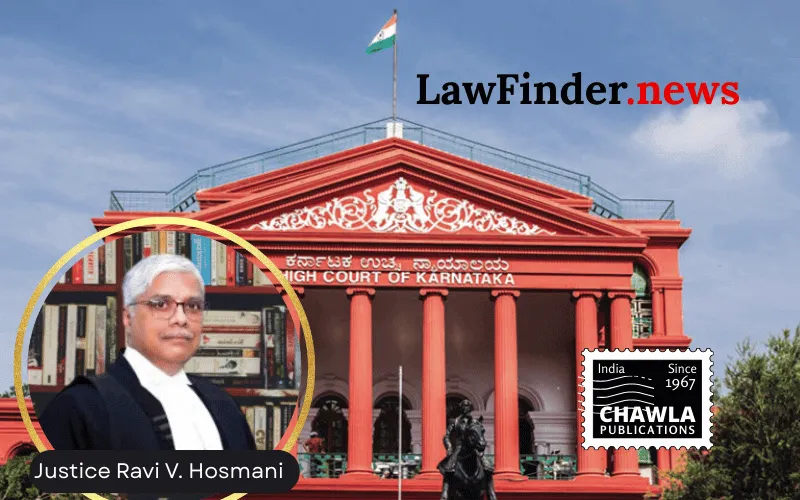
The High Court, presided over by Justice Ravi V. Hosmani, held that the Tribunal's reasoning was perverse and not supported by the evidence on record. It emphasized the crucial legal distinction between mere consumption of alcohol and being under its influence. Citing the Motor Vehicles Act, 1988, particularly Section 185, the Court noted that the presence of alcohol odor alone does not conclusively prove intoxication or impairment affecting the workman's ability to drive safely.
Further, the Court observed that the post-mortem finding of alcohol smell in the intestines could be attributed to fermentation of half-digested food, a possibility that was not ruled out during the examination of the post-mortem doctor by the insurer's witness. Importantly, there was no eyewitness or corroborative evidence presented to substantiate that the deceased was under the influence of alcohol at the time of the accident.
Given these factors, the Court found the Tribunal's dismissal of the compensation petition based solely on the smell of alcohol to be contrary to the material evidence and therefore set aside the order dated August 6, 2015. The matter was remitted back to the Tribunal for fresh disposal with liberty granted to both parties to present additional evidence.
This judgment reinforces the principle that allegations of intoxication in fatal workplace accidents require clear and cogent evidence beyond post-mortem alcohol odor and cautions against presumptive conclusions that can unjustly deny rightful compensation claims.
Bottom Line:
Employees Compensation Act, 1923 - Consumption of alcohol and being under the influence of alcohol are distinct aspects - Smell of alcohol in post-mortem report cannot conclusively establish that the deceased workman was under the influence of alcohol at the time of the accident - Tribunal's dismissal of compensation petition based on such inference held perverse.
Statutory provision(s): Employees Compensation Act, 1923 Section 3(1)(b)(i), Section 22; Motor Vehicles Act, 1988 Section 185
Salma v. United India Insurance Co. Ltd., (Karnataka) : Law Finder Doc Id # 2980677