Landmark ruling emphasizes transparency and accountability for entities receiving substantial government support.
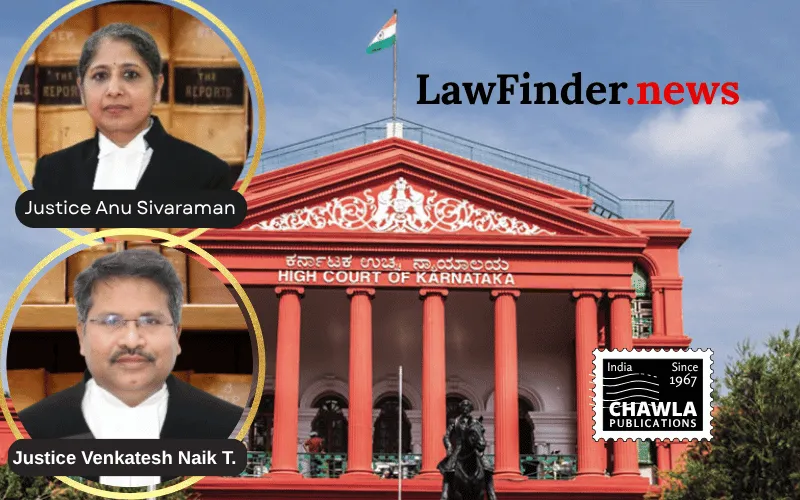
In a significant judgment, the Karnataka High Court has affirmed the classification of Century Club as a "Public Authority" under the Right to Information Act, 2005 (RTI Act), paving the way for increased transparency and accountability. The decision, delivered by a division bench comprising Justices Anu Sivaraman and Venkatesh Naik T, follows an appeal by Century Club challenging the dismissal of its writ petition by a single judge.
Century Club, a prestigious society located in Bengaluru's Cubbon Park, was granted 7.5 acres of land by the Maharaja of Mysuru free of cost in 1913. This historical grant was central to the court's decision, with the bench ruling that such allocation constitutes substantial indirect financing by the state, thereby qualifying the club as a "Public Authority" under Section 2(h) of the RTI Act.
The club's appeal was rooted in its assertion that it did not meet the criteria of a "Public Authority" as outlined in Section 2(h) of the RTI Act. The club contended that it operates independently of government funding, relying solely on member contributions. However, the court found that the grant of land itself represented significant government support, which the club continues to benefit from without paying rent or lease, thus impacting the state exchequer.
The court highlighted the importance of transparency and accountability, particularly for entities receiving substantial government benefits, whether directly or indirectly. The judgment referenced key Supreme Court decisions, including Thalappalam Service Cooperative Bank Limited v. State of Kerala and D.A.V. College Trust and Management Society v. Director of Public Instructions, reinforcing the principle that entities benefiting from government largesse must adhere to public oversight.
This ruling mandates Century Club to comply with RTI obligations, including maintaining records and appointing a Public Information Officer, ensuring accessibility to information and transparency in its operations. The decision is a reminder of the RTI Act's objective to promote openness and accountability, holding entities accountable to the public, regardless of their private status.
Reacting to the decision, respondent S. Umapathy expressed satisfaction, emphasizing the need for transparency in entities benefiting from government resources. The judgment underscores the RTI Act's role in enabling citizens to access information, thereby strengthening democratic principles and enhancing accountability.
Century Club's counsel, Sri Prashanth Murthy S.G., argued that the club's activities are funded by member contributions and do not rely on government support. However, the court emphasized that the land grant remains a pivotal factor in determining substantial government financing.
The ruling is expected to have wide-reaching implications for similar entities across India, potentially increasing the scope of entities classified as "Public Authorities" under the RTI Act. The court's decision reinforces the Act's aim to curb corruption and promote transparency, ensuring that entities receiving public resources are subject to public scrutiny.
Bottom line:-
A private entity that receives substantial indirect financial support or benefits, such as a grant of land from the government, may fall within the definition of a "Public Authority" under Section 2(h) of the Right to Information Act, 2005.
Statutory provision(s):
Right to Information Act, 2005 - Sections 2(h), 4(1)(a), 4(1)(b), 18, 19(8)(a)
Century Club v. S. Umapathy, (Karnataka)(DB) : Law Finder Doc id # 2938274