Division Bench rejects CISF’s appeal against Single Judge’s order protecting employee’s 14-year service, emphasizing delay in action and lack of fraud; mandates electronic verification system for caste certificates
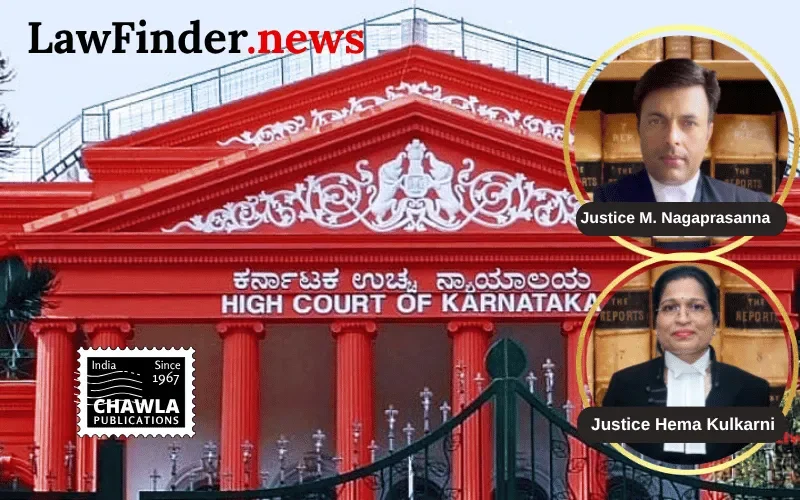
In a significant judgment delivered on October 28, 2026, the Karnataka High Court’s Division Bench (Dharwad Bench) dismissed the appeal filed by the Commandant, Central Industrial Security Force (CISF), 4th Reserve Battalion, Sivagangai, challenging the Single Judge’s order that protected the employment of Virupaxagouda, who had served for nearly 14 years before the caste certificate verification issue arose.
The dispute originated from the caste certificate submitted by Virupaxagouda, which identified him as belonging to the "Reddy" caste and categorized under 3A in the state's OBC list. Based on this certificate, he was appointed as a constable in CISF in June 2009. However, a later re-verification in 2018 revealed that while the certificate was genuine as per the state list, it did not correspond to the Central Government’s OBC list applicable for central employment, which excluded the Hindu-Reddy community under Category 3A. This discrepancy led the Deputy Commissioner to issue a letter in August 2022, challenging the validity of his caste certificate for reservation benefits.
The appellant contended that the appointment was erroneous because the caste certificate was improperly relied upon. The Commandant argued that the employee did not belong to a recognized reserved category under the Central list, hence his appointment was invalid. However, there was no allegation or evidence of fabrication or forgery in the caste certificate; the issue was a misclassification arising from reliance on the state rather than the central list.
The Single Judge had quashed the letter challenging the certificate, holding that the delay of nearly 14 years in initiating action, without a proper explanation, made the termination or deprivation of service unjustifiable. The judgment drew heavily on the Supreme Court precedent in Dattu S/o Namdeo Thakur v. State of Maharashtra (2012), where the apex court ruled that unexplained delays in canceling caste certificates after long service periods are impermissible, particularly when no fraud is alleged.
The Division Bench reiterated the principle that an intra-court appeal against a Single Judge’s order should be entertained only if the order is perverse or suffers from an error apparent on the face of the record. It found the Single Judge’s decision to be plausible and reasonable, and saw no basis for interference merely because a different view was possible.
Importantly, the Court recognized systemic lapses in the verification process, acknowledging that the Tahsildar’s earlier verification in 2018 was flawed due to reliance on the state OBC list instead of the central list. To prevent such issues in the future, the Court issued comprehensive general directions mandating the establishment of an electronic dashboard system for timely and transparent caste certificate verification. This system will integrate with existing e-Government infrastructure, require employers to upload candidate documents within 30 days of receipt, and ensure verification by the District Caste and Income Verification Committee and the jurisdictional Tahsildar within strict timelines.
The Court also directed educational measures to clarify distinctions between state and central OBC lists among officials involved in verification, aiming to curb wrongful classification and ensuing disputes.
This judgment not only reinforces protections for employees who have served long without fraud but also highlights the need for procedural reforms to uphold fairness and administrative efficiency in caste-based reservations, crucial in India’s socio-legal landscape.
Bottom Line:
Employment cannot be terminated based on caste certificate verification after a prolonged period of service if there is no evidence of fraud or fabrication and the delay in initiating action is unexplained.
Statutory provision(s):
Article 226, Constitution of India