Division Bench can remand cases only if vital issues remain unaddressed; Labour Court not functus officio post-award and may extend enquiry time, but must assess merits fairly
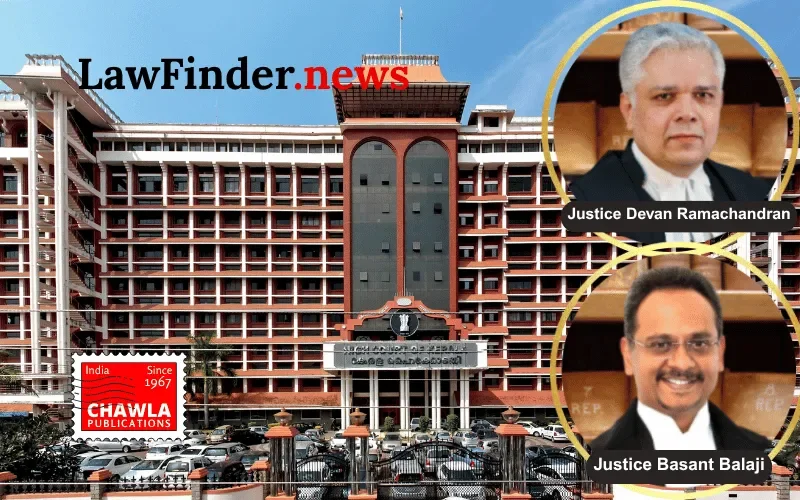
In a significant ruling dated October 15, 2026, the Kerala High Court (Division Bench comprising Justices Devan Ramachandran and Basant Balaji) delivered a detailed judgment addressing two crucial legal questions: the scope of intra-court appeals and the authority of Labour Courts to extend time for disciplinary proceedings after an award becomes enforceable.
The appeal arose from a disciplinary action against Smt. I. Bindhu by the Thiruvananthapuram Service Co-operative Bank Limited, which resulted in her dismissal. The Labour Court initially set aside the disciplinary enquiry on grounds of procedural invalidity and allowed the Bank to conduct a fresh enquiry within a three-month time frame. However, when the Bank sought an extension of this period citing delays in obtaining certified copies and changed circumstances, the Labour Court granted the extension without adequately assessing the reasons or objections.
The appellant challenged the Labour Court's extension order (Ext.P5), arguing that once the award became enforceable under Sections 17 and 17A of the Industrial Disputes Act, 1947, the Labour Court was functus officio and lacked jurisdiction to extend time. Additionally, she contended that the extension was granted without proper evaluation, rendering it illegal.
The Kerala High Court's Division Bench upheld the principle that all Benches of the High Court are equal constituents of the same Court, with no Bench subordinate to another. It reaffirmed that a Division Bench exercising appellate jurisdiction can remand or request reconsideration by a Single Bench only in exceptional circumstances-specifically when the Single Bench has omitted to consider a vital issue. Merely disagreeing with a Single Bench's view or preferring an alternative view is insufficient grounds for remand.
The Court emphasized the doctrine of "Peer Restraint," underscoring judicial discipline based on comity and mutual respect among Judges. The Division Bench cannot criticize or advise a Single Bench as a matter of supervisory authority.
Regarding the Labour Court's authority, the Court relied on the Supreme Court's ruling in Haryana Suraj Malting Limited v. Phool Chand, holding that a Labour Court is not rendered functus officio merely because an award has become enforceable. The Labour Court retains ancillary, incidental, or inherent powers to do justice, including setting aside ex parte awards or extending timeframes when justified.
However, the Court found fault with the manner in which the Labour Court granted the time extension. It held that the Labour Court must exercise its power to extend time only after carefully weighing the employer's explanation against the employee's objections and ensuring justice is done. Simply accepting the employer's reasons without inquiry or evaluation was unsustainable.
Consequently, the Kerala High Court set aside the impugned order granting the extension and remanded the matter to the Labour Court for fresh consideration of the extension application on merits within two months.
This judgment clarifies the limits of appellate power within the High Court and reinforces the Labour Court's duty to fairly assess extension requests in disciplinary cases, balancing procedural fairness with industrial peace objectives.
Bottom Line:
In intra-court appeal, a Division Bench can remand or request reconsideration by a Single Bench only in exceptional cases where a vital issue was not considered by the Single Bench; it cannot remand merely because it disagrees with a view already taken. Labour Court is not rendered functus officio merely because an award has become enforceable and can, in appropriate cases, extend time fixed in its award; however, such power must be exercised on considerations of justice after evaluating the reasons and objections of parties.
Statutory provision(s): Constitution of India Article 226, Industrial Disputes Act, 1947 Sections 17, 17A