Court Upholds Limitation Law; Disallows Resurrection of Time-barred Claims Under Article 226
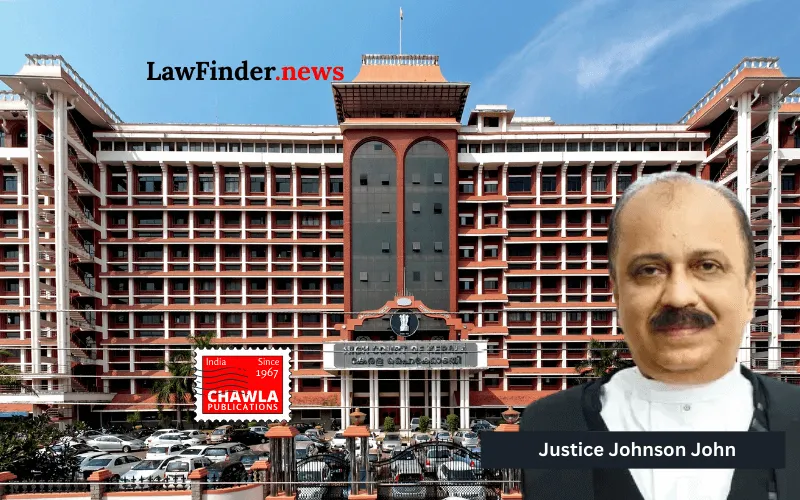
In a significant ruling, the Kerala High Court dismissed a writ petition filed by M/s. AVT McCormick Ingredients Pvt. Ltd., challenging an assessment order that denied the refund of input tax credit under the Goods and Services Tax (GST) regime. The court, presided over by Justice Johnson John, held that the discretionary jurisdiction under Article 226 of the Constitution cannot be exercised to revive a cause of action that has become unenforceable due to the law of limitation.
The petitioner, engaged in the export of spice extracts and oleoresins, had sought the court’s intervention against the order issued by the Assistant Commissioner on 15th October 2018, which disallowed the refund claim of input tax credit carried forward in the Electronic Credit Ledger. The petitioner argued that the order was based on a departmental circular, rendering any appeal futile, and thus sought relief directly from the High Court.
However, the court emphasized that the petition was filed after the expiry of the statutory period for filing an appeal, which is contrary to the public policy aimed at finalizing litigation within a reasonable timeframe. Justice Johnson John observed that while Article 226 provides for a discretionary remedy, it cannot be employed to sidestep statutory limitations unless exceptional circumstances, such as lack of jurisdiction or violation of natural justice, are evident.
The court further noted that the petitioner failed to produce satisfactory material to demonstrate the credit in the Electronic Credit Ledger as required under the GST Act and Rules. As such, the adjudicating authority's decision to reject the refund claim was upheld, with no grounds found to interfere with the impugned order.
Citing precedents, including the Supreme Court judgment in Singh Enterprises v. Commissioner of C. Ex., Jamshedpur, the court reiterated that appellate authorities do not have the power to entertain appeals beyond the prescribed limitation period. The decision underscores the judiciary's adherence to statutory remedies and timelines, reinforcing that judicial intervention should not undermine the legislative framework intended for dispute resolution.
This judgment serves as a cautionary tale for entities navigating tax disputes, underscoring the importance of adhering to procedural timelines and the challenges of seeking judicial relief when statutory remedies remain unexhausted.
Bottom Line :
The discretionary jurisdiction of the High Court under Article 226 of the Constitution cannot be exercised to resurrect a cause of action that has become unenforceable due to the law of limitation. Filing a writ petition after the expiry of the statutory period for filing an appeal is contrary to public policy aimed at ending litigation.
Statutory provision(s): Article 226 of the Constitution of India, GST Act, 2017 Sections 107, 108, 140, Rule 117 of the CGST Rules, Rule 89(4) of the CGST Rules.
M/s. AVT McCormick Ingredients Pvt. Ltd. v. Union of India, (Kerala) : Law Finder Doc id # 2965176