Court says inter-religion marriage between Christian petitioner and Hindu husband cannot be ignored merely because Tahsildar refused to issue an “inter-caste marriage certificate.”
The Kerala High Court has directed the regularisation of a woman’s appointment as farm employee under the reservation category “Vernacular Matter,” holding that her inter-religion marriage could not be denied recognition simply because the Tahsildar declined to issue a fresh inter-caste marriage certificate.
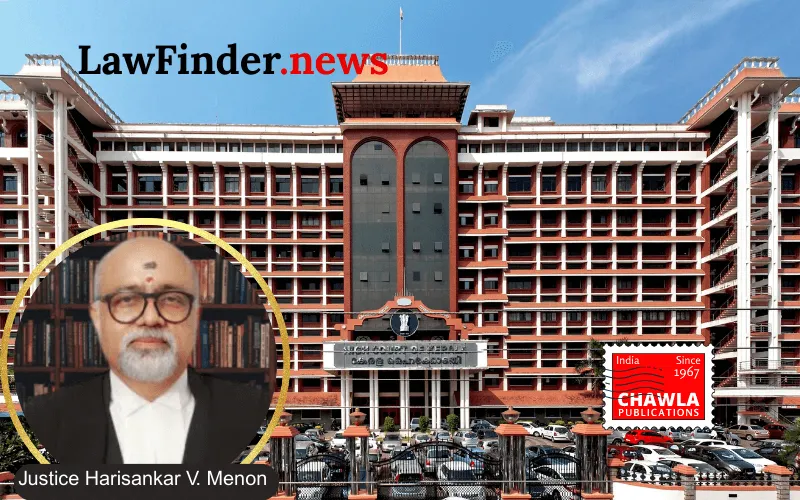
Justice Harisankar V. Menon delivered the ruling in a writ petition filed by Jisha Thomas, a Roman Catholic Christian, who had been appointed to the post under a reserved category. The petitioner’s husband belongs to the Hindu Pulaya community. She had produced an earlier certificate issued by the Tahsildar in 2007 stating that her marriage with Nishu Soman was an inter-caste marriage. When the appointing authority insisted on a fresh certificate, she approached the Tahsildar again.
The Tahsildar, however, rejected her request, reasoning that a marriage between persons belonging to two different religions could not be treated as an inter-caste marriage. Later, another certificate was issued confirming that the petitioner belonged to the Christian religion and her husband belonged to the Hindu religion under the Pulaya category. Even then, the appointing authority did not accept the documents, prompting the petitioner to move the High Court.
During the proceedings, the Court had already directed the respondent to provisionally accept the certificate and allow the petitioner to join duty, subject to the outcome of the case. The petitioner accordingly took charge, but her appointment was not regularised.
The Court noted that the appointment was granted under the category “Vernacular Matter” and that the petitioner’s claim was supported by the certificates showing her religious identity and that of her husband. The respondents argued that the documents only proved an inter-caste marriage and not something sufficient for the benefit sought. They also relied on Clause 246 of the Village Office Manual to contend that a marriage between persons of two different religions was not entitled to an inter-caste marriage certificate.
Rejecting this narrow interpretation, the Court held that for the purpose of the appointment benefit, the relevant fact was that the petitioner belonged to the Christian religion and her husband belonged to the Hindu religion. The Court observed that an inter-religion marriage also had to be taken into account while considering entitlement under the appointment order.
Accordingly, the High Court disposed of the writ petition by directing the fifth respondent to regularise the petitioner’s appointment on the basis of the certificates produced by her and to extend all consequential benefits forthwith.
Bottom Line :
Reservation/appointment under “Vernacular Matter” category - Inter-religion marriage between petitioner belonging to Christian Roman Catholic community and husband belonging to Hindu Pulaya community is liable to be considered for extending benefit - Tahsildar’s refusal to issue inter-caste marriage certificate on ground that parties belong to different religions cannot defeat petitioner’s claim when certificates establish their respective communities and religions - Appointment directed to be regularised with consequential benefits.
Statutory provision(s): Article 226 of the Constitution of India, 1950, Clause 246 of the Village Office Manual
Jisha Thomas v. State of Kerala, (Kerala) : Law Finder Doc id # 2984409