Court says safe roads are part of the right to life under Article 21; directs time-bound action on road maintenance, black spots, private bus regulation, enforcement, and a state-wide monitoring platform.
The Kerala High Court has issued an extensive set of directions aimed at tackling the State’s road safety crisis, holding that the right to safe roads and safe passage is an intrinsic facet of the right to life under Article 21 of the Constitution.
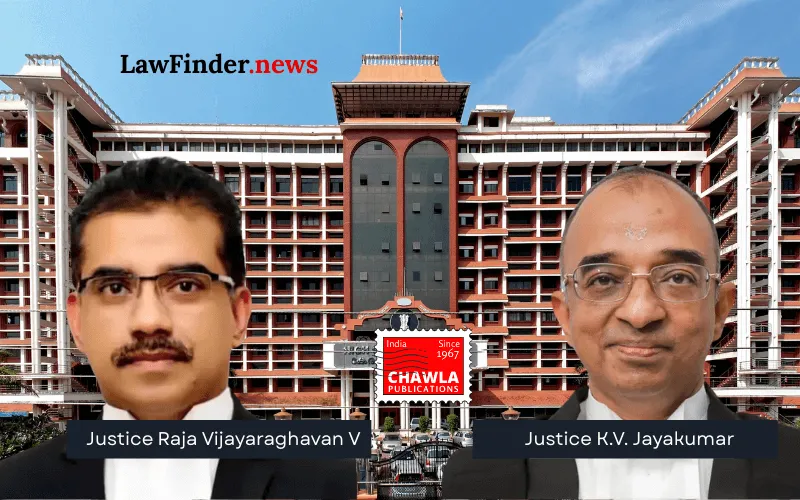
A Division Bench of Justices Raja Vijayaraghavan V and K.V. Jayakumar was hearing a public interest petition alleging that the State and its agencies had failed to take effective measures to prevent road accidents and ensure road safety. The petitioner also sought stronger implementation of the Kerala Road Safety Fund, electronic enforcement under the Motor Vehicles Act, and compliance with road design and maintenance standards.
The Court noted that Kerala continues to suffer alarming road accident figures, with thousands of deaths and injuries each year. Referring to official data, audit findings and international safety standards, the Bench observed that the problem was not the absence of law, but the failure of implementation, coordination and accountability. The Court said the State cannot remain content with recording accidents after they occur, prosecuting offenders after lives are lost, or awarding compensation after irreversible harm has already been caused.
While declining to duplicate directions already issued by the Supreme Court in relation to National Highways in the Phalodi accident matter, the High Court found it necessary to lay down Kerala-specific directions covering State Highways, PWD roads, local body roads, private bus operations, utility road cutting, black spot rectification, driver profiling, emergency response and road safety funding.
Among the key directions, the Court ordered operationalisation of Section 136A of the Motor Vehicles Act for electronic monitoring and enforcement on State Highways and high-risk urban roads within six months. It also directed strict compliance with road marking, signage, crash barrier, drainage and shoulder standards under the Kerala PWD Manual and Indian Roads Congress norms.
The Bench expressed concern over the role of private buses, observing that unrealistic running times and the existing fare-collection model create incentives for overspeeding and racing. It directed GPS-based time-and-motion studies, revision of timetables, minimum headway norms, point-to-point speed monitoring, and mandatory GPS tracking devices in stage carriages. The Court also ordered constitution of an expert committee to study structural reforms in private bus operations, including gross-cost contracting and route franchising models used in other jurisdictions.
On road maintenance, the Court directed the PWD to identify and rectify potholes, faded markings, defective signs, dangerous curves, unsafe shoulders, drainage deficiencies and encroachments. Local bodies were asked to prepare inventories of roads under their control and rectify safety defects, with District Collectors responsible for coordination where multiple agencies are involved.
The Court also issued detailed directions on overloading enforcement, vehicle fitness, weigh-in-motion systems, utility road cutting, and electrical hazards caused by roadside installations. It ordered that no utility agency may cut or trench roads without prior written permission, advance restoration charges and a proper restoration plan.
In a major institutional reform measure, the Court directed creation of a state-wide Integrated Road Safety Monitoring Platform to unify complaints, defect tracking, black spot monitoring, enforcement data, GIS mapping and officer accountability. The Kerala Road Safety Authority was named as the nodal agency, with a steering committee to be formed within 15 days and the platform to be developed within six months.
The Bench also directed that every district constitute a District Road Safety Monitoring Committee, and that the Kerala Road Safety Fund be used strictly for road safety purposes, including trauma care, research and the new monitoring platform. The Finance Department was asked to place before the Court a time-bound plan for release and utilisation of the amount proposed by the Road Safety Commissioner.
Recognising the scale of the issue, the Court directed the Registry to place the matter before the Chief Justice for registration of a suo motu case titled “In Re: Road Safety in Kerala”. The writ petition may be tagged with that proceeding if it is registered. The first consolidated compliance report has been directed to be filed within 75 days.
Bottom Line :
Road safety - Right to safe roads and safe passage is a facet of Article 21 - High Court, while declining to duplicate Supreme Court directions concerning National Highways, issued Kerala-specific comprehensive directions regarding State Highways, PWD roads, local body roads, private bus operations, black spot rectification, electronic enforcement, Road Safety Fund and creation of an Integrated Road Safety Monitoring Platform, and directed registration of a suo motu case titled "In Re: Road Safety in Kerala".
Statutory provision(s): Article 21, Motor Vehicles Act, 1988 Sections 20, 72(2), 112, 113, 114, 115, 136A, 183, 184, 185, 189, 194, 198A, 200, 215B, Bharatiya Nyaya Sanhita, 2023 Section 106, Kerala Motor Vehicles Rules, 1989 Rule 153
Clemance Thottappilly v. State of Kerala, (Kerala)(DB) : Law Finder Doc id # 2987128