Court directs Ombudsman to pass Award after hearing parties, emphasizing complainant's consent under RBI Integrated Ombudsman Scheme, 2021
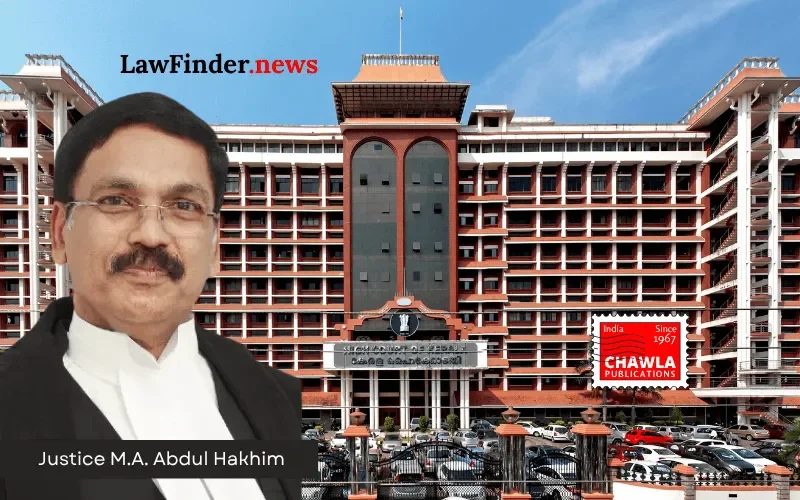
In a significant judgment delivered on November 10, 2026, the Kerala High Court, presided over by Justice M.A. Abdul Hakhim, clarified the limits of the Banking Ombudsman's powers under the Reserve Bank of India's Integrated Ombudsman Scheme, 2021. The Court held that the Banking Ombudsman cannot close a complaint as resolved under Clause 14(9)(a) of the Scheme unless there is a mutual settlement between the complainant and the bank. Further, if the complainant does not accept the Ombudsman's advisory, the Ombudsman is bound by the Scheme to pass an Award after giving both parties a reasonable opportunity to be heard.
The case arose from a complaint filed by Mohamed Shafi, an individual customer of Standard Chartered Bank, Kochi Branch, alleging that the bank had induced him to subscribe to eight life insurance policies under assurances that premium payments would be managed via mutual fund returns and the bank would cover any shortfall. When the bank later failed to honor these commitments fully, the petitioner approached the Banking Ombudsman for redress.
During the Ombudsman's proceedings, an advisory was issued directing the bank to reimburse Rs. 5 lakhs and pay Rs. 1 lakh as compensation. The bank credited Rs. 6 lakhs to the petitioner's account without his consent, following which the Ombudsman closed the complaint as resolved under Clause 14(9)(a). The petitioner challenged this closure before the Kerala High Court.
The Court analyzed the provisions of the Scheme, particularly Clause 14(9)(a) which deems a complaint resolved only upon a settlement reached by the parties through facilitation, conciliation, or mediation. The Court emphasized that a unilateral payment by the bank without the complainant's acceptance cannot amount to a `settlement'. Since no mutual agreement was reached, the Ombudsman's closure order was held to be illegal.
The Court further pointed out that Clause 15 mandates the Ombudsman to pass an Award if the complaint is not resolved by settlement or rejected. Such an Award requires affording a reasonable opportunity of hearing to both parties, and the complainant has the option to accept or reject the Award. If rejected, the complainant remains free to pursue other remedies.
Rejecting the bank's contention that the writ petition was not maintainable and that the petitioner had alternative remedies, the Court held that a writ petition challenging a non-appealable order of the Banking Ombudsman is maintainable to ensure compliance with the Scheme. The Court also noted that disputed questions of fact underlying the complaint could be adjudicated by the appropriate forums after the Ombudsman's Award.
Accordingly, the Kerala High Court set aside the Ombudsman's order closing the complaint as resolved and directed the Banking Ombudsman to dispose of the complaint by passing an Award in accordance with Clause 15 within three months. The Court clarified that the Rs. 6 lakhs credited to the petitioner's account earlier would be subject to the final Award.
This judgment reinforces the procedural safeguards under the RBI Integrated Ombudsman Scheme, ensuring that complainants are not deprived of an opportunity to contest advisories and that complaints are not prematurely closed without genuine settlements.
Bottom Line:
Banking Ombudsman cannot close a complaint as resolved under Clause 14(9)(a) of the Reserve Bank - Integrated Ombudsman Scheme, 2021, in the absence of a mutual settlement between the parties. If the Advisory issued by the Ombudsman is not accepted by the complainant, the Ombudsman is bound to pass an Award under Clause 15 of the Scheme after affording a reasonable opportunity of being heard to both parties.
Statutory provision(s):
Reserve Bank - Integrated Ombudsman Scheme, 2021 - Clause 3(1)(k), Clause 14(9)(a), Clause 15(1)(b), Clause 15(7), Clause 15(8), Clause 16, Clause 17; Banking Regulation Act, 1949 - Section 35A; Reserve Bank of India Act, 1934 - Section 45L; Payment and Settlement Systems Act, 2007 - Section 18.
Mohamed Shafi v. Banking Ombudsman, (Kerala) : Law Finder Doc Id # 3018749