Registrar of DRT Cannot Suo Motu Refer Section 17 Application on Maintainability or Limitation; Judicial Merits to be Considered Only After Numbering Application
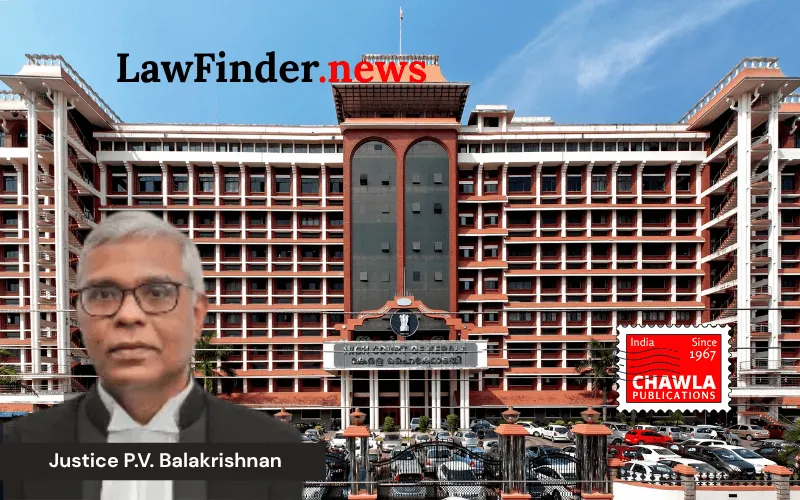
In a significant judgment delivered on September 8, 2026, the Kerala High Court, presided over by Justice P.V. Balakrishnan, ruled that the Registrar of the Debts Recovery Tribunal (DRT) cannot exercise judicial functions by suo motu referring applications filed under Section 17 of the Securitisation and Reconstruction of Financial Assets and Enforcement of Security Interest Act, 2002 (SARFAESI Act) to the Tribunal on grounds such as maintainability, locus standi, or limitation. The Court also held that the DRT itself cannot reject such applications at a preliminary stage on these grounds.
The case arose from an unnumbered Suit Application (SA) filed by Ramachandran P before the DRT-I, Ernakulam, challenging the sale conducted by the Catholic Syrian Bank Ltd under the SARFAESI Act. The Registrar referred the matter to the DRT for consideration of limitation issues, following which the DRT rejected the application. The petitioner challenged this order before the Kerala High Court.
The Court extensively relied on its earlier decision in Fathima M.P. v. IDBI Bank Ltd. [2026 (5) KLT 50], which clarified the limited role of the Registrar under Rule 5 of the Debts Recovery Tribunal (Procedure) Rules, 1993. The Court reiterated that the Registrar is a ministerial officer without judicial powers, empowered only to decline registration if defects are not cured, but not to delve into the merits of the application or to decide on maintainability, locus standi, or limitation issues.
Justice Balakrishnan emphasized that such judicial questions must be adjudicated only after the application is numbered and parties are heard. The Registrar can only post the application before the Tribunal upon the parties' insistence if no defects are alleged. The DRT may reject an application at the preliminary stage only if a formal defect noted by the Registrar remains uncured by the applicant.
Consequently, the Kerala High Court set aside the DRT's order rejecting the application and remitted the matter back to the Registrar of DRT-I, Ernakulam. The Registrar was directed to consider the application strictly in accordance with Rule 5 of the Debts Recovery Tribunal (Procedure) Rules and the legal principles laid down in the Fathima M.P. case within one week from the receipt of the judgment.
This ruling reinforces procedural safeguards for borrowers challenging enforcement actions under the SARFAESI Act, ensuring that applications are not dismissed prematurely on technical or judicial grounds without due hearing.
Bottom Line:
SARFAESI Act - Application under Section 17 - Registrar of DRT cannot suo motu refer unnumbered application to Tribunal on issues such as maintainability, locus standi or limitation - Registrar is confined to Rule 5 of Debts Recovery Tribunal (Procedure) Rules, 1993 and cannot exercise judicial functions - DRT also cannot reject Section 17 application at preliminary stage on such grounds.
Statutory provision(s):
Section 17 of the Securitisation and Reconstruction of Financial Assets and Enforcement of Security Interest Act, 2002; Rule 5 of the Debts Recovery Tribunal (Procedure) Rules, 1993