Court holds that confinement without voluntary consent or legal/medical mandate violates Article 21; Wife's unilateral decision to admit husband quashed
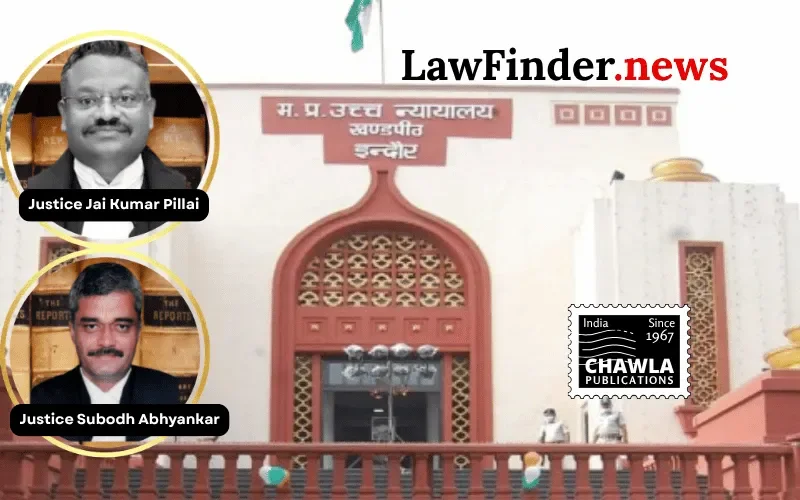
In a significant judgment delivered on October 7, 2026, the Madhya Pradesh High Court (Division Bench, Indore) has declared the detention of an adult male, Babulal, at a private de-addiction and rehabilitation center as illegal and ordered his immediate release. The writ petition was filed by Babulal's brother, Rajesh Patidar, under Article 226 of the Constitution, challenging the confinement of Babulal at the instance of his wife amidst matrimonial disputes.
The court meticulously examined the facts, including the strained marital relationship between Babulal and his wife, and the circumstances under which Babulal was admitted to the rehabilitation center. It was established that the wife had called Babulal to her residence and then taken him to the private center without his voluntary consent. Despite repeated requests for release by his brother, the center refused to free Babulal.
Critically, the court relied on the independent Medical Board report which found no evidence of any gross psychopathology or drug addiction that could justify forced confinement. While Babulal suffered from left side residual hemiparesis requiring neurological care, the report ruled out any mental health condition necessitating admission to the rehabilitation center.
The court underscored that as a major and a person of sound mind, Babulal possessed an unassailable right to bodily autonomy and personal liberty under Article 21 of the Constitution. It held that a private de-addiction facility cannot lawfully detain an adult without his free and informed consent or a competent legal or medical mandate. The wife's consent alone was insufficient to override the fundamental rights of the husband.
Further, the court rejected the center's claim that Babulal was staying there voluntarily, pointing to the refusal to release him upon request as evidence of wrongful restraint. The judgment emphasized that any deprivation of liberty must be supported by clear statutory authority or medical necessity, neither of which was present in this case.
Consequently, the court directed the police authorities and the private rehabilitation center to release Babulal immediately and allow him to reside wherever he chooses, including with his brother. The wife was given liberty to seek future admission of Babulal to a de-addiction center only if supported by an independent Medical Board opinion establishing emergent medical necessity.
This landmark ruling reinforces the constitutional protection of personal liberty against unlawful detention in private facilities and clarifies the limits of spousal consent in medical admissions. It also highlights the judiciary's role in safeguarding individual autonomy and preventing misuse of rehabilitation centers for non-medical purposes.
Bottom Line:
Habeas Corpus - Adult husband detained in private de-addiction and rehabilitation center at instance of wife - Medical Board found no gross psychopathology - Private center has no authority to confine major without his voluntary consent or competent legal/medical mandate - Detention held illegal and release directed.
Statutory provision(s):
Constitution of India, 1950 Articles 21, 226
Rajesh Patidar v. State of Madhya Pradesh, (MP)(DB)(Indore) : Law Finder Doc Id # 3001066