Court Rules Bail Refusal Based on General Social Investigation Report Unjustified; Directs Release Under Father's Custody with Strict Conditions
In a significant judgment delivered on October 27, 2026, the Madhya Pradesh High Court set aside the orders of the Juvenile Justice Board and the Additional Sessions Judge that had refused bail to a 17-year-old child in conflict with law. The Court emphasized that bail is the rule and refusal is an exception under the Juvenile Justice (Care and Protection of Children) Act, 2015, and held that the gravity of the offence alone cannot justify denying bail to a juvenile.
The juvenile, a Class 12 student, had been held in the Observation Home, Indore for over three and a half months after being taken into custody in connection with offences under the Bharatiya Nyaya Sanhita, 2023, and the Scheduled Castes and Scheduled Tribes (Prevention of Atrocities) Act, 1989. The child's bail plea under Section 12 of the JJ Act was rejected primarily based on the Social Investigation Report, which highlighted concerns about the neighborhood environment and potential exposure to undesirable company.
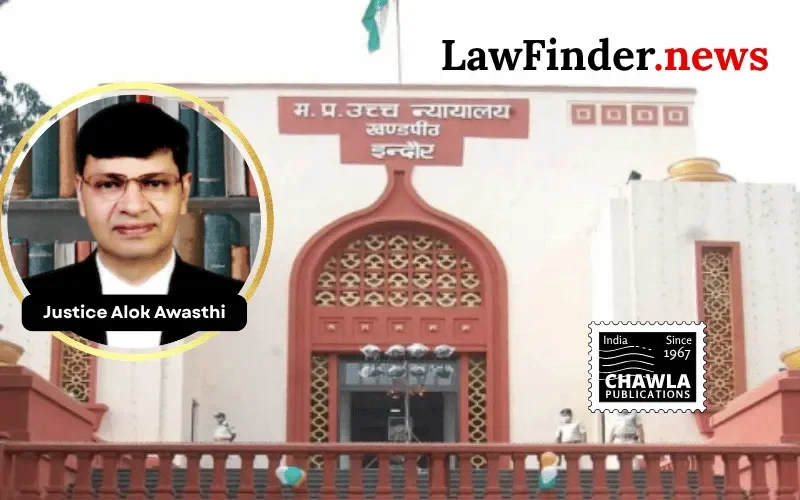
However, the High Court, presided over by Justice Alok Awasthi, found that the Social Investigation Report did not specifically establish any of the three statutory exceptions under the proviso to Section 12(1) of the JJ Act - association with known criminals, exposure to moral, physical or psychological danger, or defeating the ends of justice. The Court noted that the child had no previous criminal antecedents, and his father, engaged in the dairy business, was willing to take full responsibility for his supervision.
Rejecting the lower courts' reliance on generalized concerns from the Social Investigation Report, the Court held that prolonged detention of a juvenile, especially a student nearing completion of schooling, contradicts the rehabilitative and reformative objectives of the JJ Act. The judgment underscored that the statutory scheme mandates release on bail unless clear and specific grounds for refusal are demonstrated.
Consequently, the Court directed the child's immediate release on bail into the custody of his natural guardian, his father, subject to the furnishing of a personal bond and surety of Rs. 50,000 each. Strict conditions were imposed to ensure the child's supervision, prohibition from associating with criminals, attendance at all Juvenile Justice Board hearings, and monitoring by a probation officer. The Court clarified that any violation of these conditions would lead to automatic cancellation of bail.
This ruling reinforces the principle that juvenile justice laws prioritize rehabilitation over punitive measures and sets a precedent against denying bail on vague or generalized social factors. It also highlights the judiciary's role in safeguarding the rights and welfare of children in conflict with law, ensuring their reintegration into society under responsible care.
Bottom Line:
Juvenile Justice Act, 2015 - Bail to child in conflict with law - Bail under Section 12 is the rule and refusal is an exception - Gravity of offence alone is not sufficient to deny bail - General observations in Social Investigation Report regarding neighbourhood or possibility of undesirable company are insufficient unless the statutory exceptions under proviso to Section 12(1) are specifically made out - Child directed to be released on bail in custody of father.
Statutory provision(s):
Juvenile Justice (Care and Protection of Children) Act, 2015 Section 12, Bharatiya Nyaya Sanhita, 2023 Sections 103(1), 109(1), 115(2), 296B, 351(3), 3(5), Scheduled Castes and Scheduled Tribes (Prevention of Atrocities) Act, 1989 Section 3(2)(v)
Child in Conflict with Law v. State of Madhya Pradesh, (MP)(Indore) : Law Finder Doc Id # 3004112