Notary Public Raghvendra Samadhiya Admits Mistake, Agrees to Corrective Measures and Contribution for Lawyers' Welfare
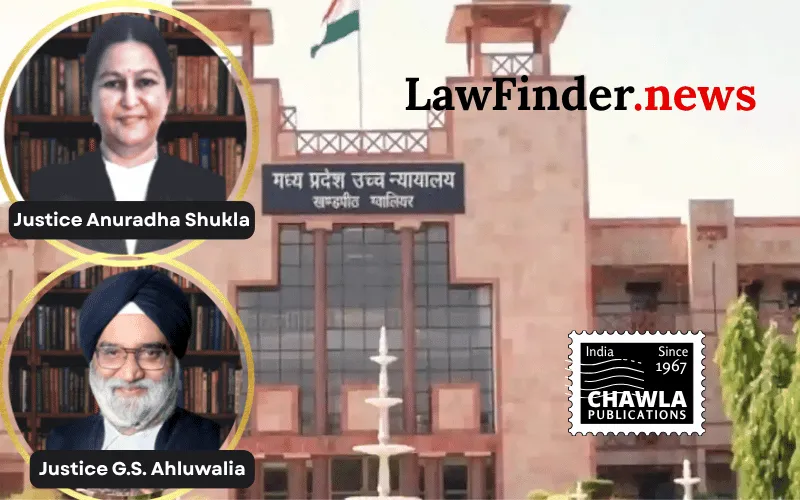
In a notable judgment, the Madhya Pradesh High Court has pardoned Notary Public Raghvendra Samadhiya for unauthorized notarization of a document falsely implying a court marriage. This decision was made in response to a suo moto writ petition initiated under Article 226 of the Constitution of India. The bench, comprising Justices G. S. Ahluwalia and Anuradha Shukla, emphasized the limitations of notaries' jurisdiction, highlighting that they are not authorized to act as marriage officers or notarize marriage or divorce documents.
The case originated from a habeas corpus petition alleging illegal detention, wherein a document notarized by Samadhiya gave the false impression of a court marriage. Upon realization, Samadhiya admitted his mistake and expressed sincere regret, undertaking not to repeat such acts. The court accepted his apology, conditioned upon compliance with corrective measures, including the installation of display boards clarifying notaries' limitations and a contribution of Rs. 2,00,000 towards the welfare of lawyers.
The court appreciated Samadhiya's readiness to rectify his mistake, emphasizing that while committing a mistake is not a sin, repeating it is. The court directed the Bar Council of India to circulate a government-issued memorandum to all notaries, clarifying their limitations to prevent unauthorized notarization of marriage or divorce documents. With these actions, the court dropped the proceedings against Samadhiya, allowing him to resume his duties as a notary after fulfilling the conditions set forth.
Bottom Line :
Notaries cannot notarize documents pertaining to marriage or divorce as it is beyond their jurisdiction. Misconduct by a notary public can result in suspension and penalties, but genuine acknowledgment of the mistake and corrective measures may lead to pardon.
Statutory provision(s): Article 226 of the Constitution of India