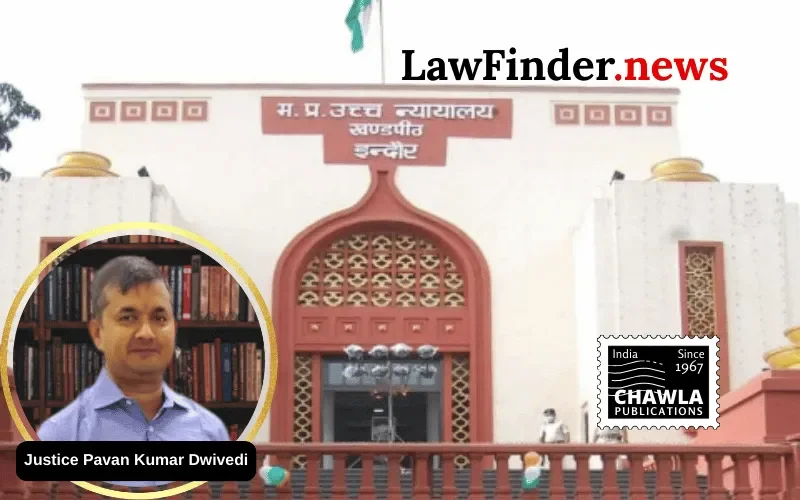
Court Emphasizes Strict Compliance with Section 215 of Bharatiya Nagarik Suraksha Sanhita, 2023, Holding that Offences Connected to Same Transaction Cannot be Split to Bypass Statutory Bar
In a significant judgment delivered on November 2, 2026, the Madhya Pradesh High Court (Indore Bench) quashed the First Information Report (FIR), charge-sheet, and order taking cognizance against Rajesh Achaliya and six others for offences allegedly committed during a protest. The Court underscored the mandatory nature of compliance with Section 215 of the Bharatiya Nagarik Suraksha Sanhita, 2023 (BNSS), which requires a written complaint from the concerned public servant or their competent superior before a Court can take cognizance of certain offences, including disobedience to lawful orders under Section 223 of the Bharatiya Nyaya Sanhita, 2023 (BNS).
The petitioner, Rajesh Achaliya, a meritorious student with distinctions in multiple subjects, had been implicated along with six other members of Jay Adivasi Yuva Shakti (JAYS) for allegedly violating a District Magistrate's order issued under Section 144 of the Code of Criminal Procedure (Cr.P.C.) by organizing a procession without permission and obstructing police personnel near the police station. The police registered an FIR accusing them of offences under Section 223 and later added charges under Section 126(2) of BNS for obstruction of public servants.
However, the High Court found that the FIR was registered and cognizance taken without any written complaint by the District Magistrate or any authorized public servant, as mandated by Section 215 BNSS. The Court clarified that such statutory requirements are not mere formalities but are mandatory prerequisites for the initiation of prosecution in offences falling under these sections. Furthermore, the Court noted that since the offences under Sections 223 and 126(2) arose from the same transaction, they could not be artificially split to circumvent the statutory bar imposed by Section 215 BNSS.
The Court relied heavily on the Supreme Court's authoritative pronouncements, including the landmark ruling in Devendra Kumar v. State (NCT of Delhi), 2025, which held that offences intrinsically connected to those requiring a complaint by a public servant cannot be segregated to bypass the requirement. The Court also examined the spot map submitted in the final report, which showed that the accused persons were standing at a distance from the police station building, negating the charge of obstruction to police functioning under Section 126(2).
Highlighting the potential prejudice to the petitioner's future, the Court remarked that prosecuting a bright student merely for his participation in a protest against an FIR registered against tribal community members would be unjust. Therefore, the Court quashed the FIR, charge-sheet, and cognizance order, holding that the trial court lacked jurisdiction to take cognizance without the mandatory complaint.
This judgment reinforces the procedural safeguards under the BNSS and BNS statutes, ensuring that prosecutions for offences against public servants or public justice cannot be initiated without proper written complaints, thereby preventing frivolous or malicious litigation. The ruling further clarifies the interconnectedness of offences and the non-allowance of splitting transactions to evade statutory protections.
Bottom Line:
BNSS, 2023 Section 215 - Court cannot take cognizance of offence under Section 223 of BNS without written complaint of concerned public servant or competent superior - Where offence under Section 126(2) BNS is intrinsically connected with same transaction, it also cannot be split up to bypass statutory bar - FIR, charge-sheet and cognizance order liable to be quashed.
Statutory provision(s):
Bharatiya Nagarik Suraksha Sanhita, 2023 Section 215, Bharatiya Nyaya Sanhita, 2023 Sections 223, 126(2), Code of Criminal Procedure Section 144
Rajesh Achaliya v. State of Madhya Pradesh, (MP)(Indore) : Law Finder Doc Id # 3012529