Court says suits involving different causes of action, reliefs and evidence cannot be consolidated merely because one family business is common
The Madhya Pradesh High Court at Gwalior has upheld the refusal to consolidate three civil suits involving members of the Bhargava family, ruling that consolidation is permissible only when the suits share substantial similarity in parties, issues, cause of action and reliefs.
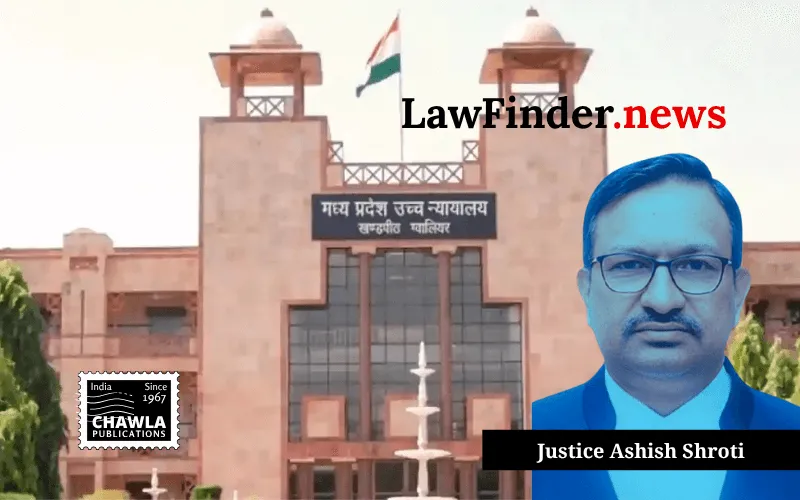
Justice Ashish Shroti dismissed a civil revision filed by Parveen Bhargava challenging an order of the Principal District Judge, Gwalior, who had declined to club Civil Suit No. 445-A/16 with Civil Suit Nos. 07-A/18 and 701-A/17.
The dispute arose from family and business properties associated with the Bhargava family. One suit, filed by Piyush Bhargava, sought declaration of share and partition of several family properties, including businesses and assets acquired by the family patriarch. The other two suits concerned liquidation of M/s Gwalior Ice Factory and rendition of accounts, and were filed in relation to the same business entity.
Before the High Court, the applicant argued that the parties in all three suits were substantially similar and that one of the properties involved was common. It was also contended that since two of the suits had already been consolidated, the third should also be tried together in the interest of convenience and consistency. The applicant further disputed the lower court’s view that consolidation would affect the right of appeal.
The High Court, however, found that the nature of the claims was fundamentally different. It observed that the partition suit involved declaration of share and division of multiple family properties, whereas the other two suits were limited to liquidation and rendition of accounts of a single firm, namely M/s Gwalior Ice Factory. The court held that the parties, cause of action, reliefs and evidence required in the two sets of proceedings were not the same.
Relying on the Supreme Court’s decision in Chitivalasa Jute Mills v. Jaypee Rewa Cement, the High Court reiterated that suits may be consolidated only when there is complete or substantial similarity of issues so that common evidence and arguments would suffice. In the present case, the court said, the evidence in the partition suit would be entirely different from the evidence in the suits concerning liquidation and accounts.
The court also noted that consolidating suits pending before different courts could deprive parties of one level of appeal. While that factor alone may not always bar consolidation, it becomes significant where the suits are otherwise dissimilar in subject matter and relief.
Finding no error in the District Judge’s order, the High Court dismissed the revision petition.
Bottom Line :
Consolidation of suits can be ordered only when there is complete or substantial similarity in issues, parties, cause of action and reliefs so that common evidence and common arguments would suffice; suits for partition of family properties cannot be consolidated with suits for liquidation and rendition of accounts of a firm merely because one property/business is common, especially when such consolidation may deprive parties of one forum of appeal.
Statutory provision(s): Section 24, Civil Procedure Code, 1908
Parveen Bhargava v. Piyush Bhargava, (Madhya Pradesh)(Gwalior) : Law Finder Doc id # 2982764