Right to Electricity Upheld as Part of Right to Life; Distribution Licensee Directed to Provide Connection Within 7 Days to Occupier Despite Ownership Dispute
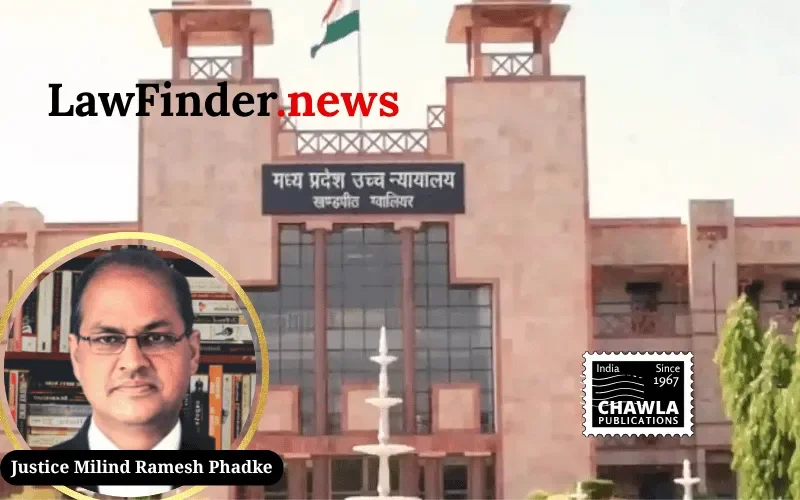
In a significant judgment delivered on September 24, 2026, the Madhya Pradesh High Court (Gwalior Bench) has clarified the legal position regarding the supply of electricity to premises where ownership is disputed. The Court ruled that electricity connections cannot be denied to an occupier of a property merely because the title or ownership shares are under dispute among parties.
The case arose when Smt. Preeti Sharma, the petitioner, approached the High Court after her temporary domestic electricity connection was disconnected by the electricity distribution authorities. The disconnection was carried out based on a complaint by respondent No.5, the petitioner's mother, who contested the petitioner's share in the property located at Chutmul Ki Bazaria, Gwalior.
The petitioner claimed possession and occupation of the premises pursuant to a compromise settlement reached in civil proceedings involving the family members, including the complainant. She had been residing there with her husband and children and had earlier been granted a temporary electricity connection on August 20, 2025, which was disconnected on August 27, 2025, following the complaint.
The petitioner urged the Court to direct the authorities to provide a fresh electricity connection or restore the earlier one, emphasizing that the distribution licensee is mandated under Section 43 of the Electricity Act, 2003, to supply electricity to the owner or occupier of premises on application, subject to compliance with statutory norms and payment of charges.
The Court observed that the electricity authorities are not required to adjudicate complicated civil disputes relating to ownership or partition while deciding applications for electricity connections. It highlighted a crucial legislative change: unlike the earlier Electricity Act of 1910, which required "lawful occupation" for supply, the Electricity Act, 2003, omitted the word "lawful," thereby broadening the right to supply to any occupier, irrespective of ownership disputes.
The judgment cited precedents, including the Calcutta High Court's ruling in Fashion Proprietor Aswani Kumar Maity v. West Bengal Electricity Distribution Co. Ltd., and the Gujarat High Court's decision in Yogesh Lakhmanbhai Chovatiya v. PGVCL, which similarly upheld that disputes on title cannot justify refusal of electricity supply to an occupier.
Importantly, the Court recognized the right to electricity as an integral part of the fundamental right to life and liberty guaranteed under Article 21 of the Constitution of India, emphasizing that in modern times, access to electricity is essential for survival and dignity.
Accordingly, the Court directed the electricity distribution company to provide a fresh electricity connection to the petitioner within seven days from the date of receipt of the Court's order, subject to compliance with necessary formalities and payment of charges.
This ruling reinforces the principle that possession and occupation, rather than title disputes, determine entitlement to essential utilities like electricity, ensuring that residents are not deprived of fundamental services due to ongoing civil litigation.
Bottom Line:
Electricity Act, 2003 Section 43 Electricity connection cannot be denied to a person in occupation of premises merely because title or share in property is disputed - Distribution licensee is not required to adjudicate complicated questions of ownership or civil rights - Right to electricity held to be part of right to life under Article 21 - Authorities directed to release connection within 7 days subject to compliance with norms.
Statutory provision(s):
Electricity Act, 2003 Section 43, Constitution of India Article 21, Code of Civil Procedure Order XXIII Rule 3, Maintenance and Welfare of Parents and Senior Citizens Act, 2007 Sections 22 and 23