Court Clarifies that No Separate Formal Application is Mandated for Permanent Alimony under Section 25(1) of Hindu Marriage Act, 1955; Matrimonial Court Directed to Hear Alimony Claim Independently
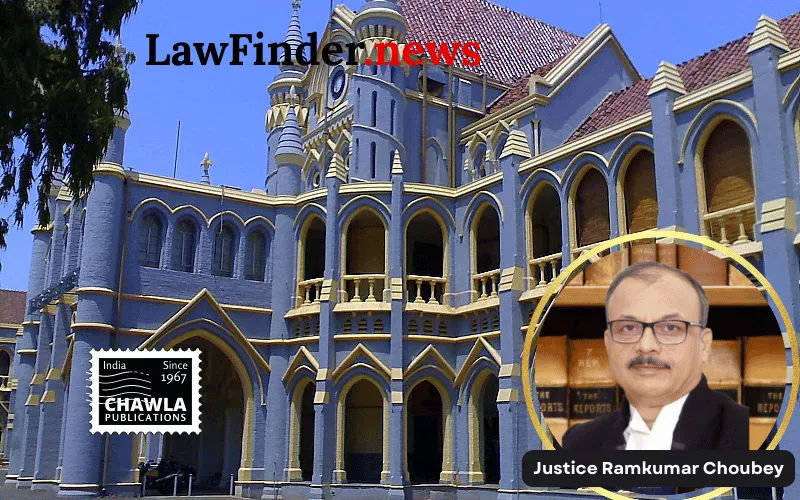
In a significant judgment delivered on September 7, 2026, the Madhya Pradesh High Court, Jabalpur Bench, addressed the issue of permanent alimony claims post-divorce decree under the Hindu Marriage Act, 1955. The case, Smt. Ushabai v. Lalit Bisen, revolved around whether a spouse can seek permanent alimony after a decree of divorce has been granted without filing a separate formal application at the time of the divorce.
The appellant, Smt. Ushabai, had earlier contested an ex-parte divorce decree granted to the respondent, Lalit Bisen. However, she later chose not to challenge the divorce but sought to claim permanent alimony. The lower court had dismissed her application to set aside the ex-parte decree but did not address the question of alimony.
The High Court examined Section 25(1) of the Hindu Marriage Act, which empowers courts to order permanent alimony and maintenance either at the time of passing the decree or subsequently on an application by either spouse. The Court emphasized a liberal interpretation of the phrase "on application made to it," stating that the provision does not strictly require a formal application at the time of divorce. It recognized that the relief of permanent alimony could be sought at any stage, even after the decree has been passed.
Relying on precedent, including the Gujarat High Court's ruling in Patel Dharamshi Premji v. Bai Sakar Kanji and the Madhya Pradesh High Court's own decision in Surajmal Ramchandra Khati v. Rukminibai, the Court held that the spouse's right to seek alimony survives beyond the dissolution of marriage. The expression "wife or husband" in Section 25(1) applies to parties to the matrimonial proceeding and does not require maintaining that status at the time of application.
Consequently, the Court declined to reinstate the divorce proceedings but granted the appellant liberty to file an application for permanent alimony before the learned matrimonial Court. The matrimonial Court was directed to consider the application on merits, after hearing both parties, taking into account factors such as the income and property of both spouses, conduct, and other relevant circumstances as mandated under Section 25.
This judgment underscores the protective intent of the Hindu Marriage Act to ensure that a spouse is not left without support simply because a divorce decree has already been granted. It clarifies procedural ambiguities and empowers aggrieved spouses to seek maintenance in a flexible manner.
Legal experts view this decision as a reinforcement of the broader humanitarian objectives of matrimonial law in India, facilitating justice and financial security for divorced spouses without procedural hurdles.
Bottom Line:
Hindu Marriage Act, 1955 - The spouse seeking permanent alimony under Section 25 is not required to present a separate formal application, and the relief can be sought at any time subsequent to the passing of the decree.
Statutory provision(s):
Hindu Marriage Act, 1955 - Section 25(1), Code of Civil Procedure, 1908 - Order 43 Rule 1(d), Order IX Rule 13
Smt. Ushabai v. Lalit Bisen, (Madhya Pradesh)(Jabalpur) : Law Finder Doc Id # 2974617