Court Dismisses Writ Petition Challenging Rule 3(1)(b)(iv) of Information Technology (Intermediary Guidelines and Digital Media Ethics Code) Rules, 2021, Affirming Statutory Grievance Redressal Mechanism and Intermediary's Due Diligence Obligations
Jabalpur, Madhya Pradesh - In a landmark judgment dated September 17, 2026, the Madhya Pradesh High Court (Division Bench) upheld the constitutional validity of Rule 3(1)(b)(iv) of the Information Technology (Intermediary Guidelines and Digital Media Ethics Code) Rules, 2021, rejecting a writ petition filed by a social media content creator challenging the rule on grounds of violation of fundamental rights and principles of natural justice.
The petitioner, Anmol Jain, who operates a popular Instagram account "memexnasha" with over thirty-nine thousand followers and claims to be a part of the digital content-creator economy, approached the High Court after Instagram, operated by the respondent, removed several of his posts citing copyright infringement. The petitioner contended that the private intermediary (Instagram) had no authority to determine intellectual property rights violations or to remove content without prior notice or hearing. He argued that Rule 3(1)(b)(iv) was ultra vires Articles 14, 19(1)(a), 19(1)(g), and 21 of the Constitution of India, which guarantee equality before law, freedom of speech and expression, and protection of life and personal liberty.
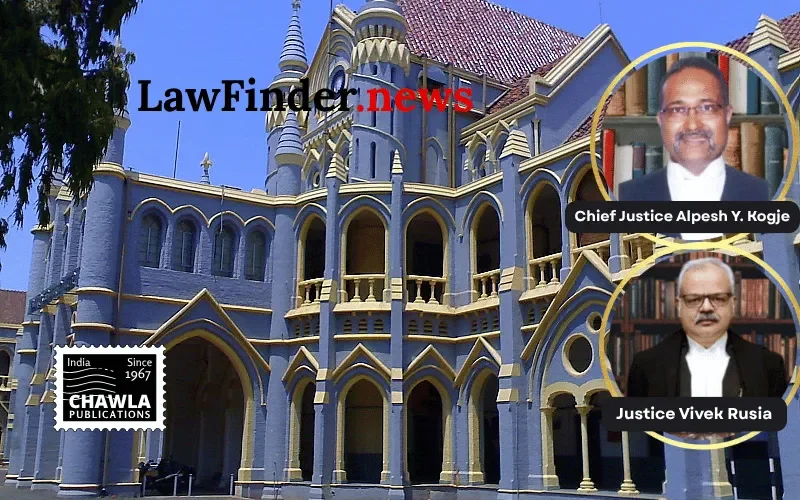
The Court, comprising Chief Justice Alpesh Y. Kogje and Justice Vivek Rusia, thoroughly examined the statutory framework under the Information Technology Act, 2000 and the Intermediary Guidelines Rules notified under Section 87 of the IT Act. The Court observed that the respondent qualifies as an "intermediary" under Section 2(w) of the IT Act, which includes entities that receive, store or transmit electronic records on behalf of another person. The Court emphasized the obligation of intermediaries to exercise due diligence in managing their platforms, including removing content that infringes patent, trademark, copyright, or other proprietary rights.
The Court highlighted the comprehensive grievance redressal mechanism established under the Rules and the IT Act, including the appointment of a Grievance Officer who must acknowledge complaints within 24 hours and resolve them within 15 days, and the availability of an appellate remedy before the Grievance Appellate Committee. These procedural safeguards were held to satisfy the requirements of natural justice and provide sufficient remedies to aggrieved users.
Rejecting the petitioner's plea, the Court reasoned that the Rule in question does not confer judicial functions on the intermediary but merely mandates due diligence to maintain platform integrity and comply with intellectual property laws. The Court further clarified that the statutory framework allows the intermediary to manage and control the platform, including removal of non-compliant content, consistent with the rights and obligations under the IT Act.
The writ petition was dismissed, reinforcing the principle that intermediaries have a critical role in policing online content to prevent infringement and protect rights holders, while simultaneously ensuring procedural fairness through established grievance mechanisms.
This judgment sets a significant precedent in balancing the competing interests of freedom of expression and intellectual property rights on digital platforms, and confirms the regulatory authority of intermediaries under Indian law.
Bottom Line:
Information Technology (Intermediary Guidelines and Digital Media Ethics Code) Rules, 2021 -Constitutional validity of Rule 3(1)(b)(iv) upheld - Intermediary is empowered to remove content infringing patent, trademark, copyright or other proprietary rights as part of due diligence - Adequate grievance redressal and appellate remedies under Rules and Information Technology Act available - Writ petition challenging removal of Instagram content and suspension/deactivation of account dismissed.
Statutory provision(s):
Information Technology Act, 2000 Section 2(w), Section 87; Information Technology (Intermediary Guidelines and Digital Media Ethics Code) Rules, 2021 Rule 3(1)(b)(iv), Rule 3(2), Rule 3A; Constitution of India Articles 14, 19(1)(a), 19(1)(g), 21
Anmol Jain v. Union of India, (MP)(DB)(Jabalpur) : Law Finder Doc Id # 3004083