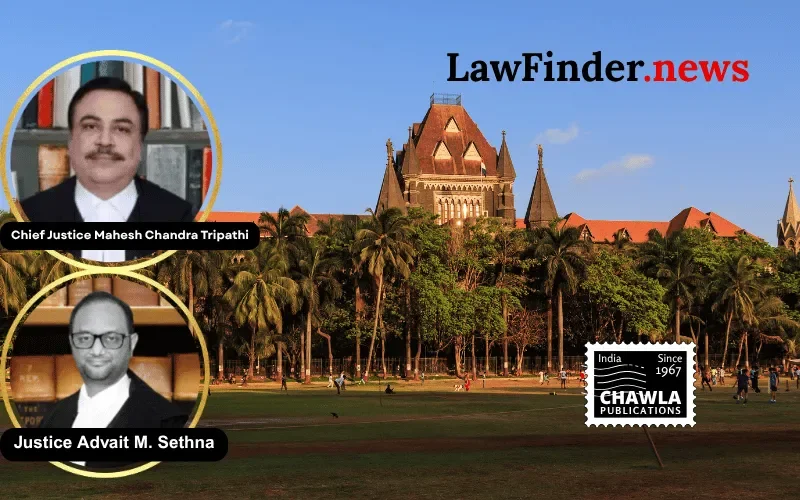
Court Rejects Petitions to Quash FIR Alleging Coercive Religious Practices and Conversion Attempts; Highlights Need for Trial to Determine Facts
In a significant ruling on August 4, 2026, the Madhya Pradesh High Court, Jabalpur Bench, dismissed multiple petitions seeking quashing of the FIR registered at Kotwali Police Station, Damoh, in Crime No. 498/2023. The FIR relates to allegations of religious conversion, coercion, and imposition of religious practices at Ganga Jamuna Higher Secondary School, Damoh, governed by Ganga Jamuna Welfare Society.
The petitions were filed by Shailendra Kumar Jain, Abdul Wasim Bari, Anas Athar, and Rustam Ali, who challenged the FIR and subsequent criminal proceedings on grounds including lack of jurisdiction, procedural irregularities, absence of direct evidence, and failure to obtain requisite prosecution sanction prior to cognizance.
The FIR arose following complaints from students and parents alleging that the school had imposed a compulsory dress code requiring girl students to wear Hijab, prohibited religious symbols like Tilak and Kalawa, mandated Urdu language classes and religious prayers, and that these practices were enforced by threats and coercion. An enquiry committee constituted by the Collector of Damoh conducted an investigation leading to the registration of the FIR.
Key points from the judgment include:
1. Rejection of Quashing on Procedural Grounds:
The Court held that FIR and criminal proceedings cannot be quashed solely based on procedural irregularities such as the initial absence of prosecution sanction under Section 196 of the Criminal Procedure Code, 1973, especially when such sanction was subsequently obtained before framing charges. The Court relied on precedents including Dharmesh @ Nanu Nitinbhai Shah v. State of Gujarat and Kalpnath Rai v. State to affirm that late sanction does not vitiate proceedings if no failure of justice is shown.
2. Madhya Pradesh Freedom of Religion Act, 2021 (MPFR Act) Interpretation:
The Court noted that Section 3 of the MPFR Act penalizes not only completed religious conversion but also attempts to convert by force, coercion, or undue influence. The petitioners' argument that the investigation lacked jurisdiction because the FIR was not filed by an aggrieved person under Section 4 of the Act was rejected. The Court observed that the statutory provision must be interpreted in light of factual circumstances, and investigation into cognizable offences related to attempts to convert cannot be barred merely because the complainant was an enquiry officer rather than a directly affected individual.
3. Juvenile Justice (Care and Protection of Children) Act, 2015:
The Court found that allegations under Sections 75 and 87 of the Juvenile Justice Act relating to cruelty and abetment must be decided based on evidence regarding the accused's role and control over children. The contention that the applicants were not office bearers or in control of the school at the relevant time and hence not liable was held to be a matter for trial.
4. Material Collected During Investigation:
The Court emphasized that the petitioners' selective reliance on affidavits from parents and students supporting the school's curriculum cannot override the substantial material collected during investigation, including statements of students alleging coercion. The Court underscored that such factual disputes are to be resolved in trial.
5. Advanced Stage of Trial:
Highlighting that 32 of 33 prosecution witnesses had already been examined, the Court noted the advanced stage of the trial as a compelling factor against quashing the FIR or proceedings at this juncture.
6. Role of the Petitioners:
Although the petitioners argued non-involvement or lack of membership in the current management committee, the Court held that factual determination of their involvement and whether they exercised control remains to be examined during the trial.
In conclusion, the Madhya Pradesh High Court dismissed the petitions filed by Shailendra Kumar Jain (M.Cr.C. No.1001/2026), Anas Athar and Rustam Ali (M.Cr.C. No.49886/2023), and Abdul Wasim Bari (M.Cr.C. No.52398/2026), allowing the criminal proceedings to continue. The Court refrained from expressing any opinion on the merits, reiterating that the determination of guilt or innocence will be based on appreciation of evidence during trial.
This judgment underscores the Court's stance that procedural technicalities or preliminary objections cannot prematurely terminate prosecutions when substantial investigative material exists, particularly in sensitive matters involving alleged religious conversion and protection of children.
Bottom Line:
FIR and subsequent criminal proceedings cannot be quashed solely on the ground of procedural irregularities under Section 196 Cr.P.C. or lack of direct allegations when substantial material has been collected during investigation.
Statutory provision(s):
Bharatiya Nagarik Suraksha Sanhita, 2023 Section 528, Madhya Pradesh Freedom of Religion Act, 2021 Sections 3, 4, 5(1), Juvenile Justice (Care and Protection of Children) Act, 2015 Sections 75, 87, Indian Penal Code Sections 295A, 120B, 506 Part-II, Criminal Procedure Code Section 196