Court dismisses quashing plea, affirms applicant's right to proceed with complaint under Section 200 Cr.P.C., ruling that alleged dying declaration and ex-gratia payment do not mandate FIR registration
In a significant ruling delivered on September 7, 2026, the Madhya Pradesh High Court, Jabalpur Bench, dismissed a petition filed by Smt. Poonam Kushwaha seeking to quash orders refusing the registration of an FIR alleging police assault that allegedly resulted in the death of her husband. The Court upheld the orders passed by the Magistrate and Sessions Judge, which declined to register an FIR under Section 156(3) of the Code of Criminal Procedure (Cr.P.C.) but instead treated the application as a complaint under Section 200 Cr.P.C.
The case arose from an incident on April 16, 2020, during the COVID-19 lockdown, when the deceased, Banshilal Kushwaha, was allegedly assaulted by police personnel at Police Station Gora Bazar, Jabalpur. The assault purportedly led to serious injuries and his subsequent death on April 20, 2020. The applicant claimed that before his death, her husband made a statement to electronic media naming the police personnel responsible, which she contended amounted to a dying declaration. She also pointed to the District Administration's grant of Rs. 50,000 as ex-gratia assistance as indicative of a homicidal death caused by the police.
After complaints to the Superintendent of Police failed to result in FIR registration, the applicant approached the Magistrate under Section 156(3) Cr.P.C. However, the Magistrate, after reviewing the police report and merg inquiry, declined to order FIR registration. Instead, the Magistrate treated the application as a complaint under Section 200 Cr.P.C., permitting the applicant to lead evidence and pursue the matter further. This order was subsequently upheld by the Additional Sessions Judge.
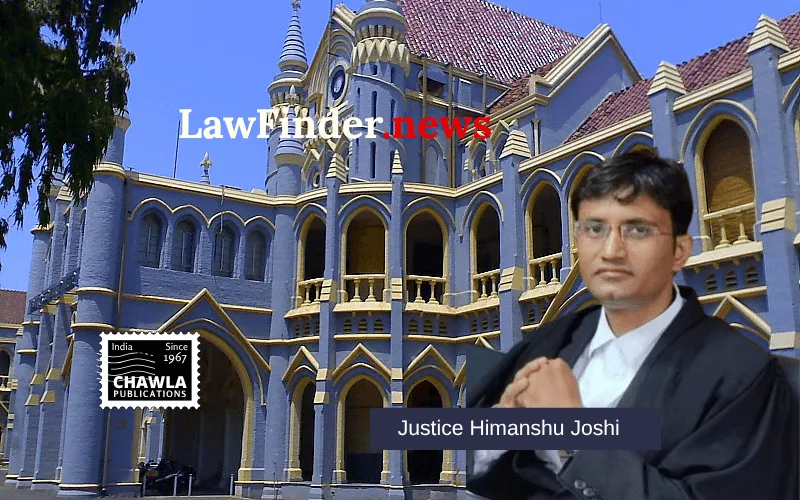
The High Court, presided over by Mr. Himanshu Joshi, J., examined the submissions and the material on record, including medical documents, post-mortem reports, forensic science laboratory (FSL) reports, and inquiry findings. The Court noted that the alleged statement before electronic media could not be conclusively treated as a dying declaration at this stage, as its authenticity and evidentiary value required proof. It further observed that the ex-gratia payment by the District Administration did not, by itself, establish homicidal death or police culpability.
Addressing the applicant's contention of manipulation of the post-mortem report, the Court found the allegation to be a disputed factual assertion unsupported by cogent material. The medical opinions and reports placed on record by the respondents negated the claim that injuries from assault caused the death. The Court emphasized that it could not undertake a comparative appreciation of evidence in the exercise of inherent jurisdiction under Section 482 Cr.P.C.
Ultimately, the High Court held that the Magistrate's decision to treat the FIR application as a complaint was legally permissible, providing the applicant with an efficacious remedy to present evidence and seek justice through the due process of law. The Court found no jurisdictional error, perversity, or manifest illegality in the impugned orders and dismissed the Section 482 Cr.P.C. application.
This judgment reaffirms the procedural safeguards available to complainants in criminal matters and clarifies the scope of Magistrate's powers under Sections 156(3) and 200 Cr.P.C. It also highlights the evidentiary thresholds for treating statements as dying declarations and the limitations of High Court's inherent jurisdiction in reappraising factual material at the initial stage.
Bottom Line:
Application under Section 482 Cr.P.C. for quashing orders refusing registration of FIR under Section 156(3) Cr.P.C. and treating application as a complaint under Section 200 Cr.P.C. dismissed; applicant has efficacious remedy before Magistrate.
Statutory provision(s):
Code of Criminal Procedure, 1973 Sections 156(3), 200, 202, 482; Indian Evidence Act, 1872 Section 32
Poonam Kushwaha v. Alok Singh, (MP)(Jabalpur) : Law Finder Doc Id # 2979250