Family Court's Jurisdiction Validates Interim Maintenance Despite Application Filed Under Incorrect Provision
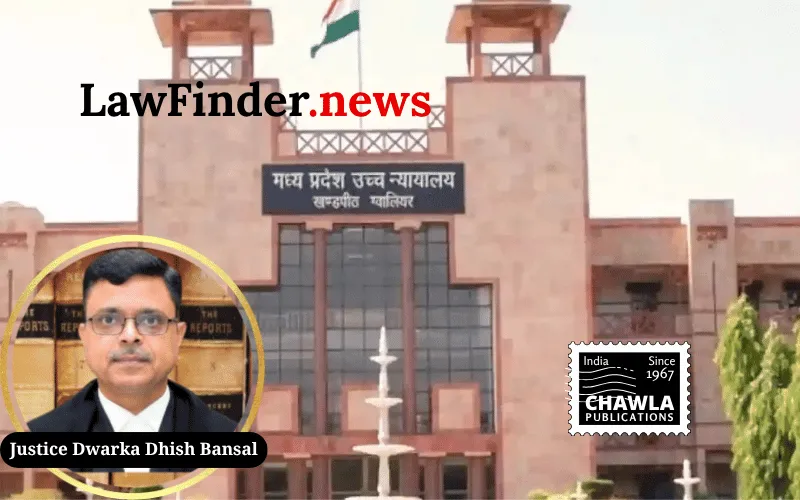
In a significant judgment by the Madhya Pradesh High Court, presided over by Justice Dwarka Dhish Bansal, the court dismissed a criminal revision petition challenging the Family Court's order to grant interim maintenance to a major unmarried daughter. The case titled "Shri Ganga Singh (Handicapped) v. Smt. Devi Singh and Another" revolved around the application filed under Section 125 of the Criminal Procedure Code (CrPC) by the petitioner’s daughter, Raksha Singh, seeking maintenance. The Family Court had awarded Rs. 2,000 per month as maintenance pendente lite to Raksha Singh, despite the application being filed under the wrong provision.
The petitioner, Shri Ganga Singh, argued against the maintenance order on the grounds that the application under Section 125 CrPC was not maintainable for his major unmarried daughter. He further contended that his daughter had assaulted him and filed complaints, thus disqualifying her from receiving maintenance.
Justice Bansal, relying on precedents set by the Supreme Court in cases like Abhilasha v. Parkash and others, reiterated that a Family Court holds jurisdiction under both Section 125 CrPC and Section 20(3) of the Hindu Adoption and Maintenance Act, 1956 (HAM Act). The court emphasized that technical errors, such as citing the wrong statutory provision, should not impede the delivery of justice. As per the judgment, the Family Court was correct in exercising its jurisdiction to grant interim relief under the HAM Act, despite the application’s initial filing under CrPC.
The judgment clarifies that under Section 20(3) of the HAM Act, a major unmarried daughter is entitled to maintenance if she is unable to sustain herself through her earnings or property, without needing to demonstrate any disability. The court dismissed the revision petition, confirming the Family Court's decision, and warned the petitioner of strict actions if the interim maintenance dues were not cleared.
The court also advised the respondents to amend their application to address technical objections and ensure it aligns with both Section 125 CrPC and Section 20(3) of the HAM Act.
This judgment highlights the judiciary’s commitment to ensuring justice prevails over procedural inaccuracies, fostering an equitable legal environment where substantive rights are prioritized over technical defaults.
Bottom line:-
Maintenance pendente lite - Major unmarried daughter can claim maintenance under Section 20(3) of the Hindu Adoption and Maintenance Act, 1956, even if an application is mistakenly filed under Section 125 Cr.P.C. - Mere mentioning of a wrong provision does not invalidate relief if the court has jurisdiction.
Statutory provision(s): Section 125 Cr.P.C., Section 20(3) of the Hindu Adoption and Maintenance Act, 1956